PETALING JAYA: The FBM KLCI is showing tentative signs of relief, as the potential de-escalation in the Middle East conflict lifts sentiment – but uncertainties remain.
Yesterday, as at press time, Brent crude eased to US$93 per barrel after US President Donald Trump hinted that the Iran war could end soon and floated the idea of removing oil sanctions to keep the supply chain intact.
The development gave Asian equities, including Malaysian shares, a lift after last week’s and Monday’s sharp sell-off. While the move brings some relief, it is too early to celebrate, as geopolitical risks have yet to be fully resolved.
A local investment bank trading head, who preferred not to be named, said the local market was reacting quickly to the early signs of easing tensions, reflecting a mix of relief and caution.
“Markets are always forward-looking, so even just the hint of a de-escalation is enough to shift sentiment meaningfully,” he said.
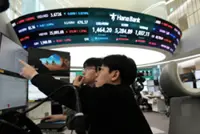
Over the last couple of weeks, the FBM KLCI plunged from 1,756 points on Feb 23 to a low of 1,674 on March 9, before recovering 27.5 points, or 1.64%, yesterday to close at 1,701.68.
Brent crude, which had remained below US$70 per barrel before the war, surged as high as US$119 per barrel on March 9 before easing about 5.9% to US$93 yesterday.
Bank Muamalat Malaysia Bhd chief economist Mohd Afzanizam Abdul Rashid said the market-friendly signals from Washington point to a potentially short-lived conflict, but he cautioned that it is still early days.
“The new Iran Supreme Leader has been appointed and he is known for his hardline stance towards the war. As such, what we saw now is perhaps a relief rally,” he said.
Still, in the near term, the trading head said a rebound is likely, but it will not be uniform across all sectors. He noted that oil and gas counters could face headwinds as the war premium in crude prices fades.
“The more interesting story is in sectors that were quietly bleeding from high energy costs and supply chain anxiety. Any knee-jerk market reaction in those names should present buying opportunities, frankly,” he said.
“Companies with strong fundamentals will prove resilient through oil price volatility and supply chain disruptions. That’s where the conviction trades will be.”
Looking at the medium-term picture, he said Malaysia’s economic outlook is more nuanced than that of pure oil exporters such as the Gulf states.
“Yes, we export crude and liquefied natural gas, but we also subsidise domestic fuel. So while oil was surging, we were simultaneously collecting more petroleum revenue and spending more on subsidies,” he explained.
With the government’s fiscal tools and policy intent in place, Mohd Afzanizam said he is not overly concerned on that front.
However, he cautioned that Malaysia’s growth story is more sensitive to the indirect effects of the conflict, such as shipping costs, insurance premiums and global trade volumes than to oil prices alone.
“If de-escalation sticks and these channels normalise, the macro picture looks reasonably constructive for the second half of the year,” he said.
He said the key uncertainty lies in geopolitical developments.
“The wildcard, of course, is whether optimism in the United States is running ahead of reality.”
However, he said Iran’s new Supreme Leader “suggests a hardline posture”, and the Strait of Hormuz situation has yet to fully resolve.
“While the directional shift is positive, I’d caution against pricing in a clean resolution just yet. One bad headline can undo a week’s worth of recovery very quickly,” he said.
Citing estimates circulating across trading desks, SPI Asset Management managing partner Stephen Innes said traffic through the Strait of Hormuz is currently running about 90% below normal levels, with only 10 to 12 tankers passing through daily compared with the usual 100 to 120.
This effectively removes 16 million to 18 million barrels per day (bpd) from the route, which typically oversees 18 to 20 million bpd.
While some crude can be rerouted through regional pipelines, Innes said diversion capacity is limited to about five million bpd, leaving a significant portion of supply still stranded. “At the same time, many shipping firms remain reluctant to send tankers into what is essentially an active combat corridor.
“Even under an optimistic scenario, that still leaves roughly nine to 11 million bpd effectively offline, which in market terms continues to point toward US$100 oil,” he said.
Based on a common market rule of thumb where every one million bpd disruption could lift crude prices by about US$3, Innes said the scale of the supply shock should theoretically push prices close to US$100 per barrel from a base of around US$70.
“Instead, it is trading closer to US$90. That US$10 difference is not a supply gap but an emotional one. The market is simply choosing not to pay the full fear premium today,” he said.
Innes added that the recent pullback in oil prices reflects investors betting the conflict may not last long, rather than a meaningful improvement in the physical oil supply situation.
Innes pointed out that global oil demand sits around 103 to 105 million bpd.
He said short term demand for oil is “extremely inelastic” because airlines, shipping, trucking, petrochemicals and power generation cannot quickly substitute away from crude. That means small supply shocks produce outsized price responses, he said.
“Even the idea of emergency stockpile releases does little to address the structural bottleneck,” Innes said.
“Strategic reserves can add barrels to the accounting ledger, but they cannot magically solve the transportation constraints, or the insurance risks that currently keep tankers idling outside the Gulf.”
Supply sitting in storage halfway around the world does not immediately replace supply stranded behind a maritime chokepoint, he added.
Innes added that oil markets are “notorious graveyards for confident predictions”.
“Prices can surge in fear, collapse in relief, and then surge again when the next logistical reality sets in,” he said.
“The lesson could not be clearer: when the oil alarm bell rings, the entire macro complex reacts instantly. When that alarm suddenly falls silent, the relief rally can be just as violent.”
Separately, the trading head said the local bond market will continue to be supported by Bank Negara’s “steady” stance on the overnight policy rate throughout 2026.
“The (lending) rate outlook remains stable, which gives a cushion for the bond market,” he said
“Despite the volatile oil backdrop, extreme oil prices are largely a supply-push inflation story – and that’s a very different animal from demand-pull inflation, which is what central banks really worry about.”
He added that the belly of the curve, typically referring to the five to 10-year Malaysian Government Securities, could attract renewed foreign interest as the “dust settles”.
Additionally, the trading head said the recent pullback in oil prices has helped ease pressure on the ringgit, which had been weighed down by a stronger US dollar and risk-off sentiment as investors rotated out of emerging-market assets.
“If this narrative of a short, contained conflict holds, I would expect the ringgit to find its footing again, though I would not call it a strong recovery just yet.
“We need to see more concrete developments on the ground before making that call,” he said.