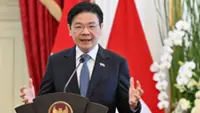
KUALA LUMPUR: The government has assured that the country’s energy supply remains secure despite supply chain disruptions amid escalating Middle East tensions, while leaving open the possibility of higher dividends from Petroliam Nasional Bhd (PETRONAS) if prices remain elevated.
Second Finance Minister Datuk Seri Amir Hamzah Azizan said Malaysia remains in a relatively strong position to absorb higher energy costs, noting that the country is a net energy exporter.
Still, Amir Hamzah said it is early to determine whether higher oil prices could lead to increased petroleum-related revenue or a revision to dividends from PETRONAS.
“I think these are early days,” he said when asked whether persistently high oil prices could result in higher dividend contributions from the national oil company.
He was speaking to reporters at the sidelines of the 2nd Asean Banking & Finance Summit 2026, organised by the KSI Strategic Institute for Asia Pacific (KSI).
However, Amir Hamzah added that the government could reassess the situation if elevated oil prices persist for an extended period.
“If this is a very long crisis, then we will look at that at that point,” he said.
As outlined in Budget 2026, PETRONAS has committed to paying RM20bil in dividends to the government this year, down from RM32bil in 2025 when Brent averaged below US$70 per barrel.
Amir Hamzah added that Malaysia’s oil and gas supply position remains stable.
“In terms of gas supply in the country, PETRONAS is a large contributor and it is in good shape. From an oil supply perspective, we are in a good position and there will not be any disruptions to the market at this point,” he said.
The government will also continue to maintain the RON95 petrol price at RM1.99 per litre for now, he said, noting that Prime Minister Datuk Seri Anwar Ibrahim has indicated the price will be held for at least two months.
Amir Hamzah highlighted that Malaysia starts the year from a strong economic position, which allows the country to cushion some of the impacts.
“At the end of the day, we must remember that Malaysia is a net energy exporter. So the oil price also has positive transmission into the economy,” he said.
He noted that last year’s economic results were strong and that “the tailwinds are still with us,” expressing his optimism for the first quarter.
“Hopefully, if cooler heads prevail and we come to a better landing and have a diplomatic solution, then we will manage this well.”
Economist, however, warned that prolonged high energy prices could increase the government’s fiscal burden.
IPPFA Sdn Bhd director of investment strategy and country economist Mohd Sedek Jantan said Malaysia faces rising fiscal pressure as energy prices surge.
“Now we see that the Brent crude oil price is more than US$100. So we have to quantify how long the situation will last,” he said, adding that oil is unlikely to drop below US$75 per barrel.
Sedek estimated that at prices above US$100 per barrel, the government could face an incremental fiscal cost of about RM13bil to RM16bil annually.
“We can estimate that the burden of the government, like it or not, will be increased,” he said.
He noted that under a baseline scenario of Brent averaging around US$90 per barrel and the ringgit below RM4.00 per US dollar, Malaysia’s economy is expected to remain resilient, with gross domestic product growth projected at 4.6% in 2026.
However, he said if elevated energy prices persist for several months, cost pass through effects and rising subsidy pressures could reduce growth by about 0.3 to 0.4 percentage points.
He added that charter rates for very large crude carriers, which transport about two million barrels of oil each, have surged from US$33,000 on Jan 1 to US$476,000, reflecting global supply chain pressures.