
THE 13th Malaysia Plan (13MP) has proposed a hybrid model for withdrawals from the Employees Provident Fund (EPF), but that alone is insufficient to tackle the looming retirement crisis. It is a step forward but leaves key gaps unaddressed.
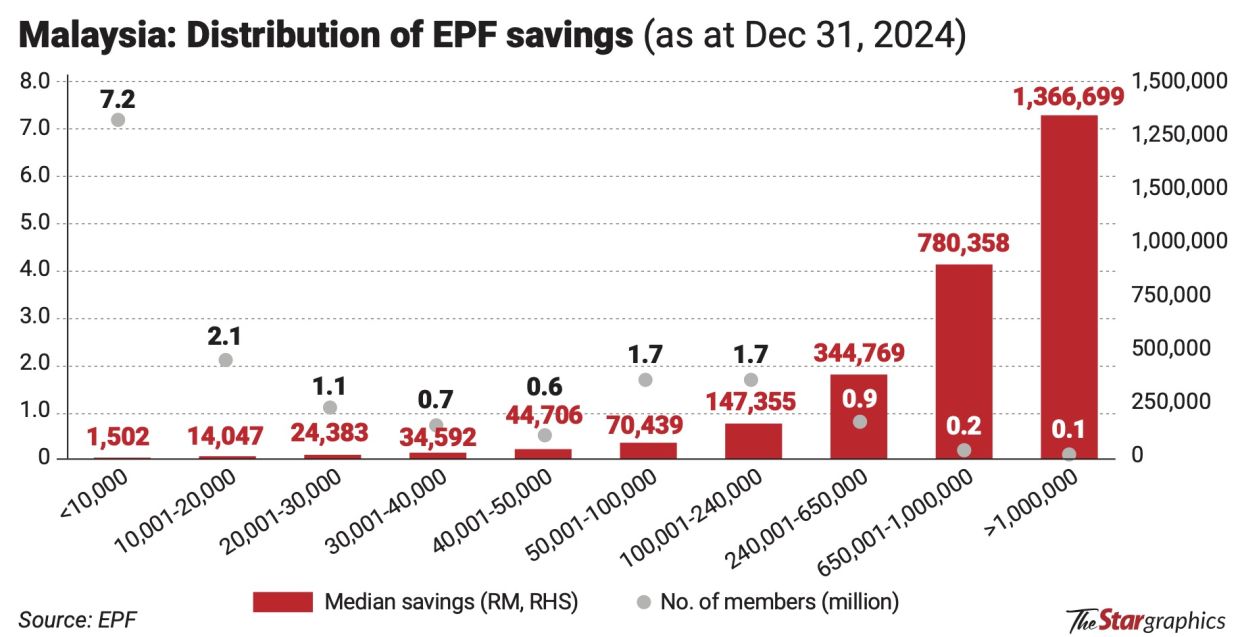
Ending lump-sum withdrawals is not enough to secure retirement. The hybrid model won’t solve the savings crisis for 6.3 million EPF members heading into retirement with less than RM10,000 in savings.
The reform will encourage part of contributor savings to be streamed out as a monthly retirement pension. This is much like Singapore’s Central Provident Fund (CPF) and pension systems in countries like Finland, the Netherlands and Norway.
The new structure will apply only to those members who register after the mechanism is implemented, according to government officials.
The scheme will not affect existing members’ withdrawal rights, but they can opt for the new mechanism.
A monthly pension model is promising, but low savings and wages remain critical issues.
Experts say this issue will likely require the government to increase welfare expenditure and impact future consumption patterns. And if real wages don’t improve exponentially, this problem is set to balloon further.
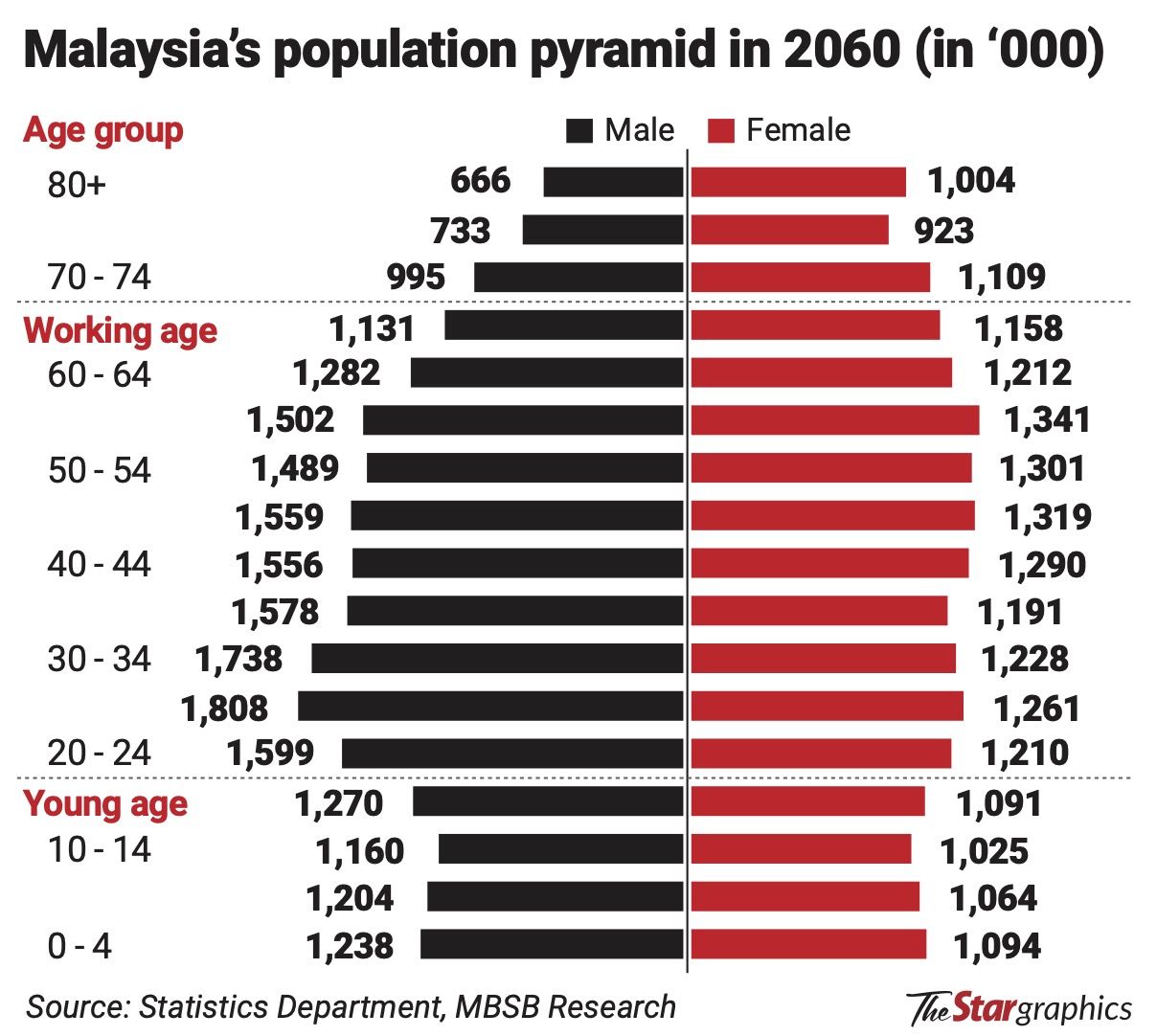
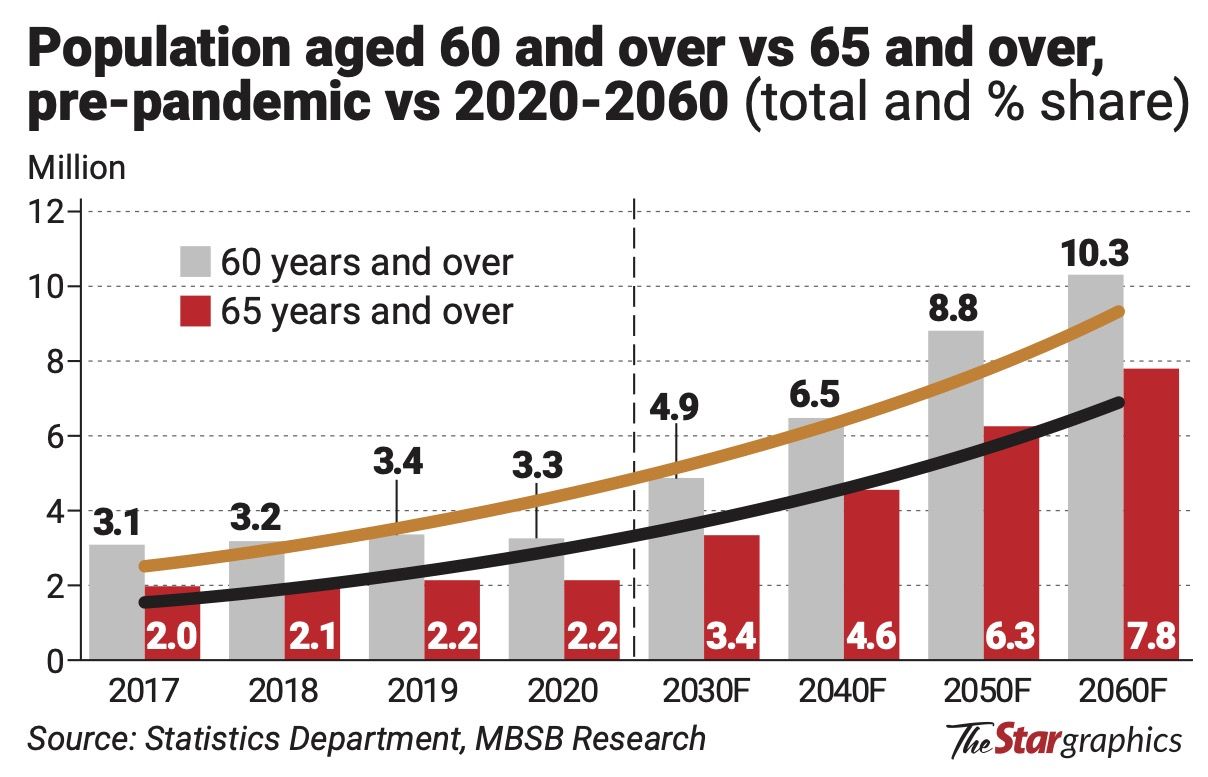
This is a very real risk as Malaysia is projected to become an aged nation by the 2030s when those aged 60 and above will exceed 15% of the population.
It is expected to rise to 23.4% by 2050, making the country a super-aged society. As of 2024, 11.6% or 3.9 million Malaysians were aged 60 and above.
Prof Yeah Kim Leng of Sunway University says as life expectancy increases and population ageing accelerates, refinements to the local public pension scheme and EPF together with measures such as raising the retirement age and aligning withdrawal age are necessary to avert a retirement crisis in the next one to two decades.
More holistic whole-of-society and whole-of-government approaches and policies, some of which have been laid out in the 13MP, are crucial to promote healthy and productive ageing and create a comprehensive social protection system for the aged population, including laws for children to care for their parents if needed, he says.
While the retirement savings gap of some retirees can be partly addressed by Cagamas Bhd’s (the National Mortgage Corp of Malaysia) reverse mortgage scheme, the systemic risks of an ageing population with insufficient savings necessitates exploring complementary pension pillars.
Expanding social insurance schemes, such as Social Security Organisation (Socso), to cover critical risks like disability and long-term care could reduce pressure on the EPF for non-retirement needs and provide a vital safety net.
However, a more transformative solution could involve establishing a non-contributory, universal basic income fund financed by taxes or a consolidated “Malaysian Superfund” says Liew Chee Yoong, Associate Professor – Finance at UCSI University Malaysia and Research Fellow at the Centre for Market Education.
Such a fund could consolidate financial resources from existing government-linked investment companies with strong revenue streams, such as redirected subsidies or resource royalties.
“While a full universal basic income fund would require significant fiscal costs, a pilot test targeting the most vulnerable elderly citizens could demonstrate feasibility and build political support, creating a foundation for retirement security independent of individual EPF balances,” Liew suggests.
Many have called for the setting up of social insurance schemes but economist Geofffrey Williams says these must be paid for.
“If they are universal and mandatory, then this is a tax on the poor. This does not help. The government must have a non-contributory scheme where pensions are funded from a new Universal Basic Pension fund or Malaysian Superfund which combines existing government investment funds into one solely to pay for pensions.
“Then you get universal coverage without making people poorer by cutting their income,” he tells StarBiz 7.
There are many superfund type pensions, for example in Norway and Japan. If there was a fund of around RM1 trillion, it could provide enough returns for a universal basic pension.
Williams says this can be achieved by merging government-linked investment companies (GLICs), excluding the EPF, and over time, building the fund through investment returns and perhaps, Petroliam Nasional Bhd’s income.
The problem here is funds of some of the GLICs are contributor-owned and not government-owned much like the EPF’s funds.
Nevertheless, Williams says the proposed superfund would provide a basic pension which would top up existing income sources.
It could be combined with existing STR/Sara or Sumbangan Tunai Rahman and Warga Emas schemes to give a single payment.
“If we exclude civil servants who have their own pension, there are around three million pension-age Malaysians.
“To give each a RM1,000 per month pension is RM36bil per year, less than the civil service pension bill. This can be provided by a 5% return on a fund of RM720bil which can be raised by combining the GLICs,” Williams says.
He says if the T20 is excluded, the cost is RM28.8bil which is a 5% return on a fund of RM576bil which is easily obtained by combining the assets of the GLICs and the investment returns ringfenced for pensions.
Would such a fund encourage a culture of dependency as those heading into retirement spend their savings knowing there is this retirement income option?
Williams says the Universal Basic Pension is not enough to discourage people from saving as normal. In fact, it will help people meet the pension adequacy levels quicker and encourage saving. This may be a proposal in the next five-year plan.
Stark realities
The proposed hybrid withdrawal approach for the EPF, nonetheless, aims to help the country better manage the multi-dimensional effects of an ageing population on the economy, society and overall human well-being.
The plan, however, underscores a fundamental tension, ie, the demand for immediate financial flexibility versus the imperative of securing adequate retirement income in the face of rising life expectancy
At present, the EPF is fairly flexible and allows contributors or members to make partial withdrawals for education, medical, housing, investment and other pre-retirement purposes and/or a lump sum withdrawal upon retirement.
This has led many to tap the saved funds for immediate needs as we saw with the Covid-19 lockdown when billions of ringgit were withdrawn. As a result, many face a retirement income gap as savings have dwindled.
The retirement fund’s data show nearly 82% of its members had savings below RM71,000 at the end 2024, which is insufficient for even a modest monthly income upon retirement. Of the total 16.3 million EPF members, 7.2 million had savings of RM1,500 only.
At such a low saving amount, opting for a pension-like withdrawal scheme would make no sense and signifies the acute challenge ahead.
For the 300,000 members who have some RM800,000 and above in EPF savings, the hybrid withdrawal system is an option worth looking at without upending their retirement plans.
Nevertheless a measured approach allowing limited, conditional flexibility for genuine emergencies, coupled with robust mechanisms to replenish withdrawn funds, may offer a more viable path than either extreme rigidity or excessive accessibility, says Liew.
“However, the efficacy of any withdrawal policy is inherently tied to the broader issue of contribution sufficiency,” he tells StarBiz 7.
And here lies the core issue – low wage levels for many workers in the country.
Recent Statistics Department data put median wages in formal employment at RM3,000 – so half of people in work earn less than this and those in informal work or outside the workforce like housewives and students have no formal steady income from which to save for retirement.
Gig workers, for instance, are only advised to contribute to the retirement fund. The e-hailing platforms are currently exempted from making mandatory contributions.
To add to the problem, real wage and salary growth has been depressed by inflation.
The Statistics Department notes that median wages in the formal sectors have increased marginally in real terms, rising from RM2,582 in early 2022 to RM2,600 in late 2023.
The growth has often been outpaced by inflation, resulting in a decline in purchasing power for many workers, likely leading to the need to tap into their EPF savings.
Former Bank Negara Malaysia governor Tan Sri Muhammad Ibrahim recently said real wages in the country have declined nearly three-fold over the past 40 years.
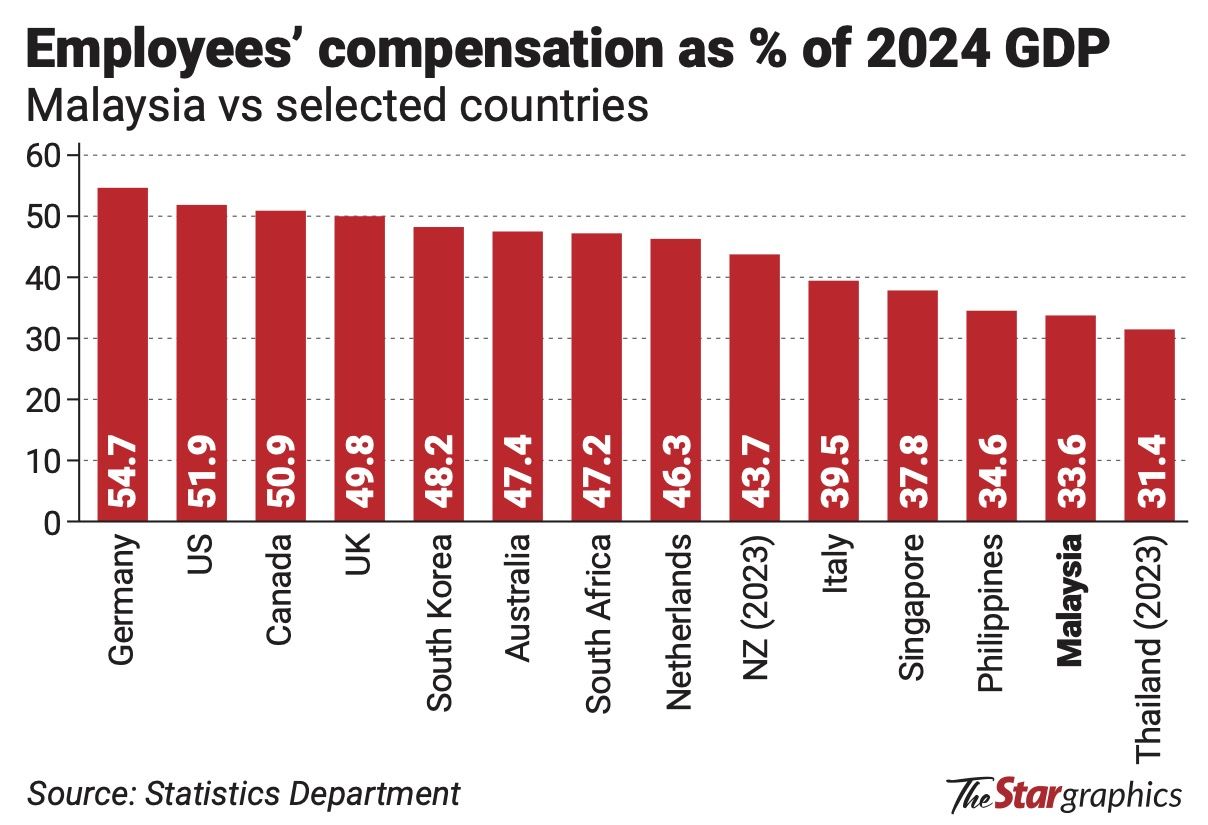
Another depressing marker is that labour’s share of gross national product remains low at 33% due to a combination of structural, policy and technological factors.
The country has many low-wage labour-intensive industries whereas export-oriented industries face strong cost competition from labour abundant countries with lower wages.
Domestic industries resort to foreign and unskilled labour instead of raising wages to attract local workers, resulting in a depressed labour income hovering around the minimum wage level.
Remedies
The government has proposed in the 13MP several labour market policy measures and interventions to raise average incomes to RM3,500.
These include a two-tier minimum wage that is a higher minimum wage for graduates and semi-skilled workers than the current universal minimum wage of RM1,700 a month to ensure wages and salaries are reflective of workers’ skills and qualifications.
This will be complemented with plans to raise the retirement age and wage levels so that savings can be replenished.
The five-year plan (2026-2030) has also proposed to scale up the implementation of the progressive wage policy to elevate workers’ income through reskilling and upskilling for productivity gains.
Large private sector companies are also encouraged to adopt decent living wage levels like at GLCs and GLICs, where the living wage is set at RM3,100 per month.
Putrjaya is hoping this leads to employees’ compensation to GDP ratio rising to 40% by 2030 from 33.6% in 2024. On paper, the 13MP will help but only time will tell.
Yeah’s calls for accelerating the weaning off industries from over-dependence on foreign workers though a carrot-and-stick approach is, therefore, needed.
This includes policy support and fiscal incentives for upskilling, automation, industrial upgrading and hiring domestic workers on the one hand, and capping the importation of unskilled foreign labour and implementing the planned multi-tiered foreign worker levy, on the other.
“Besides raising wages and labour income through innovative schemes such as the progressive wage model, accelerating domestic and foreign direct investments that create high-value products and services and high wage employment is also crucial to strengthen labour demand and competition that in turn will sustain wage increases.
“With a sustainable rise in productivity-lined wages, the other necessary policy focus is to promote prudent household spending and adequate savings for retirement, including the necessary pension reforms to avert an old age poverty crisis that looms in the next one to two decades in a business-as-usual policy scenario,” he advises.
Raising the contribution level from employees and employers to the EPF is another option, but likely to see resistance. Williams says increasing employee contribution from 11% now will just make people poorer by cutting their take-home pay, unless the higher contribution comes from employers, who will likely resist this.
Liew adds that mandating higher employer contributions without addressing underlying productivity and wage stagnation risks negative consequences, such as reduced hiring or suppressed wage growth.
“The priority must therefore be a dual strategy – implementing productivity-linked wage models to sustainably raise incomes, coupled with gradual, phased increases in contribution rates, potentially supported by targeted government subsidies for lower-wage workers and small businesses.
“Enhancing coverage to include the growing gig economy is also important,” he says.
Managing returns
Weaker population growth could slow economic growth and eat into EPF investment returns that are given to contributors. This is a global problem.
Rising life expectancy, meanwhile, means the EPF and retirement and pension funds worldwide must distribute benefits longer, in an unfavorable environment of low interest rates.
The local equity market’s performance has been lacklustre for almost a decade (2024 being the exception) and is already down some 5% year-to-date while developed markets like the United States are at historic highs.
Being a fully-funded, defined-contribution retirement savings scheme, the fund needs to raise the returns to contributors.
It should be allowed more room to be flexible with its investment activity to maximise returns and not be curtailed to invest the bulk of its funds domestically
Higher returns on investments will help EPF contributors bulk up their savings for retirement.
As it stands, the EPF’s Retirement Income Adequacy framework targets RM650,000 in savings for a contributor to have a reasonable standard of living during retirement.
With this level of savings, the retiree could withdraw about RM2,700 per month initially growing to over RM7,300 by the 20th year of retirement.
The current 40% cap on foreign investments, which is a limit already reached, could lead the fund to experience diminishing returns.
The strategic intent to retain capital domestically is understandable, yet it conflicts with the pursuit of optimal returns for members. The EPF’s own performance data highlight this tension, with foreign investments generating a disproportionate share of income.
As its fund grows, supported partly by mandatory contributions from foreign workers, revisiting the cap becomes increasingly necessary.
A prudent revision, perhaps raising the limit towards 50% in a phased manner over several years, could increase long-term yields, says Liew.
This should be accompanied by strategic diversification, focusing not just on traditional developed markets, but also high-growth emerging economies and regional infrastructure projects, potentially through sovereign partnerships, to reduce risk and support regional development goals.
This is another reform concerning EPF that needs to be considered.
Already a subscriber? Log in
Get 20% OFF The Star Digital Access
Cancel anytime. Ad-free. Unlimited access with perks.