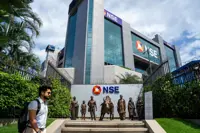
SINGAPORE: Trading on the Singapore Exchange (SGX) has increased in the weeks after a Monetary Authority of Singapore (MAS)-led equities market review group on Feb 21 announced a series of measures to revitalise the local stock market.
Almost 30 billion shares were traded in February, a 56% jump from January, while the total market value of all transactions for the month was up 42% to S$29.6bil over the same period, according to SGX.
The steps involved include allocating an initial S$5bil to invest, alongside selected Singapore-focused fund managers, in local stocks, as well as extending tax incentives and streamlining regulations to attract new listings.
Temasek Holdings Ltd chief executive officer (CEO) Dilhan Pillay described the measures as the most significant for the local stock market in over 30 years.
But the current moves focus on boosting institutional investments and attracting higher-quality initial public offerings and have yet to sustainably address a critical component that will help boost shareholder returns and keep the current momentum going – retail investor trust and confidence.
To be sure, MAS has said it is exploring ways to enhance investor recourse avenues and improve engagement between shareholders and listed companies.
Further updates are expected in the coming months.
Still, there is a need to accelerate these efforts and expand them to include legal options for investors who have been burnt in the stock market and strengthen minority shareholder protections to prevent investor trust from eroding, even as broader market reforms take shape.
This will be essential in tackling the SGX’s struggle with low liquidity and weakening investor sentiment, factors which have led to suboptimal valuations, discouraged new listings and contributed to a spike in the number of companies choosing to leave the exchange.
The ongoing dispute between some shareholders of Great Eastern (GE) and Oversea-Chinese Banking Corp Ltd (OCBC) is one example of the lack of avenues for some minority shareholders to negotiate better terms for themselves.
In May 2024, OCBC launched a S$1.4bil bid to privatise GE by acquiring the remaining 11.56% stake it did not own at S$25.60 per share, a 36.9% premium over GE’s last traded price but 30% below its embedded value of S$36.59.
By July 2024, OCBC’s stake surpassed 90%, causing GE to lose its required 10% minimum free float and leading to SGX suspending its shares.
However, some minority shareholders continued to oppose the offer and refused to sell. GE now faces a May 25 deadline to restore its free float, following two deadline extensions.
Meanwhile, trading in GE remains suspended.
In January, British activist investor Palliser Capital urged MAS and SGX to intervene, calling OCBC’s offer “gravely unfair” to minority shareholders and citing weak corporate governance safeguards.
GE shareholder Ong Chin Woo told The Straits Times that poor market liquidity leads to low stock valuations and limits minority investors’ ability to cash out.
He added that the lack of recourse forces many shareholders to accept unfavourable prices in privatisation deals, giving controlling stakeholders excessive power.
Poor corporate governance can also impact a company’s performance and reputation, and erode investor confidence.
Take the boardroom tussle at City Developments Limited (CDL), which saw executive chairman Kwek Leng Beng sue his son, CEO Sherman Kwek, on Feb 26, alleging a power grab through board resolutions passed without proper nomination procedures.
He also sought Sherman Kwek’s removal as CEO.
After two weeks of public clashes and CDL’s share price hitting a 16-year low, the older Kwek dropped the lawsuit, with both men calling a truce for the company’s sake.
However, the saga has raised concerns over board independence and transparency.
Said Rick Chan, managing partner at professional services firm Forvis Mazars: “Corporate governance is a critical factor in restoring confidence.
“Strong governance ensures transparency, protects shareholder rights and builds market confidence.”
Concerns that corporate decisions are being made without sufficient accountability can further weaken confidence in the SGX, undermining efforts to revive it at a time when interest and momentum are returning.
A survey by Securities Investors Association (Singapore), or Sias, found that 37% of investors faced difficulties exercising their rights, highlighting gaps in investor protection.
Among them, 41% felt unheard in corporate decision-making, 22% struggled with voting procedures and 24% had trouble accessing financial reports.
“This suggests that existing investor protection mechanisms may not adequately address the needs of all investors,” Sias said.
Another Sias survey revealed that while most investors remain open to SGX stocks, low returns, lack of attractive options and weak liquidity are the biggest deterrents.
According to its president and CEO David Gerald, to support SGX’s revival, Sias will propose investor protection reforms in May,.
This includes stronger public enforcement for investor compensation, lowering shareholding thresholds for minority shareholder action, mandating company explanations for significant shareholder dissent, enhancing access to financial disclosures and revisiting two-tier voting for independent directors.
This will come as MAS is shifting SGX’s listing framework towards a disclosure-based regime, under which the exchange will streamline listing requirements, reduce qualitative admission criteria and simplify prospectus disclosures to attract more companies.
Said Chan: “A disclosure-based regime can increase listings by allowing investors to make informed decisions based on risk disclosures.
“However, it also raises concerns about investor protection, particularly when fraudulent disclosures occur.”
Robson Lee, a partner at Kennedy’s Law, noted that retail investors including many retirees who invested in companies like Hyflux, which collapsed under poorly disclosed losses and liabilities, as well as in fraudulent S-chips and during the Blumont, Asiasons, and LionGold penny stock crash, had few avenues to recoup their losses. — The Straits Times/ANN