Pharmaniaga seeks the right medicine


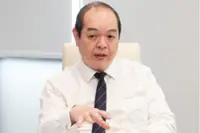
Pharmaniaga Bhd managing director Zulkifli Jaafar. — AZLINA ABDULLAH/The Star

IT’s been two years since Pharmaniaga Bhd slipped into Practice Note 17 (PN17) status.

Will the company’s regularisation plan – recently approved by Bursa Malaysia – be able to lift it out of its doldrums?
That is the question facing investors, considering that soon after Bursa Malaysia’s approval of the plan, Pharmaniaga’s stock took a beating.

Pharmaniaga’s problems in 2023 stemmed from a massive RM552mil write-off related to unsold Sinovac Covid-19 vaccines.

Since then, the company has been working on its regularisation plan, which had to be revised.

The plan essentially entails a rights issue to raise up to RM353.5mil, a private placement to raise up to RM300mil, and a capital reduction of RM520mil.

The extraordinary general meeting (EGM) for shareholder approval is slated for March 20.

Pharmaniaga’s largest shareholders – Boustead Holdings Bhd and Armed Forces Fund Board (LTAT) – which hold 47.1% and 7.8%, respectively, have given undertakings to subscribe to their entitlements to the rights issue.

LTAT wholly-owns Boustead Holdings.

Pharmaniaga managing director Zulkifli Jafar believes the regularisation plan will succeed because of the confidence shown by the biggest shareholders.

“They are pumping in the most money, so, I think that is an indication that they believe in us,” he says.

It is still unclear who will take up the 23% private placement, as Zulkifli remains tight-lipped.

However, there is no shortage of interest.

“We have a few interested parties,” he says, adding that they want strategic partners rather than investors looking for short-term gains.

“We want someone who can grow with us and build the company,” he explains.

“They should be aligned with our business to enhance growth, and we prefer partners who are in or related to the industry,” Zulkifli adds.

About 51.3% of the proceeds raised from the exercise will be used to repay borrowings.

This is expected to generate annual interest savings of up to RM16.8mil.

Another 34% of the proceeds is earmarked for business expansion that includes acquiring four new warehouses across Malaysia.

Money is also being set aside for the development of vaccines, insulin and other generic drugs.

Zulkifli says this investment aligns with the National Immunisation Programme, addressing supply gaps in insulin and expanding Pharmaniaga’s product portfolio.

The funds will cover formulation, clinical trials and product registration, with commercialisation expected this year.

Zulkifli says Pharmaniaga is making significant strides in expanding its biopharmaceutical capabilities, particularly through the supply of vaccines and insulins.

The company is set to commercialise its vaccines in stages, starting with the Pneumococcal conjugate vaccine, Human papillomavirus and Hexavalent vaccines.

These vaccines, currently imported, have a combined value of approximately RM290mil, Zulkifli says.

Pharmaniaga’s main business is a concession with the Health Ministry (MoH) to handle logistics in delivering medicines.

Zulkifli felt manufacturing vaccines locally would give the company higher margins compared to logistics and distribution, the latter of which has gross profit margins of between 7.2% and 11.7%.

With the MoH increasingly looking to procure vaccines and insulins locally, Zulkifli says it has already initiated collaborations with partners from Europe, India, South Korea and China.

He says Pharmaniaga has managed to improve its operational costs by 7.6% in less than two years and rationalised non-core businesses.

The group has closed down its retail business, the biomedical devices division and the nutraceutical business – all areas that weren’t profitable.

The company has also reduced headcount from 2,380 to 1,977.

“We’re now focusing more on manufacturing, which offers better margins. Our logistics and distribution division, while still crucial, is almost fixed, with the government fees set,” Zulkifli explains.

On its insulin and vaccine manufacturing plant in Puchong, he says: “We began transforming our plant in 2018 with a RM300mil investment, and once we secure halal certification, we will be the first to produce halal-certified insulin and vaccines.”

The company’s insulin plant received approval in November, with human insulin now expected to begin trading in the first quarter of this year (1Q25).

“By 3Q25, we will be moving into localisation, starting with the sterile formulation and manufacturing of human insulin,” he adds.

The company has also received approval for its more costly glargine analogue insulin, which has higher margins.

“Our goal is to localise production so we can control pricing and offer better value. But we need a commitment from the government,” Zulkifli explains.

“The local insulin market alone is worth RM150mil to RM200mil annually, and vaccines represent a nearly RM300mil spend by the government,” Zulkifli says.

With the diabetic patient population projected to increase by five million by 2030, he says Pharmaniaga’s focus on insulin production is critical.

The company’s target is to eventually reach a 70-30 split, with 70% of revenue coming from manufacturing and 30% from logistics, from the current 50-50 split.

“Logistics and distribution is our bread and butter – it’s sustainable, and we can live comfortably. But we have obligations to pay dividends to shareholders. We need to ensure we can improve profitability; we can’t just afford to be comfortable.”

Pharmaniaga also expects its biopharma division to contribute significantly to the company’s topline.

This year, the biopharma plant is expected to add around RM8mil in revenue.

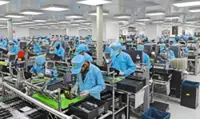
Pharmaniaga operates four manufacturing plants in Malaysia – Bangi, Puchong, Sri Iskandar and Sungai Petani – along with one in Indonesia.

The Bangi plant, the largest, produces oral solid dosage (OSD), creams and syrups, while the Puchong plant houses the company’s most advanced facility, specialising in small-volume injectables, vaccines and insulin.

Sri Iskandar focuses on non-sterile penicillin, and Sungai Petani handles galenical and OSD production.

Currently, these facilities run at 60%-70% capacity, with 80% considered the optimal level for efficiency.

While its factories are primarily focused on the local market, the company exports 10% of its production to markets like the European Union, Brunei, Hong Kong and Singapore, with plans for further expansion.

Pharmaniaga handles only 34% of government procurement, which contributes about 50% to its top line.

Follow us on our official WhatsApp channel for breaking news alerts and key updates!
Pharmaniaga , PN17 , Vaccine , Insulin , Healthcare , Biopharma

Next In Business News

Trump hikes US global tariff rate to 15%
The parcel overhang
Zero abandoned homes�by�2030?
Unmasking housing market pricing abuses
Ringgit likely to trade cautiously next week ahead of key US data
Powering a new reinvestment cycle as demand surges
Up in Arms - or up the value chain?
Asia bonds for diversification
AI disruption fears rock markets
Private equity hits a sixer

Others Also Read