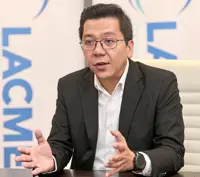
A taxing issue


Jeffrey Chew: Implementing this tax will be challenging as wealthy people have ways to manage their money and ensure that it does not impact them as much.

THE inheritance tax is not such a bad idea if it is administered and implemented well, but the government should consider other avenues to broaden or widen the tax base.

This is since a tax on the wealthy, while good for political optics and shoring up the populist credentials of the unity government, may not be easy to collect as the rich, being better informed and having at least above-average knowledge on how to manage finances, will have many avenues to limit what can be taxed.

Since news of the inheritance tax was first reported in Malay-language daily Utusan Malaysia, there has understandably been pushback, some counter-arguments being well-thought out and nuanced, while others were knee-jerk reactions before details on the proposed tax, which is speculated to be announced during the tabling of Budget 2025 next week, is even known.

With the restructuring or withdrawal of subsidies also on the radar, there is obviously worry of another onerous imposition.

Jeffrey Chew, who comes from a banking and tax background before helming Paramount Corp Bhd, a property development company, backs such a tax as he believes people who make lots of money should pay their fair share but questions the ability of the government to effectively implement it.

“Implementing this tax will be challenging as wealthy people have ways to manage their money and ensure that it does not impact them as much,” he points out.

Instead, Chew suggests broadening the capital gains tax (CGT) to include listed companies, from the current CGT payable on disposal of shares in unlisted companies that came into force from this March.

He views e-invoicing, which came into effect from this August and will be implemented in phases as another effective avenue for the government to capture as much taxes as possible while discouraging black market activities.

Lastly, he believes that the goods and services tax (GST) should be brought back, albeit at 2%. The GST came into effect from April 2015 at 6% and was zero-rated from June 2018 after the-then Pakatan Harapan formed the government as part of an election promise to repeal the tax.

“There is bound to be some pain involved as the government implements reforms, the challenge is how to balance the reforms without inflicting too much pain. The inheritance tax will affect the wealthy, not the middle class, but many are understandably concerned,” Chew observes.

He notes the gap between the wealthy and mid-income wage earners who are wary of the implications of the tax on property, which is more often than not where a large proportion of their “wealth” is stored.

The National House Buyers Association recently voiced concerns over the inheritance tax, deeming it unfair to people who have bought property to bequeath to future generations.

Chang: This could discourage savings and investment as people spend away since their bequests to heirs could be taxed.

Its honorary secretary-general, Datuk Chang Kim Loong, says heirs will be paying tax based on market value of property that has been driven higher due to inflation. Chang believes that this could discourage savings and investment as people spend away since their bequests to heirs could be taxed.

Discussions over the inheritance tax must also include all sorts of tax exemptions and incentives because, apart from subsidies, the rich have benefitted the most from these exemptions and incentives. Examples are zero taxes on fixed deposits and Employees Provident Fund (EPF) savings.

Perhaps the government can consider fixed deposits above RM5mil or EPF savings above RM5mil to not be exempt from tax. Similarly, dividend income should not be exempt. These are avenues for broadening the tax base.

There should also be a cost-benefit analysis of tax exemptions and incentives as they may have outlived their purpose. Perhaps tax exemptions or incentives were at one time given to nurture an industry or protect one in its infancy, but it may no longer be relevant or needed.

What is the outcome of these exemptions and incentives? Have they benefitted the nation or society? The inheritance tax may just be the tip of the iceberg of a national discourse on what is the fair share that should be paid by the wealthy.

There are also fears that the inheritance tax will turn away investors, particularly at a time when Malaysia is trying to attract not just long-term investments through foreign direct investment, but also to revitalise a stock market that is now the best performing in the region.

Yoong: Inheritance tax will be a costly mistake as it will spook investors in business and the capital markets.

Ian Yoong, an investor and retired investment banker, says friends have been asking him about the implications of the tax, which to him is dire indeed.

“Inheritance tax will be a costly mistake as it will spook investors in business and the capital markets. The fear is that the implementation of an inheritance tax, however small, will open the floodgates to greater taxes on wealth in the future,” he says.Carmelo Ferlito, an economist and chief executive officer of the Centre for Market Education, is opposed to the tax. “We should promote economic growth with pro-market reforms, to grow the pie, not to redistribute,” he says, adding that steps should be taken by increasing the wealth of those who have less without taking from those who have more.

For the record, Malaysia did have an inheritance tax but it was abolished in 1991 because of the poor collection. This is a much wealthier nation than in 1991, when GDP per capita was US$2,728. Today, GDP per capita is US$13,315.

Yes, there is disparity in income and wealth and yes, it should be addressed, but whether the inheritance tax is the right move when there are many more avenues to broaden the tax base for which the infrastructure is essentially in place, should be explored.

Get 20% OFF The Star Digital Access

Monthly Plan

RM 13.90/month

RM 11.12/month

Billed as RM 11.12 for the 1st month, RM 13.90 thereafter.

Best Value

Annual Plan

RM 12.33/month

RM 9.87/month

Billed as RM 118.40 for the 1st year, RM 148 thereafter.

Follow us on our official WhatsApp channel for breaking news alerts and key updates!

Next In Business News

DXN earmarks RM500mil capex for FY27 expansion
Ringgit higher against major currencies ahead of Fed meeting
PGF Capital's 1QFY27 net profit rises 18.3% to RM8.9mil
Destini's RAILTEC bags RM45.58mil RAC contract
Bursa Malaysia's key index ends higher on bargain-hunting
TNB, Air Selangor team up to enhance country's energy and water infrastructure
Oriental Interest expands income stream with RM280mil acquisitions
SNS Network scores record RM1.22bil contract for the supply of servers
CapitaLand Malaysia records higher net profit of RM44mil in 2Q
Wall St futures rise as US, Iran pause hostilities

Others Also Read