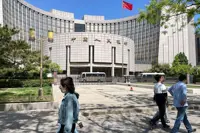
Free trade zones play vital role in Beijing’s high-quality development


More than 300 institutional innovations by pilot FTZs have been selected for replication at the national level. — China Daily

BEIJING: China’s pilot free trade zones (FTZs) are expected to ehance institutional opening-up and contribute significantly to its economic growth, experts say.

Since the establishment of the China (Shanghai) Pilot Free Trade Zone 10 years ago, Beijing has set up 22 pilot FTZs.

According to a report released by the Beijing-based Chinese Academy of International Trade and Economic Cooperation (Caitec), the pilot FTZs have made remarkable progress in pioneering increased openness, propelling high-quality development through innovations and fostering clusters of key industries.

More than 300 institutional innovations by pilot FTZs covering investment, trade facilitation and finance have been selected for replication at the national level.

Since 2022, pilot FTZs have affected 537 institutional innovations across areas including investment, trade, finance and regulation. Among them, 120 have promoted remarkable development in related areas, the report showed.

Caitec president Gu Xueming said: “As pacesetters of opening-up and reform, pilot FTZs in China have made remarkable progress in the past decade, in better aligning themselves with high-level international trade and economic rules, to facilitate broader market entry and improvements to institutional innovation in trade and investment policies.

“Pilot FTZs are expected to make even more efforts to serve a better role as the test field for the nation’s reform and opening-up,” Gu said at a forum on the development of pilot FTZs in Zhengzhou, capital of Henan province.

The forum was jointly organised by Caitec, the Department of Commerce of Henan province and the Zhengzhou municipal government.

According to Gu, pilot FTZs need to take the lead in building institutional systems and regulatory models that align with high-standard international economic and trade regulations, and form more targeted institutional innovations in key areas.

These include trade and investment, government procurement, intellectual property, environmental protection and digital trade.

For instance, they are expected to increase stress tests in the field of investment and services trade, continue to downsize the negative list for foreign investment in an appropriate manner, increase the openness of the modern services industry, and encourage foreign investment in high-end services sectors.

They should also proactively adapt to emerging new industries, new business formats and models, enhance the mechanism for coordinated, efficient and targeted institutional innovations, and improve their integration of institutional innovation as pacesetters.

To further tap pilot FTZs’ potential as a test field for China’s reform and opening-up as well as engines of economic growth, it is important for these pilot FTZs to devote more efforts to enhancing the business environment, said Gu Qingyang, an associate professor at the Lee Kuan Yew School of Public Policy of the National University of Singapore, via a video link.

“Pilot FTZs are pioneers of social and economic development in China, and they must build a world-class business environment to attract world-class resources like talent and investment, to achieve world-class development,” he said.

There is ample room for pilot FTZs to enhance the business environment in a systematic manner, including reducing hidden costs for market players, he added.

He also said there are three important ways in which pilot FTZs in China can enhance the business environment.

The first is to align with high-standard international economic and trade regulations to ensure that domestic standards and regulations keep up with international ones.

The second is to allow the market to be the decisive factor in allocating resources while letting the government better serve its duty. — China Daily/ANN

Get 20% OFF The Star Digital Access

Monthly Plan

RM 13.90/month

RM 11.12/month

Billed as RM 11.12 for the 1st month, RM 13.90 thereafter.

Best Value

Annual Plan

RM 12.33/month

RM 9.87/month

Billed as RM 118.40 for the 1st year, RM 148 thereafter.

Follow us on our official WhatsApp channel for breaking news alerts and key updates!

Next In Business News

UUE builds new growth drivers�
Whither the stock market?
From durian runtuh to durian glut
Critical safety net
Keeping housing�construction�costs on track
Skydecks: More than just a million-dollar view
What�old homes�got right�
Foreign microcap IPOs dry up in US
Asean equities in stronger investment phase�
The bigger catch: Lessons from eFishery

Others Also Read