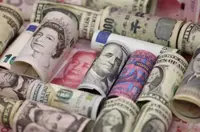
FRANKFURT: Macro hedge fund EDL Capital is betting that the euro will plunge to levels not seen since the early days of its inception over 20 years ago, as rampant inflation feeds instability in politics and bond markets that may test the region’s cohesion.
That could cause the start of a “euro bear market” in a shift from the current bout of dollar strength that’s weakened the common currency, said Edouard de Langlade, the founder of EDL.
Russian gas supply risks will drive up record inflation, forcing aggressive rate hikes at a time of recession and causing Germany to potentially baulk at the costs of keeping the eurozone together, according to him.
“Europe is on the brink of disaster, which could potentially lead to its breakup,” de Langlade told clients in a letter this month seen by Bloomberg.
“We could move to a place where the dollar is not strong against everything but the euro gets weak against everything,” he said, targeting the euro at 80 US cents (RM3.57).
The money manager, who runs US$751mil (RM3.35bil) at his macro hedge fund, is known for his big and bold bets.
While de Langlade, who previously traded for Moore Capital Management, has mostly made money for his clients since starting the fund in 2015, he suffered record losses in February because of his Russian bets.
The combination of a surging dollar, fuelled by Federal Reserve tightening, and European risks have seen the euro already fall past parity this month for the first time in 20 years. De Langlade sees further declines, close to the level where the European Central Bank (ECB) intervened to strengthen the euro in 2000.
Now the ECB is starting a rate-hiking cycle this month that exposes the vulnerabilities of the diverse economies in the euro area, a decade after former ECB chief Mario Draghi vowed to do whatever it takes to preserve the euro.
The fear is that traders force the borrowing costs of more indebted nations such as Italy to spike by betting against their bonds.
To combat the fallout, the ECB has unveiled a tool that would enable it to buy the bonds of countries facing surging sovereign yields due to market speculation, subject to certain conditions. But the expense of doing so may just be too much, de Langlade argues.
“Europe does not have a common treasury and the cost of keeping Europe together is high,” he said in the letter.
“It is very possible that once the Germans are in financial difficulties of their own, they will refuse to do whatever it takes to keep spreads tight.”
De Langlade said the dollar’s strength could fade, ending its appreciation against commodity currencies. — Bloomberg
Already a subscriber? Log in
Get 20% OFF The Star Digital Access
Cancel anytime. Ad-free. Unlimited access with perks.