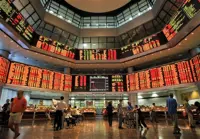
Tokyo pushes to reform its massive stock market


Japan Exchange Group Inc will unveil members of its new “Prime” section of the Tokyo Stock Exchange, which will replace the current First Section of companies that form the benchmark Topix index.

TOKYO: Japan’s largest exchange operator is set to disclose the components of three new market sections soon, but the long-awaited shake-up of the country’s sluggish stock market is attracting more skepticism than excitement.

Japan Exchange Group Inc will unveil members of its new “Prime” section of the Tokyo Stock Exchange, which will replace the current First Section of companies that form the benchmark Topix index.

But the shift is disappointing analysts who view it as little more than window-dressing: the new Prime section will initially include between 1,800 and 1,900 members, according to an analysis by Nikkei, down less than a fifth from the existing 2,185 constituents.

The bloated bench of constituents in the First Section was a key reason behind the move, which had been heralded as a once-in-a-generation reform.

But it’s now got some asking whether the revamp, which goes into effect April 4, has been worth the fuss.

“I am not sure what the point was,” said Travis Lundy, an analyst at Quiddity Advisors who publishes on Smartkarma. “It will not meaningfully alter anything.”

Japan’s overblown Topix, whose membership has nearly doubled since the 1990s to include more than half of the nation’s listed firms, has been cited among reasons for its long underperformance.

Many of the components are obscure small caps with little-to-no liquidity and offer minimal or no English-language disclosure.

The Tokyo Stock Exchange (TSE) has pitched Prime as a market for companies “which centre their business on constructive dialogue with global investors,” with improved corporate governance among the stated goals.

“I don’t see anything drastically changing when the main market stock goes from 2,200 firms to 1,800,” said SMBC Nikko Securities Inc chief quants analyst Keiichi Ito.

“Changing the market classification will not change corporate behaviour.”

One of the reasons so little has changed is what the TSE refers to as a “transitional” measure that allows companies that don’t meet Prime’s already loose listing standards to stay on by pledging to meet the criteria at some point in the future.

The firms in the “Growth” section, which will replace the Mothers and Jasdaq markets, as well as the “Standard” section will also be announced soon.

The Topix will remain, but the components will be tweaked in stages over several years.

Being on the TSE First Section carries cachet in Japan and viewed as similar to being listed as a Fortune 500 company.

That’s prompted some companies to strategise how to best position themselves.

Among those firms are e-commerce firm Market Enterprise Co, which has a market value of just over US$32mil (RM134.17mil), and Cominix Co, a machinery maker that booked US$2.5mil (RM10.48mil) in profit last year, both of which have applied for Prime.

The potential inclusion of relative minnows has prompted criticism that the revamp plans are too watered down to matter.

The TSE has countered by saying that the initial reform was merely a “first step”.

And SMBC Nikko’s Ito noted in a report last month that it will be harder for firms to “coast along” than before.

Still, investors will likely shrug off the announcement as a procedural instead of fundamental change.

Until authorities “stop paying lip service to the reforms, we are unfortunately just shuffling paper,” said Justin Tang, head of Asian research at United First Partners. — Bloomberg

Get 20% OFF The Star Digital Access

Monthly Plan

RM 13.90/month

RM 11.12/month

Billed as RM 11.12 for the 1st month, RM 13.90 thereafter.

Best Value

Annual Plan

RM 12.33/month

RM 9.87/month

Billed as RM 118.40 for the 1st year, RM 148 thereafter.

Follow us on our official WhatsApp channel for breaking news alerts and key updates!
Japan , reform , stock market ,

Next In Business News

Gold slips as US dollar, yields rise ahead of Fed minutes
Bank Negara's international reserves rise to US$132.6bil at end-June
SJPP approves RM4.9bil financing for over 6,000 MSMEs 1H26
Maybank Islamic launches Nadi Mastercard Credit Card-i with fixed 14% profit rate
South Korean stocks tumble as AI earnings boom faces doubts
5G, AI transforming manufacturing
Asian stocks tumble on AI jitters after Samsung�forecast; oil stable
S.Korea's KOSPI tumbles 8%, triggering circuit breakers for sixth time this year
CIMB Islamic to roll out no-frills CIMB Lite-i credit card
Aemulus unit secures RM17.68mil in orders for automotive device test systems

Others Also Read