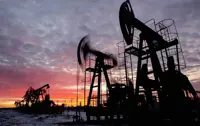
Economic concerns as oil hits US$20


The government will also look at structural reforms to ensure better diversification in the country’s economy, apart from undertaking the necessary fiscal and monetary policies to develop resiliency, according to Finance Minister Tengku Datuk Seri Zafrul Aziz.(file pic)


PETALING JAYA: The government will reprioritise its expenditure to meet the fall in revenue that has been brought about from the collapse in global oil prices.

It will also look at structural reforms to ensure better diversification in the country’s economy, apart from undertaking the necessary fiscal and monetary policies to develop resiliency, according to Finance Minister Tengku Datuk Seri Zafrul Aziz.(file pic)

Tengku Zafrul said the impact of lower oil prices had already been factored into the government’s deficit forecast of more than 4% of gross domestic product (GDP).

“This reflects the whole year’s estimated deficit based on a certain level of oil price assumption. If the oil price declines significantly below our annual average estimates, the government will reprioritise expenditures to meet the fall in revenue.

“The government continues to monitor the development oil prices closely, ” he said in the statement issued last night.

He noted that the general preoccupation with oil was understandable, given that it is closely linked to global geopolitical influences.

“However, what is more important is to recognise how Malaysia has a diversified economic base. Moving forward, the ministry will also be looking at structural reforms to ensure better diversification in the economy, apart from undertaking the necessary fiscal and monetary policies to develop the nation’s economic resiliency, ” said Tengku Zafrul.

Being a net oil and gas exporting nation, Malaysia is highly vulnerable to price fluctuations in the global crude oil market and the government is expected to lose billions of ringgit in oil revenue from the weak price environment.

With one-fifth of the federal government’s revenue projected to come from oil-related taxes this year, the country’s fiscal health critically hinges upon a stable crude oil market.

It is, hence, unsurprising that concerns on the Malaysian economy have intensified after the world’s widely-used crude oil benchmark – Brent grade – dipped below US$20 per barrel or the lowest since February 2002.

This also follows the unprecedented crash in the US oil market, which saw prices entering the negative territory for the first time in history.The price of West Texas Intermediate (WTI) futures for May delivery plunged to minus US$37.63 per barrel on April 20.

While businesses and households generally benefit from lower oil prices due to cheaper petrol and diesel for transportation and logistics, the government’s coffers will take a major hit.

This is because, for every US$1 drop in Brent crude oil price, Malaysia is expected to lose RM300mil in oil-related tax revenue.The country has based Budget 2020, which was tabled in October 2019, on an average full-year Brent crude oil price assumption of US$62 per barrel.

CLICK TO ENLARGE
CLICK TO ENLARGE

Socio-Economic Research Centre executive director Lee Heng Guie forecast Brent crude oil prices to average at US$25 to US$35 per barrel this year.

He said the government has assumed an average oil price of US$35 per barrel in its recent stimulus packages.

The country would face an estimated loss in oil-related revenue of RM16.5bil in 2020, mainly from the petroleum income tax.

“Petronas dividend contribution of RM24bil in Budget 2020 is not affected as it is being paid out based on Petronas profit in 2019, ” he told StarBiz.

Lee added that Malaysia’s crude oil exports earnings would be dampened due to lower prices and the commitment to cut its crude oil production by 136,000 barrels per day for May and June this year.

“Lower pump prices mean less petrol expenses for users and households, although the movement control order has temporarily offset the benefit. Nevertheless, Malaysia is likely to see deflation or negative inflation due to the sharp decline in retail petrol prices.

“The collapse of crude oil prices offers a window of opportunity to reform the fuel subsidy scheme to make it more targeted post the recovery in global crude oil prices, ” he said.

Meanwhile, Bank Islam chief economist Mohd Afzanizam Abdul Rashid expected Brent crude oil price to average at US$35 per barrel, much lower than the government’s assumption of US$62 in Budget 2020.

On a brighter note, the extent of the government’s dependency on oil revenue has reduced over time.

“In 2009, the ratio of petroleum related revenue was at 41.3%. This year, petroleum related revenue is expected to contribute 20.7% to the government’s overall revenue, ” he said.Asked if Brent crude oil prices could decline further following the trend seen in WTI prices, Mohd Afzanizam said it is “quite possible given their close relationship.”

“However, it should be united that WTI’s June contract and beyond are still positive. The WTI futures contract for June and July are US$21.52 per barrel and US$27.23 per barrel respectively.

“Since Brent prices usually trade at a premium compared with WTI, moving forward, I do not foresee a crash in Brent prices like what we just saw in WTI’s May futures contract, ” he said.

In a note issued yesterday, OCBC Bank’s global treasury research and strategy economist Howie Lee said the plunge in WTI crude oil for May delivery “does not mean the end of the world”, but it remained a risk.

According to Lee, negative prices are not reflective of the state of the market.

WTI May contract plummeted to negative levels but prices for June onwards, as well as the entire Brent curve, are still trading firmly positive.

“Lack of storage is highly to be blamed. The May futures expire yesterday, meaning that long positions are obliged to take physical delivery if one holds an open long position by the end of the trading session.

“Storage in the US, it seems, are close to full capacity as inventories are brimming from the coronavirus-induced demand slack.

“The lack of storage means if a refiner is handed the physical cargo, it is unable to find a warehouse to lodge its inventory. The inability to store means it matters little that a refiner had earlier bought crude oil at the low US$20s – if they cannot find a space to store the oil, their purchase is as good as moot, ” he added.

For now, the global crude oil market outlook remains subdued as business closures and restricted movement across the world due to the Covid-19 pandemic have weakened demand for oil.

In the case of Malaysia, SERC’s Lee said that the government will have to focus on compensating the shortfall in revenue as a result of the low oil prices.

He recommends the government to cut or reprioritise both operating and development expenditure.

“The government can also look out for other non-oil tax revenue such as increased investment income/dividends from the government-linked investment companies, including higher Petronas dividend and the sales of assets, among others, ” he said.

Get 20% OFF The Star Digital Access

Monthly Plan

RM 13.90/month

RM 11.12/month

Billed as RM 11.12 for the 1st month, RM 13.90 thereafter.

Best Value

Annual Plan

RM 12.33/month

RM 9.87/month

Billed as RM 118.40 for the 1st year, RM 148 thereafter.

Follow us on our official WhatsApp channel for breaking news alerts and key updates!
oil , economy

Next In Business News

Bursa Malaysia to suspend trading in BHIC Securities on Aug 7
MyCEB secures 416 business events for 2026-2030 with RM3.98bil estimated economic impact
South Korea's Naver jumps 10% on Nvidia's US$1bil investment plan
AI to drive Asean+3 growth, 2026 forecast revised higher to 4.1% - AMRO
SkyWorld launches first overseas sales gallery in Ho Chi Minh City
Shein's Hong Kong IPO filing sidesteps Xinjiang cotton controversy
China's industrial profit growth moderates as exports cushion uneven recovery
Local retailers return to net buying with RM223.1mil inflow- MBSB IB
Ringgit opens higher vs US$ ahead of state poll
Indonesia central bank governor Perry Warjiyo steps down in surprise move

Others Also Read