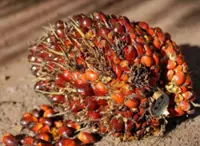
JAKARTA: The Council of Palm Oil Producing Countries (CPOPC), a palm oil board led by Indonesia and Malaysia, said British supermarket chain Iceland's decision to remove palm oil from its own-brand food products misleads consumers.
Iceland said last week that due to concerns over rainforest destruction it would remove palm oil from all of its own-brand products by end-2018, reducing demand for the vegetable oil by more than 500 tonnes per year.
The claims being made against palm oil are "misleading the consumers on the environmental benefits of other vegetable oil," CPOPC Executive Director Mahendra Siregar said in a letter addressed to Richard Walker, managing director of Iceland.
Siregar confirmed the content of the letter, dated April 13, late on Sunday.
CPOPC said demand for vegetable oil continues to grow and that replacing palm oil with other vegetable oils, such as from rapeseed, soybeans and sunflower seeds, would lead to 10 to 20 times greater land use to produce the same amount of oil.
Iceland, which specialises in frozen food and operates around 900 stores, said it has already removed palm oil from half of its own-brand products.
A demand boom for widely-used palm oil has led to palm plantations spread across 18 million hectares in Indonesia and Malaysia, according to data from Indonesian government and Malaysia Palm Oil Board. Indonesia and Malaysia are the world's largest and second-largest producers of palm oil.
Critics say the expansion has resulted in an increase in the greenhouse gases that warm the planet.
Palm plantation are also often blamed for forest fires that regularly take place on Sumatra and Kalimantan in Indonesia, blanketing large areas of Indonesia, Malaysia and Singapore in a choking haze that can hang in the air for weeks.
The European Parliament last year voted to phase out use of unsustainable palm oil in biodiesel by 2020. The resolution endorsed a single Certified Sustainable Palm Oil (CSPO) plan for Europe-bound palm and other vegetable oils to ensure they are produced in an environmentally sustainable way.
Europe is the second-largest market for both Indonesia and Malaysia. India is the largest.
Indonesia has been promoting palm oil in new markets to mitigate the risk of dropping European demand, while promoting wider use of biodiesel locally to soak up supply. - Reuters
Already a subscriber? Log in
Play, subscribe and stand a chance to win prizes worth over RM39,000! T&C applies.
Cancel anytime. Ad-free. Unlimited access with perks.