



LAS VEGAS: Carmakers and tech companies have fallen over one another in recent weeks to show the strides they’ve made with self-driving cars.
At CES – usually a stage for bragging about futuristic bona fides – top executives are instead tamping down expectations about the arrival of autonomy.
Truly driverless vehicles are years away, executives from auto giants Toyota Motor Corp and Hyundai Motor Co, mega supplier Robert Bosch GmbH and ride-hailing service Lyft Inc said this week.
While each of those companies showed off the progress they’re making in the form of concept models or Las Vegas test drives, they’re quick to admit that plenty of major hurdles remain.
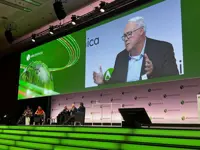
“It’s a mistake to say that the finish line is coming up very soon,” said Gill Pratt, chief executive officer of Toyota Research Institute, the carmaker’s US$1bil unit working on artificial intelligence and robotics. “Things are changing rapidly, but this will be a long journey.”
Toyota president Akio Toyoda introduced an electric-vehicle concept called e-Palette, a box on wheels engineered to drive itself on set routes.
In 2020, Toyota will demonstrate the vehicle at the Tokyo Olympics, but even then the car may need as many as two engineers or test drivers to ensure customer safety.
Pratt said the technology may not be ready to go it alone – and even if it can, the laws may not allow it yet.
One of the major challenges is replicating the human brain, Pratt said. People can sense gestures and the movements of pedestrians and other drivers and predict where they’re going.
AI scientists are working on this, Pratt said, but it’ll take years to get autonomous-vehicle systems to be capable of complete robotic driving.
South Korea’s largest automaker is projecting an even longer time frame than Toyota for when it’ll be able to deliver almost fully self-driving vehicles.
After announcing a deal to collaborate on the technology with US startup Aurora Innovation, whose founders hail from Tesla Inc and Alphabet Inc’s Waymo, Hyundai said it’s targeting so-called Level 4 capability by 2021.
The fuel-cell vehicle the company debuted at the show, called Nexo, can autonomously park itself into a space and back – with or without a driver.
“We take very conservative steps,” Lee Jinwoo, vice president of Hyundai’s Intelligent Safety Technology Center in Namyang, South Korea, said in an interview at CES.
“We want to test and validate the technology first. It will not be for sale in 2021, only testing in city use.” — Bloomberg
Already a subscriber? Log in
Get 20% OFF The Star Digital Access
Cancel anytime. Ad-free. Unlimited access with perks.

