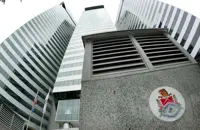
PETALING JAYA: Not surprisingly Bursa Malaysia failed to hold on to its gains generated during “window dressing” activities last week as it fell 14.11 points on the first day of trading in the new year.
The stock market fell despite the ringgit rising to a 16-month high against the US dollar.
The FBM KLCI closed at 1,782.70 yesterday due to the selling of blue-chip stocks, notably Sime Darby Plantations Bhd, Digi.Com Bhd and Malayan Banking Bhd
. It had earlier reached a record intraday low of 1,772.
“The local bourse closed unusually high last Friday due to window dressing activities. Traders are taking profit from last week’s gains,” said a trader.
Last Friday, which was the last day of trading for 2017, Bursa Malaysia enjoyed its biggest single day jump – surging 17.71 points or 1% to close the year at 1796,81.
The last minute push on the last day of trading, known as “window dressing”, paved the way for the FBM KLCI to rise by 9.4% in 2017 against the preceeding year.
Meanwhile, most Asian markets closed higher on the first trading day of the year, with Chinese shares leading the gains.
The Shanghai Composite rose 1.24% or 41.15 points to end at 3,348.33 while the Shenzhen Composite closed up 1.05% or 19.85 points at 1,919.20, driven by better than expected economic data.
The FBM KLCI was the worst-performing index in the region yesterday.
It is worth noting that local stocks related to China such as Hengyuan Refining Company Bhd
and DRB-Hicom Bhd
also saw huge interest among investors yesterday.
Shares of DRB-Hicom surged 23.5% or 43 sen to close at RM2.26, while Hengyuan ended RM1.66 or 10.18% to RM17.96 yesterday.
The ringgit continues to strengthen against the US dollar, climbing to its highest in more than 16-month as crude oil prices posted their strongest opening to a year since 2014.It strengthened to 4.0195 against the US dollar, its best performance since August 2016.
Brent crude oil was trading at US$66.77 a barrel at the point of writing, the highest since July-2015 while the US West Texas Intermediate crude was trading at US$60.36 per barrel. This was the first time since January 2014, that saw the two crude oil benchmarks open the year above US$60 per barrel.
Kenanga Research expects the local bourse to experience a challenging environment this year, especially on concerns of global capital flows arising from the unwinding of quantitative easing (QE) and US tax reforms, as well as the sustainability of US equity market due to high expectations with regard to US economic and corporate earnings growth.
Back home, the research house pointed out the rising concerns over the forthcoming 14th general election (GE14).
“While the equity market for 2018 may not be smooth sailing, it is still reasonable for us to expect a relatively good first quarter,” Kenanga said in its strategy report.
It pointed out that the undemanding valuation of the FBM KLCI against its regional peers is likely to attract more foreign interest coupled with the favourable uptrend of the ringgit and crude oil.
According to MIDF Research, Malaysia saw a total of RM10.33bil (US$2.36bil) net inflow of foreign funds into local equities in 2017, the highest annual net inflow since 2012. “Foreign funds were rather aggressive buyers in 2017 where Bursa Malaysia recorded a net injection in 35 out of 52 weeks of trading during the year,” it said.
Going into 2018, MIDF Research projects inflows into Bursa Malaysia’s equities to continue, particularly after the 14th general election. On possible foreign fund outflows driven by external factors, the research house said the impact is expected to be minimal.
MIDF added that the local bourse has a high potential to track gains of its peers as fundamentals of the Malaysian market remain intact.
Pacific Mutual Fund Bhd chief executive officer and executive director Teh Chi-cheun said 2018 would see the continuation of a bull market driven by robust economic growth and growing consumer confidence on rising wages and stable employment.
“Participate with a fair allocation in equities. Bear in mind that there will be times when the bull takes a breather and this is healthy for a sustainable rally,” he said in a statement.
Already a subscriber? Log in
Get 20% OFF The Star Digital Access
Cancel anytime. Ad-free. Unlimited access with perks.