BENGALURU: Oil prices rose for a fourth day on Tuesday, with Brent crude poised for its largest monthly gain on record and U.S. crude futures set for their strongest monthly increase since 2020, because of supply constraints from the widening Middle East war.
Brent crude futures for May rose $2.26, or 2%, to $115.04 a barrel at 0002 GMT, after reaching their highest since March 19 during the prior session. The May contract expires on Tuesday and the more active June contract was at $108.96.
U.S. West Texas Intermediate futures for May climbed $3.10, or 3%, to $105.96 a barrel, its highest since March 9.
Iran's effective closure of the Strait of Hormuz, which typically carries about a fifth of global oil supply and large numbers of liquefied natural gas tankers, has pushed Brent futures up 59% so far in March, its highest monthly gain ever, while WTI is up 58% this month, the most since May 2020.
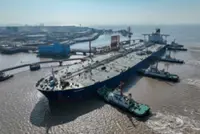
Highlighting the threat to seaborne energy supplies from the war between Iran and the United States and Israel, Kuwait Petroleum Corp said on Tuesday its fully loaded crude oil tanker Al Salmi, capable of carrying up to 2 million barrels, was struck by an alleged Iranian attack at Dubai port, the state news agency KUNA said on Tuesday. Officials also warned of potential oil spills in the area.
On Saturday, Yemen's Iran-aligned Houthi forces targeted Israel with missiles, raising fresh concerns over possible disruptions to the Bab el-Mandeb strait, the chokepoint linking the Red Sea and Gulf of Aden and a key route for ships moving between Asia and Europe via the Suez Canal.
"If the Houthis successfully resume a blockade of the Bab al-Mandab Strait, both of the world's most critical energy arteries would be under simultaneous pressure. This 'twin chokepoint' crisis is a nightmare scenario for global supply chains," said Tim Waterer, chief market analyst at KCM Trade.
Saudi crude exports have been rerouted through this route, with volumes redirected from the Gulf to the Red Sea port of Yanbu reaching 4.658 million barrels per day last week, Kpler data showed, a sharp rise from an average of 770,000 bpd in January and February.
U.S. President Donald Trump warned on Monday that the U.S. would "obliterate" Iran's energy plants and oil wells if Tehran does not reopen the Strait of Hormuz. This followed Tehran's dismissal of U.S. peace proposals as "unrealistic" and its recent missile strikes on Israel.
Still, the White House said on Monday that talks with Iran were continuing and progressing well, adding that what Tehran says publicly differs from what it tells U.S. officials in private.
"The markets do not see any offramp for the conflict as the two sides are very wide apart in terms of their demands despite the rosy picture that President Trump is painting," Marex analyst Edward Meir said. - Reuters