
Layering artificial intelligence onto China’s existing economic model without broader structural reforms could deepen the country’s economic imbalances, as businesses and capital owners stand to benefit more than workers and households, a veteran China watcher has cautioned.
“When productivity goes up, it may go up in a way that mainly benefits capital and doesn’t benefit labour,” said Louis Kuijs, chief economist for Asia-Pacific at S&P Global Ratings.
“If this is laid on top of the existing economic process in China, it will add to existing pressures.”
In an interview with the South China Morning Post last week, Kuijs, a former senior economist at the World Bank’s Beijing office, said the effects might be palpable in China, where the existing growth model channels a relatively small share of national income to workers and households.
“These issues about the lack of rebalancing may become more pronounced if AI adoption accelerates without adjustments in the economic policy setting,” he said.
China has made AI a central part of its drive to upgrade the economy and develop new growth accelerators, with Beijing issuing a series of national initiatives to promote the technology’s adoption across industries.
The country’s total AI-related spending was projected to reach about US$220 billion this year, according to a report released earlier this month by a research team affiliated with the China Finance 40 Forum.
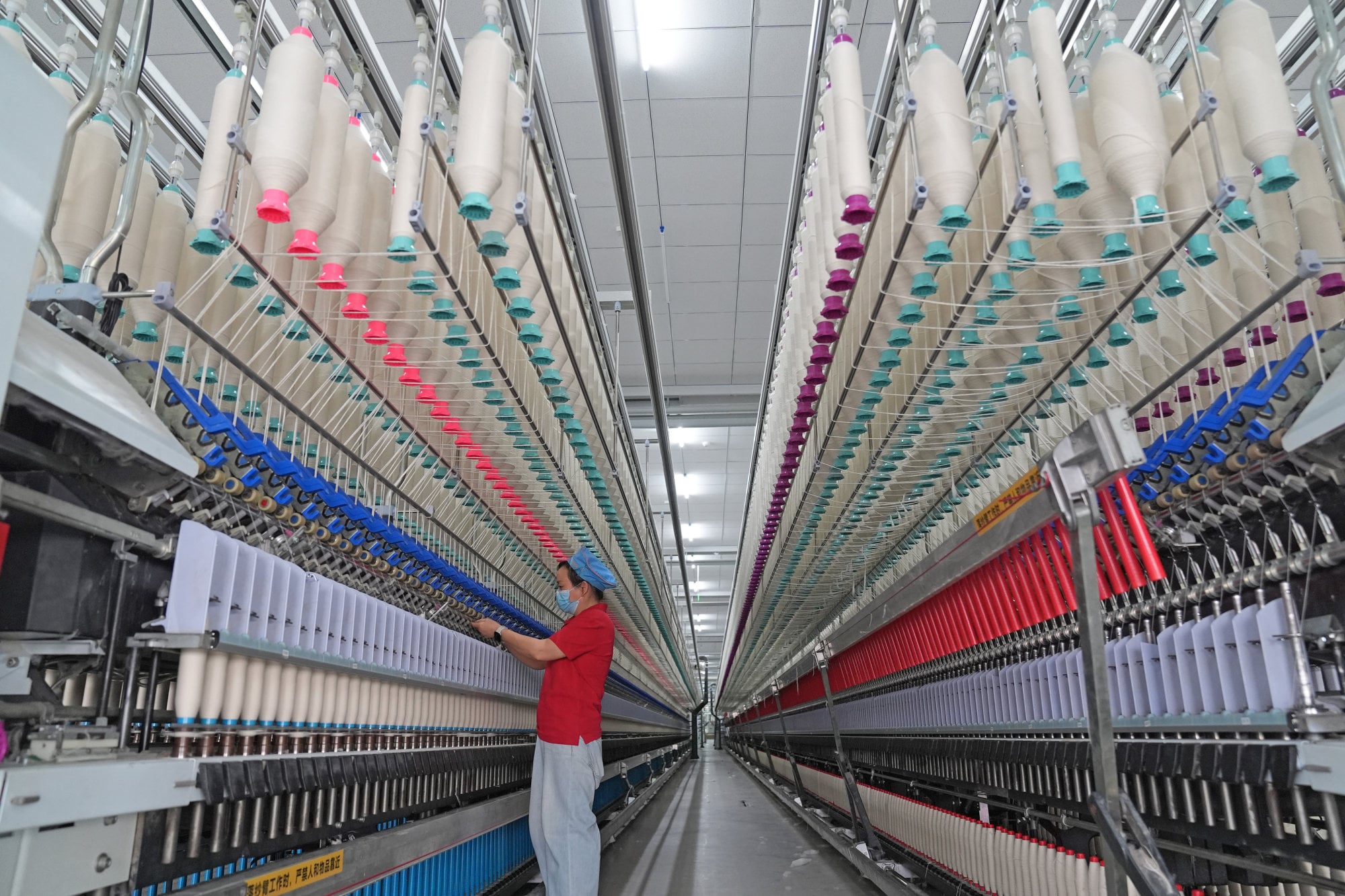
Yet the increase in AI-related capital expenditure across Chinese companies was expected to contribute less than 0.4 percentage points to gross domestic product growth, the report said.
Kuijs noted that without broader changes to China’s growth model, the benefits of AI-driven productivity gains could continue to accrue disproportionately to businesses and capital owners, rather than households – potentially further constraining household purchasing power, which is already weak.
That could leave China with another wave of overcapacity, this time in AI-related industries, if companies add capacity without a corresponding increase in domestic demand to absorb their output. Exports could again become an outlet for the surplus, he said.
Addressing the imbalance would require structural reforms, including improving access to health, education and social security and a clearer separation between the state and business, Kuijs said. Such changes, however, would take time to implement.
The reliance on exports to sustain growth was already evident in S&P Global Ratings’ latest economic projections, led by Kuijs and released on Monday. The agency raised its forecast for China’s 2026 economic growth to 4.5 per cent, from 4.3 per cent in its September projection, citing an AI-driven technology export boom.
But the credit rating agency projected domestic demand would remain weak through 2027. Strong exports were helping Beijing meet its growth target this year, allowing it to keep stimulus at a minimum, while S&P forecast some slowdown in economic growth next year.
Kuijs said Chinese policymakers generally focus on broader indicators of economic performance, underpinned by strong exports and growth in the technology sector, making them less inclined to introduce further stimulus as long as the overall economy continued to perform well.
The persistence of these economic imbalances had raised concerns that China was moving closer to what economists call “Japanification”, according to Kuijs, referring to a prolonged period of weak growth and low inflation, similar to what occurred in Japan after its asset-price bubble burst in the early 1990s.
Decades ago, Kuijs said, economists would have firmly rejected the idea that China could follow a similar path. Now, he added, the question might have more relevance.
He noted, however, that China’s economic circumstances differed from Japan’s in the 1990s, particularly as the world’s second-largest economy still had considerable room for development.
“I think there’s still a lot of catch-up potential in China compared with where Japan was in 1990, so it’s a bit easier for China to still grow. If you have a bit more underlying growth, many things are much easier than without it,” he said. -- SOUTH CHINA MORNING POST