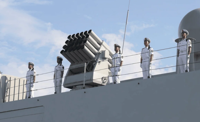
PHNOM PENH: In January, when the littoral combat ship USS Cincinnati moored pier side at Ream Naval Base, the visit carried more than ceremonial weight.
Following the lifting of Washington’s arms restrictions (a process whose full implementation and statutory vetting remain gradual), plans to revive the Angkor Sentinel exercises after a nearly decade-long pause, and the signing of a landmark Bilateral Defence Dialogue Terms of Reference between US Pacific Command and Cambodia’s Ministry of National Defence in Phnom Penh in November, Cambodia-US security relations have entered their most constructive phase in years.
Diplomatic breakthroughs are only a starting point, however. Over the past decade, suspended drills, restrictions and mutual suspicion narrowed channels between Phnom Penh and Washington, while external commentary frequently cast Cambodia’s foreign policy as a zero-sum contest between major powers.
Hosting US naval vessels at Ream - even as its upgraded infrastructure has drawn heightened external scrutiny - pushed back against that narrative by showing that it is a sovereign Cambodian port open to diverse partners.
Even so, symbolism alone cannot sustain a bilateral relationship across shifting political cycles or resolve deeper friction. Turning episodic goodwill into a durable defence partnership requires institutionalising routine cooperation and anchoring this next chapter in four priorities that respect Cambodia’s constitutional neutrality and the centrality of Asean.
First, Phnom Penh and Washington stand to gain from establishing routine, rules-based maritime access. Rather than treating every port call as a geopolitical event, both navies should normalise predictable vessel visits, routine deck and logistics exchanges, and clear standard operating procedures at Ream alongside regular US Navy and Coast Guard engagements.
Transparent, rules-based naval diplomacy demonstrates Cambodia’s constitutional non-alignment in daily practice, while giving the US steady presence without turning Ream into an arena for major-power signalling.
Second, both countries should focus revived exercises and training on targeted capacity-building, reciprocal strengths and next-generation cohorts. As Angkor Sentinel prepares to return in early 2027 alongside reopened Professional Military Education pipelines and regular working-level planning under the Bilateral Defence Dialogue, Phnom Penh and Washington can pair US expertise with the Royal Cambodian Armed Forces’ own operational experience in UN peacekeeping and demining. Key priorities include combat medicine, disaster engineering and peacekeeping logistics.
Shaping this agenda jointly allows Cambodia to define capacity-building priorities that serve its modernisation goals and regional standing, including using its peacekeeping and demining expertise to inform regional or humanitarian training scenarios.
Equally important is investing in people. Years without regular joint drills created a generational gap between young Cambodian and American officers.
Expanding junior-officer exchanges, service academy placements and young security-fellow programmes will cultivate the cohort-to-cohort trust needed to prevent misunderstandings from hardening into prolonged freezes.
Third, security cooperation can help confront cross-border security irritants, especially cyber-scam compounds, human trafficking and illicit financial networks. Criminal syndicates operating across borders sour bilateral goodwill.
Rather than allowing scam centres and trafficking networks to remain a flashpoint, both governments can pair US technical assistance, financial intelligence and Coast Guard mobile training teams with Cambodian naval, law enforcement and cyber-defence agencies.
Cracking down on illicit compounds while strengthening coastal surveillance and port safety protects both American victims and Cambodia’s legitimate economy, safeguarding trade routes, supply-chain predictability, tourism, commercial confidence and investor confidence as bilateral friction eases.
Fourth, bilateral defence engagement will have the greatest value when linked to regional stability, riverine resilience, and Asean centrality. Amid localised border frictions and shifting strategic pressures, defence ties with Washington matter most in Phnom Penh when paired with steady diplomatic backing for regional de-escalation, including upholding the Kuala Lumpur Peace Accords and frontier confidence-building measures.
Anchoring that work in Asean-led conflict prevention and sub-regional efforts like the Mekong-US Partnership on disaster resilience, water security and transnational crime ties bilateral defence to stability in Cambodia’s immediate neighbourhood and everyday security.
Managing expectations will be essential on both sides. Phnom Penh will maintain its comprehensive strategic partnership with Beijing - including regular bilateral exercises such as Golden Dragon, just as Washington will uphold its regional alliances.
At the same time, bureaucratic friction, differing strategic expectations, lingering US statutory vetting rules and targeted sanctions — aimed at specific actors and illicit networks rather than the country or military as a whole — will require steady navigation rather than quick fixes.
Yet neither reality prevents bilateral work when grounded in mutual respect rather than either-or conditions.
Durable security partnerships are built not only by warships docking at Ream, but by steady institutions and the rising generation of Cambodian and American practitioners who will manage this relationship over the next two decades.
If both capitals pair respect for sovereignty with candid problem-solving and practical cooperation, this new defence framework can outlast political cycles and strengthen stability across mainland South-East Asia. - The Phnom Penh Post/ANN
David Santoro is president and CEO of the Honolulu-based Pacific Forum. The views and opinions expressed are his own.