MANILA: Senators on Wednesday (Nov 25) called for greater transparency in the government’s proposed Pax Silica initiative, pointing to project details that have changed since it was first announced last April and following the recent filing of a bill at the House of Representatives.
These details include the nature of the hub that will rise in New Clark City, Tarlac, under the initiative, as well as the number of families who face displacement, including indigenous Aetas and farming communities.
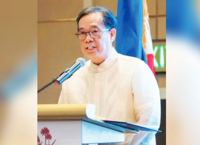
“We need transparency on this matter, as the details of what will actually be built in this area have changed from one hearing to another,” said Senator Bam Aquino on Wednesday as he sponsored the proposed 2027 budget of the Bases Conversion and Development Authority (BCDA) in plenary.
The BCDA, a government-owned and -controlled corporation tasked with developing former military reservations and other government properties, is overseeing the proposed industrial hub.
“It started with a data centre, which many people, including us, objected to. Then, suddenly, during the hearing, there was no longer any mention of a data centre. It became a manufacturing facility, but it was still unclear what kind of manufacturing would take place,” Aquino said.
President Marcos, speaking to reporters in Shenzhen, China, after attending the 33rd Asia-Pacific Economic Cooperation Economic Leaders’ Meeting last week, clarified that the proposed Pax Silica development will not include data centres.
BCDA president and CEO Joshua Bingcang has also repeatedly stated that the proposed project is not a data centre project, but is focused on semiconductor, electronics and artificial intelligence hardware manufacturing.
Adding to the confusion is House Bill No. 11758, filed on Oct. 26, 2026, or six months after the initiative was first unveiled, proposing an advanced industries zone in New Clark City.
Section 24(c), in particular, on “qualified enterprises” allows the “establishment and operation of data centers and computing infrastructure for artificial intelligence and high-performance computing.”
The bill is authored by Deputy Speaker and Antipolo Rep. Ronaldo Puno, Camarines Sur Representative Miguel Luis Villafuerte, Bataan Representative Albert Garcia, Negros Occidental Representative Alfredo Marañon III, Manila Representative Rolando Valeriano and Cavite Representative Ramon “Jolo” Revilla III.
In the same plenary deliberations, Sen. Imee Marcos, questioning Aquino, asked if there were allocations for the initiative in the 2027 budget and inquired about the possible displacement of families in the area.
Communities affected
Aquino confirmed that there is no budget earmarked for the initiative, while there is a P322-million (US$5.06 million) corporate fund reserved for families who will be affected by any BCDA project, Pax Silica included.
Aquino added that the number of families that will be affected “actually went down.”
He cited the BCDA’s official count at 198 families, down from nearly 400 cited during an earlier hearing. He said, however, that recent reports placed the number at around 1,000.
Aquino suggested that an independent agency, such as the Department of Social Welfare and Development, can help validate the number of potentially affected families.
“Nothing should be built, nothing should be done if the families and [indigenous peoples] in the area are not provided support, have been properly consulted and received their share from what the government is planning to do,” he said.
Water, electricity needs
Marcos also questioned the hub’s projected water and electricity requirements, citing earlier data that it will require three gigawatts (GW) of power or about 16 per cent of the entire Luzon grid.
“[The information keeps on changing but] from the BCDA itself, the three GW, they admit that this was stated at some point because this could possibly be the need. But they also mentioned that their plan is not to tap into the Luzon grid but to generate the energy on-site,” Aquino replied.
In response to Marcos’ inquiry about the hub’s water needs, especially with a super El Niño threatening the country’s water resources, Aquino raised that a joint venture between Korean Water Resources Corp. and Maynilad located outside the proposed hub can produce 65 million liters to 90 million litres per day.
“If ever the area needs water, it will be sourced from this new project,” he said.
Marcos sought assurance that the water requirements would not affect existing irrigation systems, downstream communities and the rights of other water users, particularly in an area considered a major rice-producing region.
Inconsistent statements
BCDA categorically committed to this, Aquino said.
Aquino reiterated that the Philippine government will not spend on the generation of these requirements, but acknowledged that statements from stakeholders have been inconsistent.
“The press releases keep changing, and so do the statements made by the leaders involved. We are calling for transparency and a clear plan before we proceed with funding this project,” Aquino said.
Senate President Win Gatchalian said the Senate has created a Committee of the Whole to look into the initiative as it may have potential effects on the economy, energy and environment.
“We are with you in a lot of these concerns. And hopefully, Mr. President, the Senate can be the venue for transparency and to really share with the people what is really planned here, right?” Aquino said. “Because until today, Mr. President, the information keeps changing.”
The BCDA’s budget amounting to P1.15 billion was likewise submitted to the plenary. - Philippine Daily Inquirer/ANN