




LIFE changes quietly over the years – children grow, parents age and family dynamics evolve.
A truly thoughtful home is one that evolves with them, adapting to changing needs while allowing everyone to live with greater comfort, independence and connection.
That idea lies at the heart of Tuai Barat Residence, a modern condominium designed for inclusive, multi-generational living by Suntrack Development Sdn Bhd.
Located in Setia Alam, Selangor, it was conceived around a simple but powerful idea – that homes should not leave anyone behind.
Rather than just a place to live, the development creates a living environment that accommodates people at different stages of life, regardless of age or ability.
This outstanding premise won Tuai Barat Residence the Residential High Rise category at the Malaysia Property Award 2026.
It has also proved compelling in the marketplace. The 330 condominium units, set within a
29-storey tower on 6.6 acres of freehold land, were fully sold out within 24 months, despite being launched during the Covid-19 pandemic.
Today, its management records consistent 99% monthly collections, with occupancy surpassing 87%. Property prices have also appreciated since the handover of vacant possession in 2024.
Its success offers an interesting lesson in residential development. Sometimes, the strongest proposition is not about having more, but understanding people better.
Designed around the way people live
Tuai Barat Residence was conceptualised by T&T Architect together with Malaysian design specialists and Universal Design consultant Dr Naziaty Yaacob.
It takes Universal Design – a philosophy of creating buildings and environments that can be used by all people to the greatest extent possible, without needing special adjustments – beyond the typical checklist of accessibility features.
Instead, the principle is incorporated right from the master planning stage, down to the little details inside individual homes.
The homes, mostly ranging from 1,109sq ft to 1,216sq ft, are designed with barrier-free access and practical movement in mind.
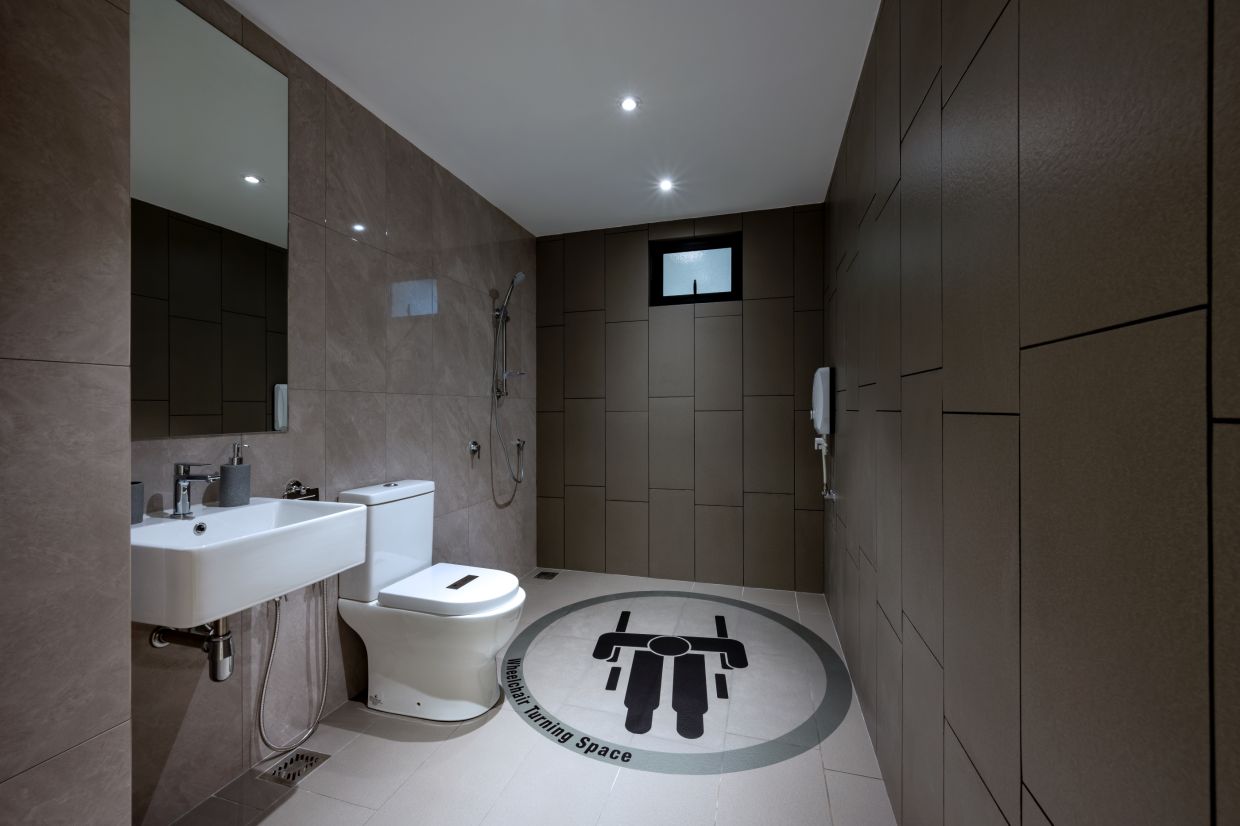
Windows and controls are positioned with accessibility in mind. Levers, buttons or switches are at wheelchair-friendly heights. Wheelchair turning space is not just a consideration in bathrooms, but also factored into bedrooms, kitchens and yards.
This gives residents greater freedom to move around their homes. Slip-resistant surfaces further reduce unnecessary hazards.
Though these features were designed with accessibility in mind, their benefits extend far
beyond one group of residents. A shorter walk to the lift is not only useful for older people, but also for families with young children and anyone carrying groceries.
A lower switch can also be convenient for children, while better circulation benefits anyone moving furniture or assisting a family member.
Here, the broader value of Universal Design becomes evident – what works better for people with specific needs can often make everyday life easier for everyone.
Universal Design that goes further
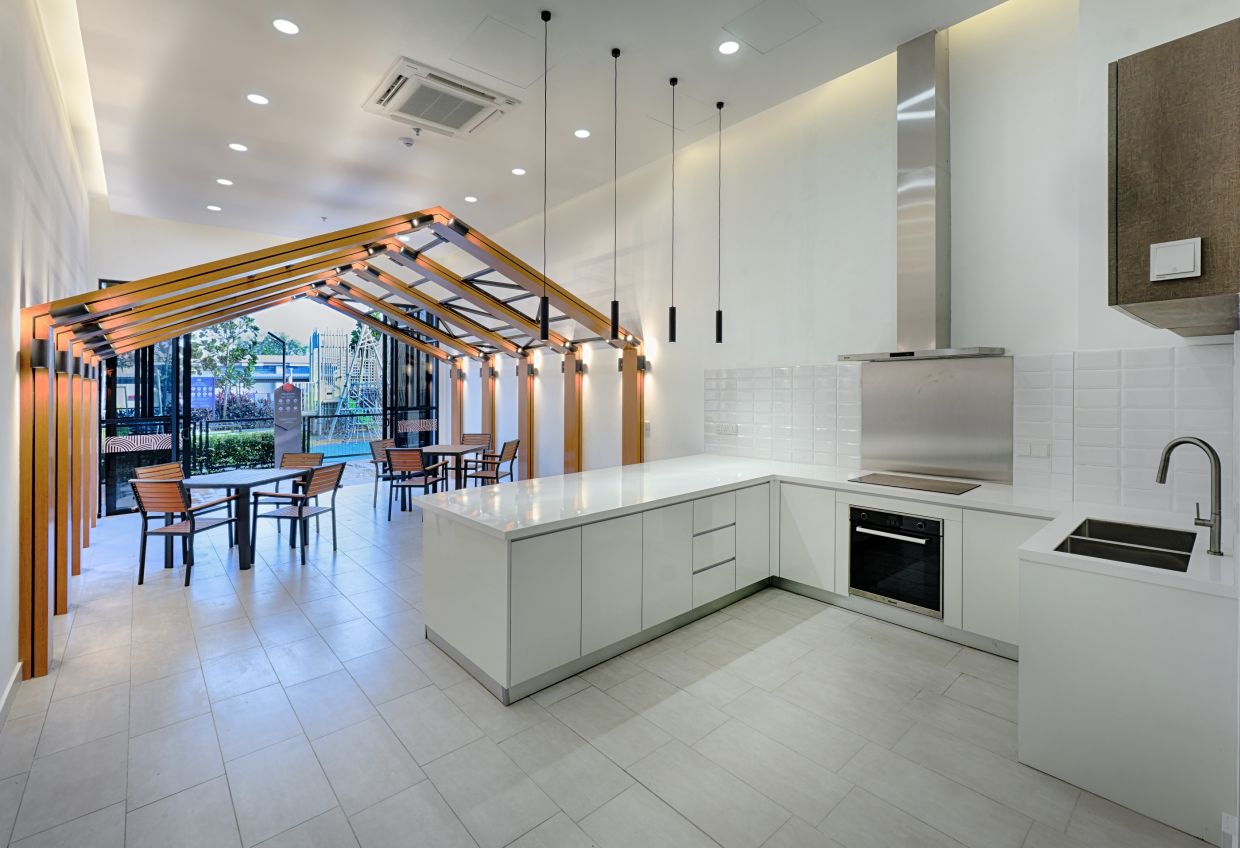
Tuai Barat Residence is believed to be among Malaysia’s first condominiums to meaningfully and holistically incorporate Universal Design as a core planning principle.
The aim was to promote independence for residents across different ages and abilities. And this extends to less obvious features.
The development incorporates dementia-sensitive design choices, with spaces thoughtfully planned to support easier navigation, familiarity and confidence as residents age.
Railings are built with gaps of less than 100mm to reduce the risk of child entrapment. In-unit sprinklers and a one-hour fire refuge provision form part of the fire safety considerations.
The tower has a north-south orientation for optimum natural light and ventilation, creating interiors that feel comfortable and connected to the outdoor environment.
Rather than being clinical or institutional, the development instead feels intuitive, safe and welcoming – one where residents can retain their independence for as long as possible.
MAGIC, safety and sustainability
Tuai Barat’s multi-generational proposition was a key part of its appeal, as families do not always live in neat, separate generations.
Parents may live with adult children. Grandparents may help raise grandchildren. Families may need to care for ageing parents while giving younger members room to grow.
Multi-generational living, in this context, is not about putting everyone together all the time, but making it easier for families to remain connected.
The result is a home that makes sense for different people at different points in life – be it a young couple raising children, an adult child living with elderly parents, or retirees looking for a home that remains suitable as they age.
Underpinning Tuai Barat is MAGIC – a Multi-Ability, Multi-Generational, Inclusive Community, a term coined by American gerontologist Dr Bill Thomas and used by Suntrack with permission.
It reflects the belief that communities should be designed around people and their changing needs, rather than expecting people to adapt to environments that were not designed with them in mind.
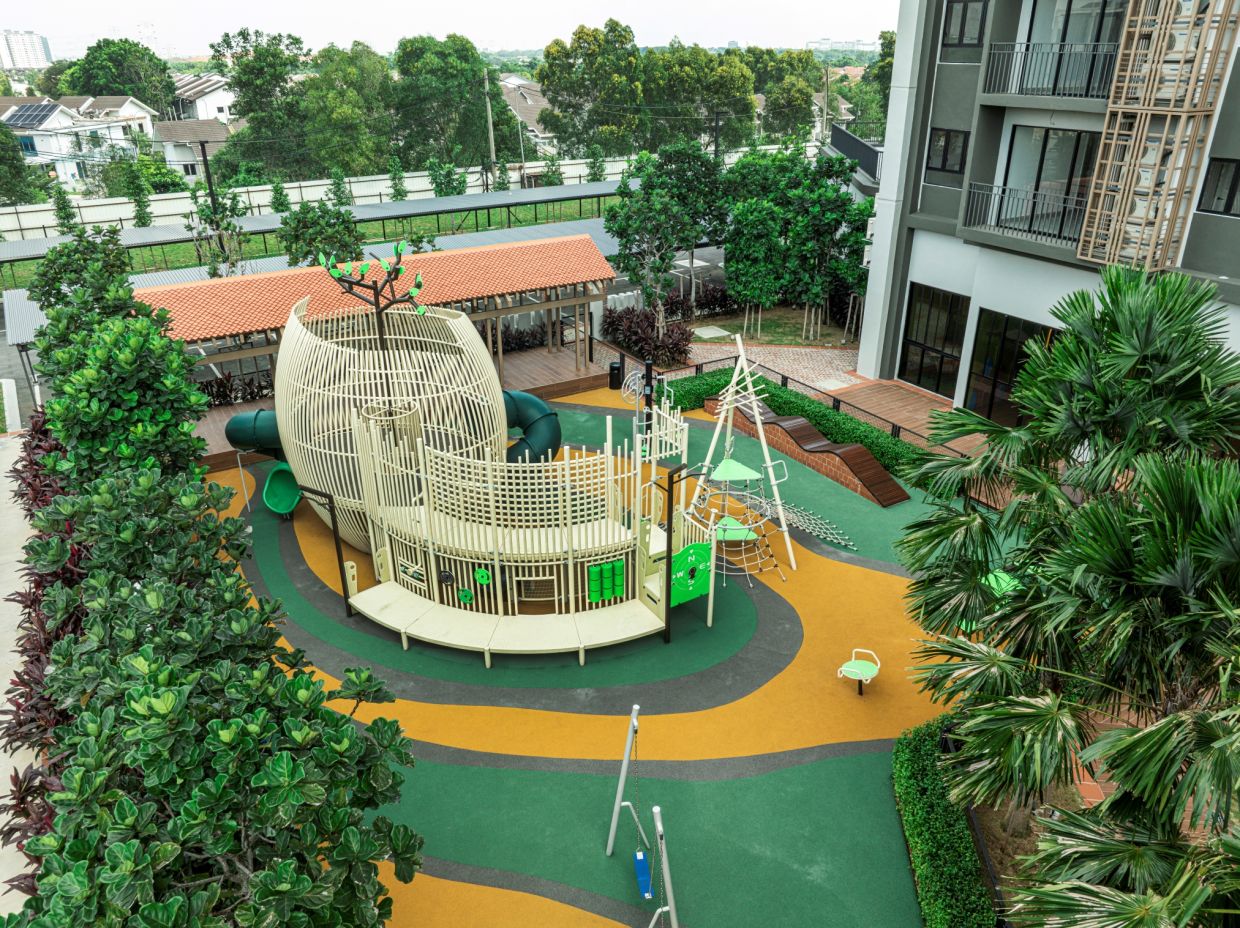
The facilities deck is planned with accessible pathways and seating areas, while communal
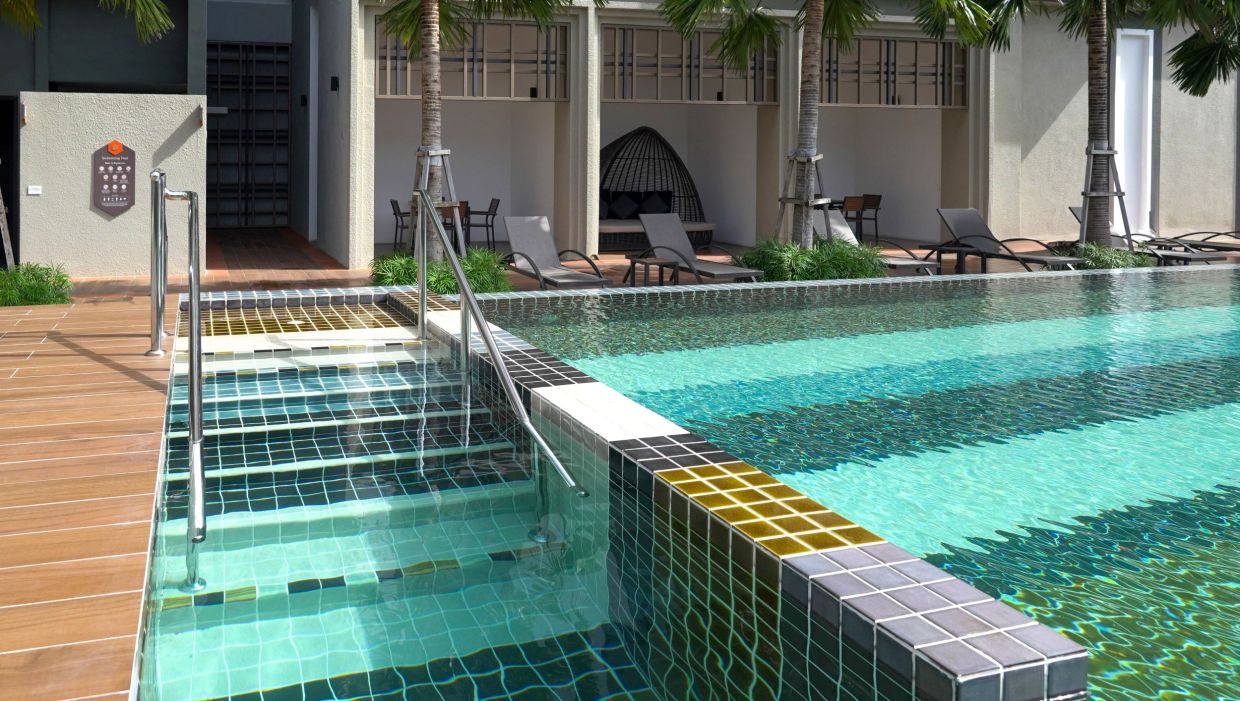
spaces encourage interaction across generations and abilities, such as a herb garden, communal kitchen and inclusive playground. Safety considerations are evident in places like the swimming pool, which is raised by 450mm and has handrails and steps for safer access into the Water.
There are also measures to support responsible everyday living, such as rainwater harvesting for landscape irrigation, waste segregation and recycling.
For Suntrack, the notion of sustainability extends beyond large-scale environmental measures to practical habits and infrastructure that complement residents’ daily routines.
Sense of identity
While functionality is central to Tuai Barat, its identity draws inspiration from the communal traditions of Sarawak’s longhouses, where generations live within a shared environment and community life is closely intertwined with everyday living.
Its ethos is also rooted in rice harvest celebrations of many Asian cultures, which represent abundance, gratitude, and people coming together.
The name “Tuai”, meaning harvest in Bahasa Melayu, reflects this aspiration – to create a place where everyone can grow, share experiences and celebrate the different seasons of life together.
In a crowded residential market, this gives the development a sense of purpose beyond square footage and specifications.
Its 84% QLASSIC score provides an objective indication of construction quality, complementing its people-centred design philosophy – one that allows buyers to imagine themselves at different points along their own life journeys.
Rather than selling a particular lifestyle, Tuai Barat instead offers the possibility of a home that can evolve with the people living in it.
More than a condominium
For Suntrack chief executive officer James K.K. Tan, the essence of Tuai Barat is not about having the most spectacular facilities or sophisticated building design.
“Its key proposition lies in understanding how families live, how people age, how accessibility can benefit everyone and how communities can help people remain connected.
“The Fiabci-Malaysia recognition celebrates not only the development’s design excellence, but also its more fundamental achievement in creating homes that anticipate the realities of life and make room for people as they are – and as they may become.
“Because inclusive design is not about making room for some. It’s about creating a community where no one is left behind.
“That is the aspiration behind Tuai Barat Residence – a place where people can live well, age well and grow together,” Tan shared.
But the journey does not end here. Suntrack continues to carry this mission forward across its developments, including its latest launch, Erat Residence @ Alam Impian.
For more about Suntrack and its people-centric approach to creating meaningful spaces, visit www.suntrack.com.my.



