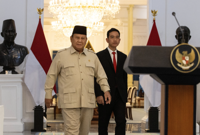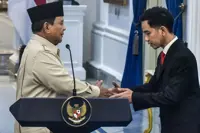
JAKARTA: The selection process for Gibran Rakabuming Raka's successor is expected to be largely uncontentious as political parties refrain from pushing for their own nominees, potentially paving the way for a candidate from President Prabowo Subianto’s inner circle.
Gibran’s resignation last Thursday (Nov 12) has set in motion the search for his successor, with the People Consultative Assembly (MPR) set to convene on Dec 2 to select and inaugurate a replacement from two candidates nominated by the President.
Prabowo is expected to meet with leaders of the ruling coalition parties to finalise his choices upon returning from the Asean summit in Manila and Apec meetings in Shenzhen later this week.
The President made a brief, lighthearted comment about his task of finding a new deputy on Saturday at the 114th anniversary event of Muhammadiyah, Indonesia’s second largest Muslim organisation.
He said: “We have no days off. Whenever there is time, we work […] After I return [from my trips], I will have to find a replacement for the vice president. I must seek guidance from the Almighty.”
Analysts suggested that the selection process is unlikely to cause tensions in the ruling coalition, as most member parties, including the National Mandate Party (PAN), Democratic Party and Golkar Party, preferred not to put forward any name for Prabowo to consider, leaving him to decide who to nominate.
Political science lecturer Arya Budi at the Gadjah Mada University said the apparent reluctance of coalition parties to offer names could signal that political elites had already reached an understanding behind closed doors about Prabowo’s preferred choice.
“Aside from demonstrating loyalty to the President, their public position may simply be that they are not proposing any names because Prabowo may already have someone in mind, possibly someone outside their own preferred choices,” Arya said.
He said Prabowo’s picks would likely be members of his inner circle in his own Gerindra Party because appointing his own loyalists could serve as a “middle ground” that may prevent any coalition partners from feeling sidelined and help preserve cohesion in the ruling alliance.
Support for Gerindra candidates has also emerged from within the coalition, with PAN chairman Zulkifli Hasan saying on Friday (Nov 13) that Gerindra members could take on the role and Golkar politician Idrus Marham warning that appointing a politician from another coalition party could only trigger friction among government allies.
According to Golkar executive Ahmad Doli Kurnia, among Gerindra politicians being considered are coordinating human development minister Sugiono, widely seen as Prabowo’s ideological son; MPR speaker Ahmad Muzani; and House of Representatives deputy speaker Sufmi Dasco Ahmad, widely regarded as Prabowo’s political fixer.
But coalition partners may have other reasons for staying out of the contest, including concerns about the political risks of assuming the vice-presidential role at a time when Prabowo's public approval has declined, said analyst Yoes Kenawas from pollster Lembaga Survei Indonesia (LSI).
“Taking on the vice presidency at this point may be more of a political liability than an advantage,” Yoes said, adding that the job could limit their political flexibility when deciding whether to remain aligned with Prabowo or form new alliances ahead of the 2029 presidential election.
“They have also come to realise that Prabowo is a highly commanding president,” Yoes said.
“While Prabowo needs a vice president who can provide policy advice and tell him when adjustments are necessary, he may prefer someone who simply carries out his instructions. This could make the position less appealing to coalition parties.”
Political parties, he said, may therefore prefer to allow Prabowo to decide on his preferred candidate in exchange for other political concessions, including ministerial positions in the next cabinet reshuffles, influence over strategic revisions to the General Elections Law and access to government projects.
With coalition partners largely staying out of the race, Prabowo is expected to have room to steer the selection process during the MPR’s December plenary toward his preferred vice president, said analyst Agung Baskoro of think tank Trias Politika Strategis.
“The coalition is already consolidated behind the President, so the selection process is likely to proceed smoothly. The two nominations may be little more than a formality: one candidate could be there for appearances, while the other will already have the votes,” Agung said. - The Jakarta Post/ANN