




US Secretary of State Marco Rubio discussed the possibility of a trilateral summit with Beijing and Moscow next week during a phone call with Chinese Foreign Minister Wang Yi on Wednesday.
“They agreed on the importance of meaningful leader-level conversations to advance goals such as peace and denuclearisation, including at any potential trilateral leaders’ meeting with Russia,” a US State Department readout said.
The South China Morning Post reported this week that the trilateral meeting could yield a commitment to control AI in nuclear arsenals as part of a broader agenda on global governance.
The call comes just days before President Donald Trump travels to Shenzhen to attend the Asia-Pacific Economic Cooperation (Apec) summit and hold bilateral discussions with Chinese leader Xi Jinping – their third meeting of the year.
Russian President Vladimir Putin is also set to attend the meetings.
Trump has insisted that nuclear issues should be the focus of any trilateral meeting.
Last month, he said “we would have it to talk about nuclear weapons and denuclearisation”, adding that “we would schedule a meeting based on the denuclearisation, and that’s a very positive thing for the world”.
The US has pushed for nuclear arms control discussions involving all three countries, a proposal China has rejected.
Sources said the focus appeared to be shifting to areas of potential consensus, particularly the role of artificial intelligence in nuclear command and control.
However, China’s readout of the call made no mention of the trilateral meeting and addressed only bilateral ties.
“The two heads of state agreed to enrich the connotation of a new vision of China-US relations, providing clearer strategic guidance for exploring a right approach for the two countries to get along with each other,” Chinese state news agency Xinhua quoted Wang as saying.
“The stable momentum of China-US relations has not come easily and is the two major countries’ rational choice based on their respective and common interests.”
The statement described the call as “positive” and “constructive”, adding that China was willing to “strengthen communication” and “properly handle differences and sensitive issues”.
“Wang Yi stated that China’s policy towards the United States remains stable and consistent,” Mao Ning, spokeswoman for China’s Ministry of Foreign Affairs, wrote on social media.
Bessent, Greer hold video call with He
The call comes days after US Treasury Secretary Scott Bessent and Trade Representative Jamieson Greer held a video call with Chinese Vice-Premier He Lifeng to work out economic and AI-related deliverables.
A day before Friday’s call, China’s commerce ministry tied any further agricultural purchases from the US to implementing a separate agreement to cut reciprocal tariffs on US$30 billion worth of products from each side.
“China has always maintained an open attitude towards expanding agricultural imports from the United States, provided that the agreed-upon reciprocal tariff reduction arrangement – covering US$30 billion on each side – is implemented,” Huang Ling, a spokeswoman for the Ministry of Commerce, said on Thursday.
Last month, Greer said no timeline had been set for implementing the limited trade agreement, describing the tariff reductions as “a policy outcome” that would require a legal determination.
“We have to stick to our legal processes,” he said.
Bessent and He are expected to meet next week ahead of the Trump-Xi summit on the sidelines of the Apec meeting in Shenzhen on November 18-19, the leaders’ third face-to-face meeting this year.
Bessent and He are set to discuss economic deliverables and also hold talks on AI cooperation.
On Tuesday, the Treasury secretary said both Washington and Beijing had begun the “important work by establishing a new dialogue” on AI to “guard against shared risks and prevent a misunderstanding between our two systems”.
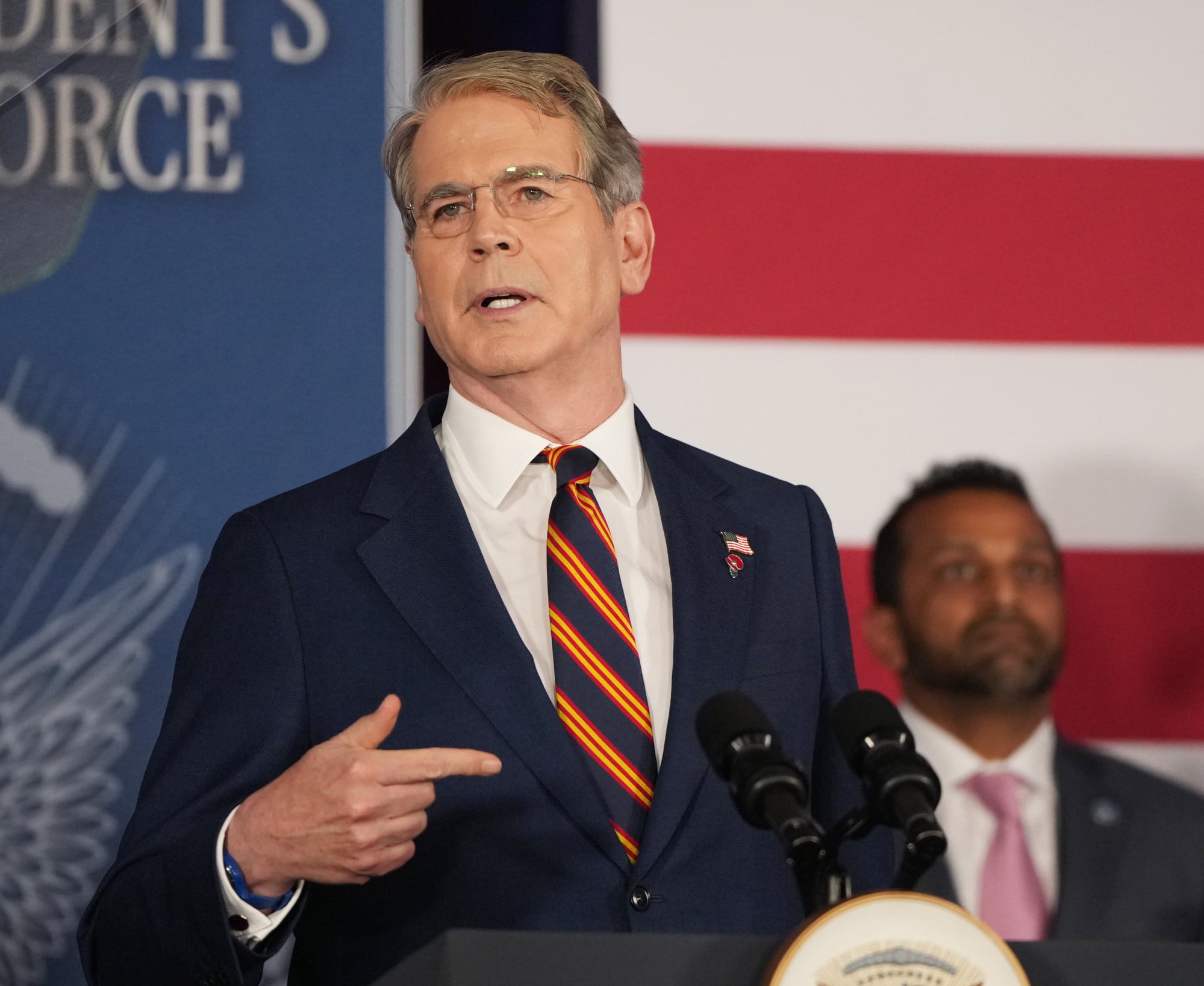
“We also expect to exchange best practices for evaluating and testing advanced models before their release, and for keeping human judgment firmly in command of this technology,” he said in a speech at the National Committee on US-China Relations 60th anniversary gala dinner in New York.
Bessent added that both sides “are establishing a direct channel to ensure that either nation can promptly alert the other to serious incidents” related to AI models.
During the September meeting, the two countries agreed to create a dialogue mechanism on AI “risks and benefits” and a “bilateral communication channel” for AI-related incidents.
The SCMP reported last month that technical teams from the two countries were holding regular talks to refine the details of a framework announced in September, aiming to make AI cooperation a potential deliverable of the coming talks.
Trump and Xi are expected to meet for a fourth time this year on the sidelines of the Group of 20 (G20) summit in Miami in December. -- SOUTH CHINA MORNING POST


