



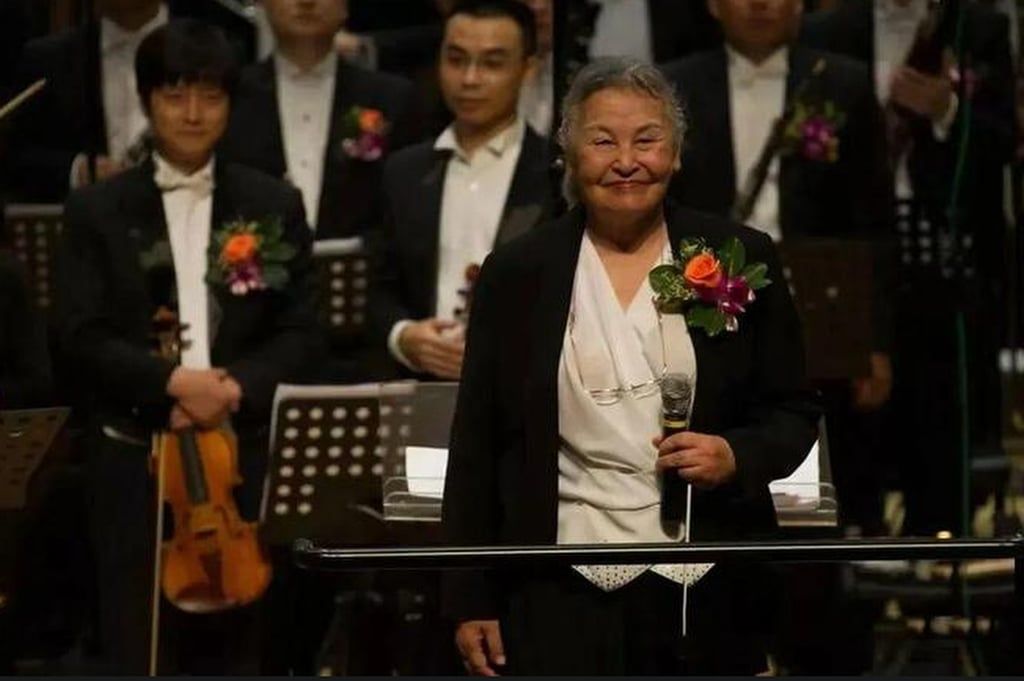
BEIJING (SCMP): China’s first female conductor, Zheng Xiaoying, is 97 years old, but she continues to give outstanding performances to audiences.
In August, the nonagenarian conducted the Chinese-language version of the opera Carmen in Xiamen, in southeastern China’s Fujian province, where she lives. Tickets for the performance were like gold dust, and audiences marvelled, as always, at her elegant, expressive conducting.
Zheng has led a remarkable life. Born in Shanghai in 1929, she began studying piano at age six. During her university years, she switched to biology and medicine at the prestigious Peking Union Medical College Hospital. But at 19, she decided to flee to the liberated zone in search of “a new world she had never seen.”
She tried three times to escape her mother’s pursuit, eventually arriving in Wuhan, central China, where she enrolled in an arts training class.
There, her talent for melody and rhythm was discovered. Her classmates recommended that she “tap the beat” as they sang.
Zheng continued conducting when they formed a concert band and performed yangge opera, even before she knew that conducting was a profession.
In 1955, an expert from the former Soviet Union, Lenny Dumashev, held China’s first conducting seminar. Zheng was selected and became the class’s only female student.
Asked how she felt performing in front of the expert during the selection process, Zheng said she never suffered from stage fright.
“When more than a hundred people are waiting for you to conduct, if you hesitate, the performance will fall apart.”
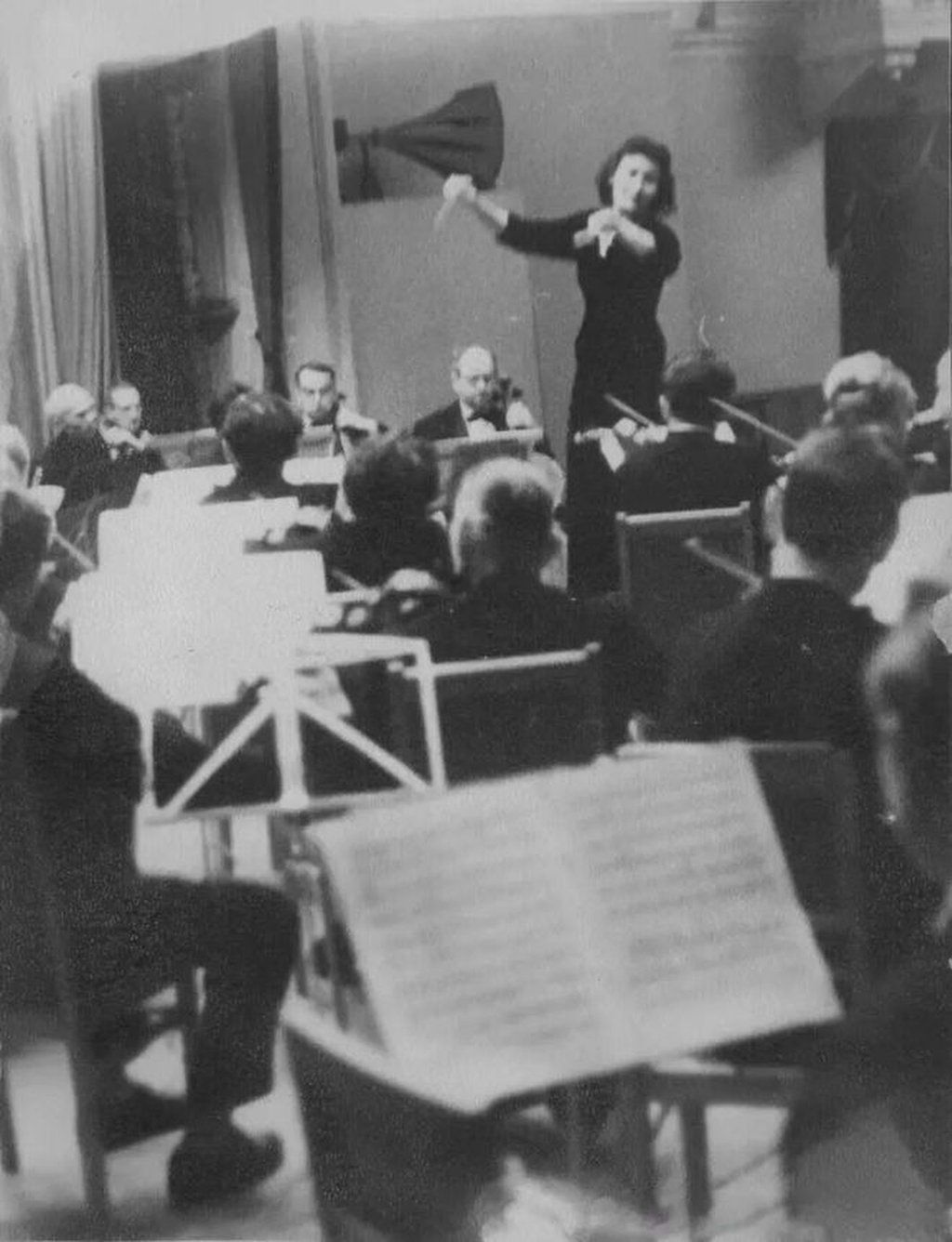
After the Central Conservatory of Music established its Conducting Department in 1956, Zheng became one of its first teachers. In 1960, she was sent to study in Russia.
In 1962, Zheng became the first Chinese conductor to perform on an international stage, conducting Giacomo Puccini’s opera Tosca at the Soviet State Moscow Musical Theatre.
During China’s Cultural Revolution, a decade of political and social turmoil from 1966 to 1976, Zheng was sent to the Chinese Peking Opera Troupe as punishment.
She said she thought it was the end of her conducting career, but later decided to turn her plight into an opportunity by learning to conduct the gongs and drums in Peking Opera.
In 1978, Zheng’s talent was recognised once again. At the age of 49, she became chief conductor of the China National Opera House.
Over the years, Zheng devoted herself to creating Chinese-language versions of classic Western operas, including Tosca, Carmen and La Traviata.
For Zheng, creating Chinese versions of these operas is about much more than translation. For Tosca, she consulted nearly 10 Chinese translations, as well as Italian and Chinese language experts, to ensure that every detail was true to the plot, characters, and music.
She did this to ensure that the wording would not create barriers for Chinese audiences unfamiliar with Western opera, allowing them to appreciate the beauty of the performance straight away.
Zheng is also recognised as a social activist. Since 1979, she has made a habit of giving audiences a 20-minute introduction to opera appreciation. She hopes this will help more people enter the world of opera.
As a career woman, Zheng said she regretted not being able to spend more time with her daughter. Her daughter has said that she was greatly influenced by Zheng’s belief that “women should gain independence through their careers.”
Zheng was diagnosed with cancer twice, in 1997 and 2014, but continued performing while receiving treatment on both occasions.
Even at her age, Zheng still works 10 hours a day, rehearsing, translating, revising scores and teaching students.
Zheng’s passion for music continues to move her students and audiences alike. But reflecting on her 97 years, she said she never thought of herself as “incredible.”
She said she never set out to pursue a conducting career, but instead “let everything happen naturally.” And she never conducted for her own fame.
“The important thing is that I never gave up halfway. I did my best in every performance, because the audience only gets to see me once. I need to be responsible to them.” -- SOUTH CHINA MORNING POST
