




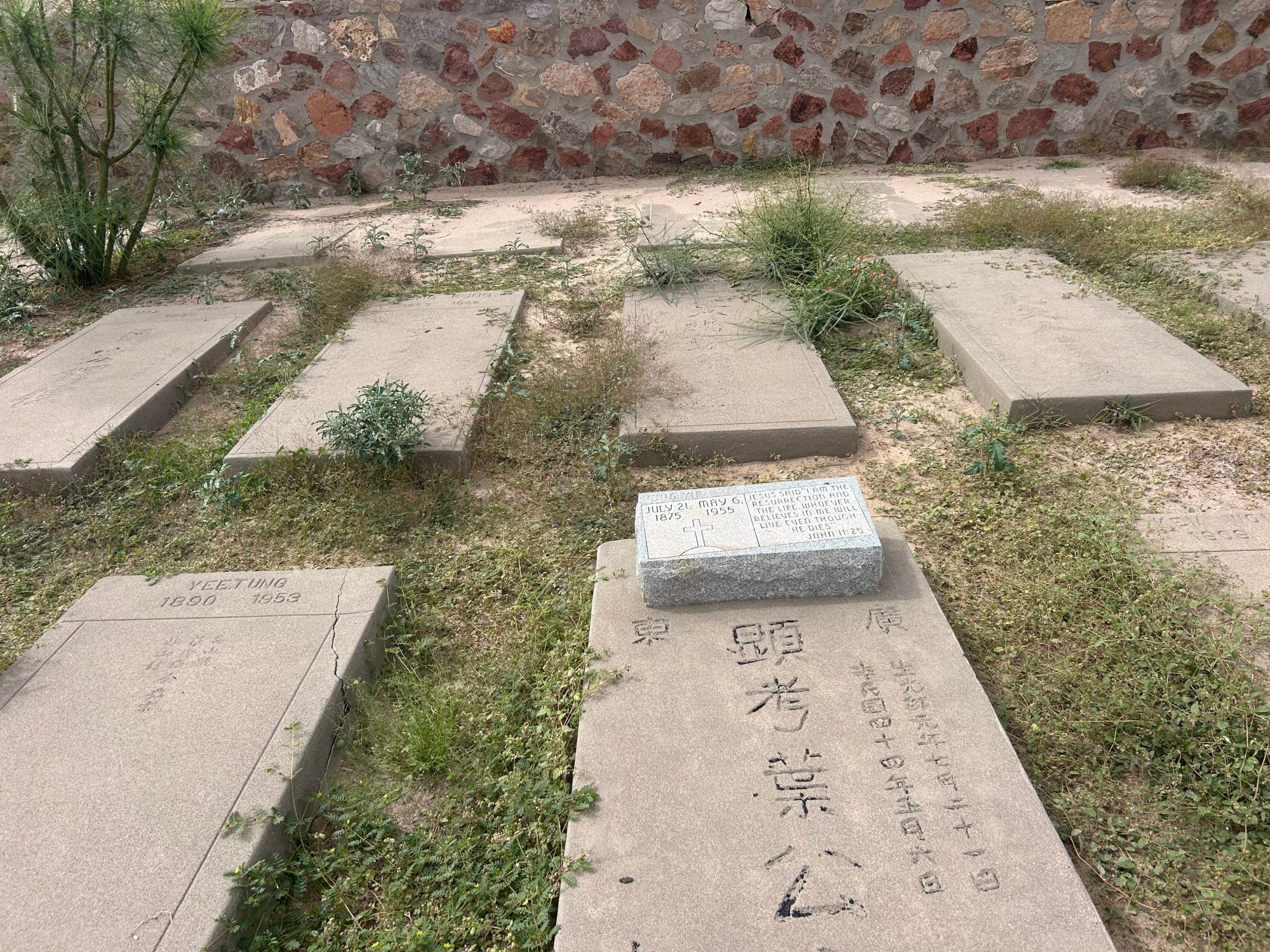
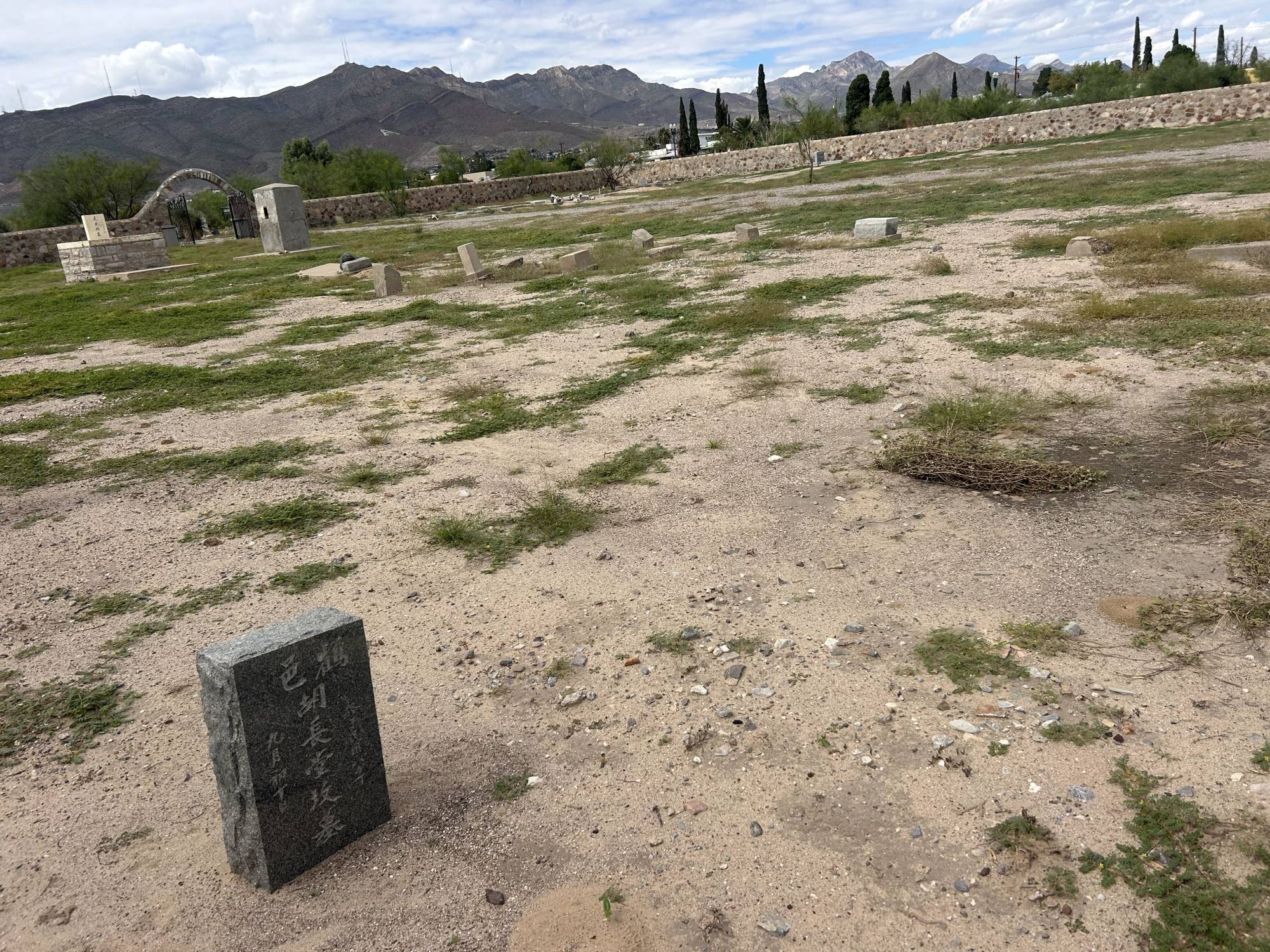
At Texas’ dusty Concordia Cemetery, grass grows over graves in a 140-year-old Chinese burial ground. Some headstones have been stolen or vandalised; others have been marked by flat concrete slabs etched with names in Chinese and English. The slabs were harder to steal than traditional headstones. Still other graves have no visible markers.
“I don’t think many people go out there,” says Linda Chew, a retired judge in El Paso, the state’s sixth-largest city.
Yet interest in the history of the Chinese community in the Lone Star State is growing. “There’s a real resurrection in understanding the influence of the Chinese in Texas,” Chew adds.
This is the story of one family.
But it represents a much larger Chinese immigrant community in Texas that worked on the railroad, lived alongside cowboys, and established laundries, grocery stores and restaurants, contributing to the rich cultural tapestry of the US-Mexico borderlands.
Researchers and community members are now working to document and reawaken the history of Chinese in Texas that, like the cemetery, has faded and grown scruffy over time.
They’re also drawing lessons from that extended history of prejudice and exclusion to counter efforts by today’s lawmakers to restrict property, education and voting rights.
“We are using history and what happened a hundred years ago to reflect what’s going on right now,” said artist June Xu, who seeks to draw the parallels in her work.
“People take civil rights for granted because they don’t know how hard that fight was.”
Building a life on the US-Mexico border despite sweeping restrictions on Chinese citizenship
In the early 20th century, Linda’s grandparents built their lives and businesses on the US-Mexico border during the era of sweeping restrictions on Chinese immigration and citizenship.
Her grandmother, Herlinda, became known as the “Queen of the Chinese”, as showcased in a 1919 El Paso Times article.
“The Chinese woman is a queen so far as the Chinese population of Juarez is concerned,” the article reads. The same piece also claimed she once taught at a Presbyterian mission in Hong Kong.
“She was a powerhouse,” Linda says, before pointing to a photograph of her grandmother, Herlinda Wong Chew, whose likeness appears on a bright pink mural in Austin, the state capital, celebrating a woman whose family helped shape Texas history.
The painting was commissioned as part of a project to honour influential Asian-Americans, Native Hawaiians and Pacific Islanders.
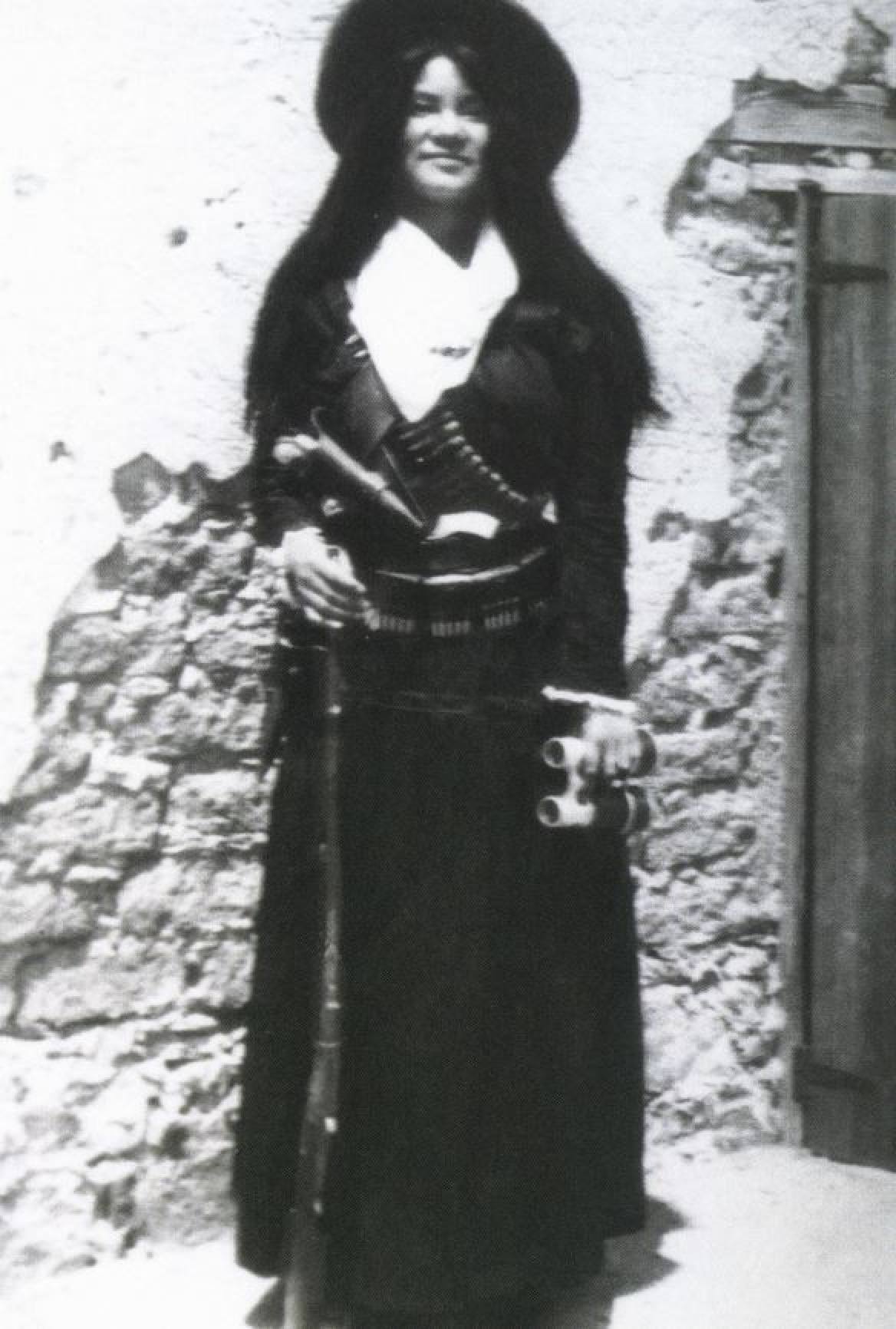
Herlinda was born around 1894 in Guadalajara, Mexico, according to her family, to a Mexican mother and a Chinese father. She married Antonio Yee Chew, a Chinese immigrant who had moved to Mexico for work.
Herlinda was self-taught and “really brilliant”, her granddaughter Linda says. Herlinda’s Chinese name was Wong Sun Far and Antonio’s was Yee Wing Chew.
During the turbulent Mexican Revolution, Herlinda and Antonio temporarily escaped to El Paso. Linda says Herlinda built a rapport with border agents, helping bring 250 people to the US from the Chinese community across the border to temporary safety during the Third Battle of Ciudad Juarez in 1919.
When Herlinda and Antonio returned to Mexico, they continued to operate their grocery business in Juarez before deciding to move to the US, perhaps for its economic and educational opportunities, Linda says.
One big problem: the Chinese Exclusion Act of 1882 – the first major US law to restrict immigration based on race and nationality – barred Chinese labourers from entering the US and prevented Chinese immigrants from becoming naturalised citizens.
Undeterred, however, Herlinda researched American immigration law and realised that Chinese merchants could legally move to the US if they met certain strict requirements and had documentation, a provision also open to diplomats, teachers, students and tourists.
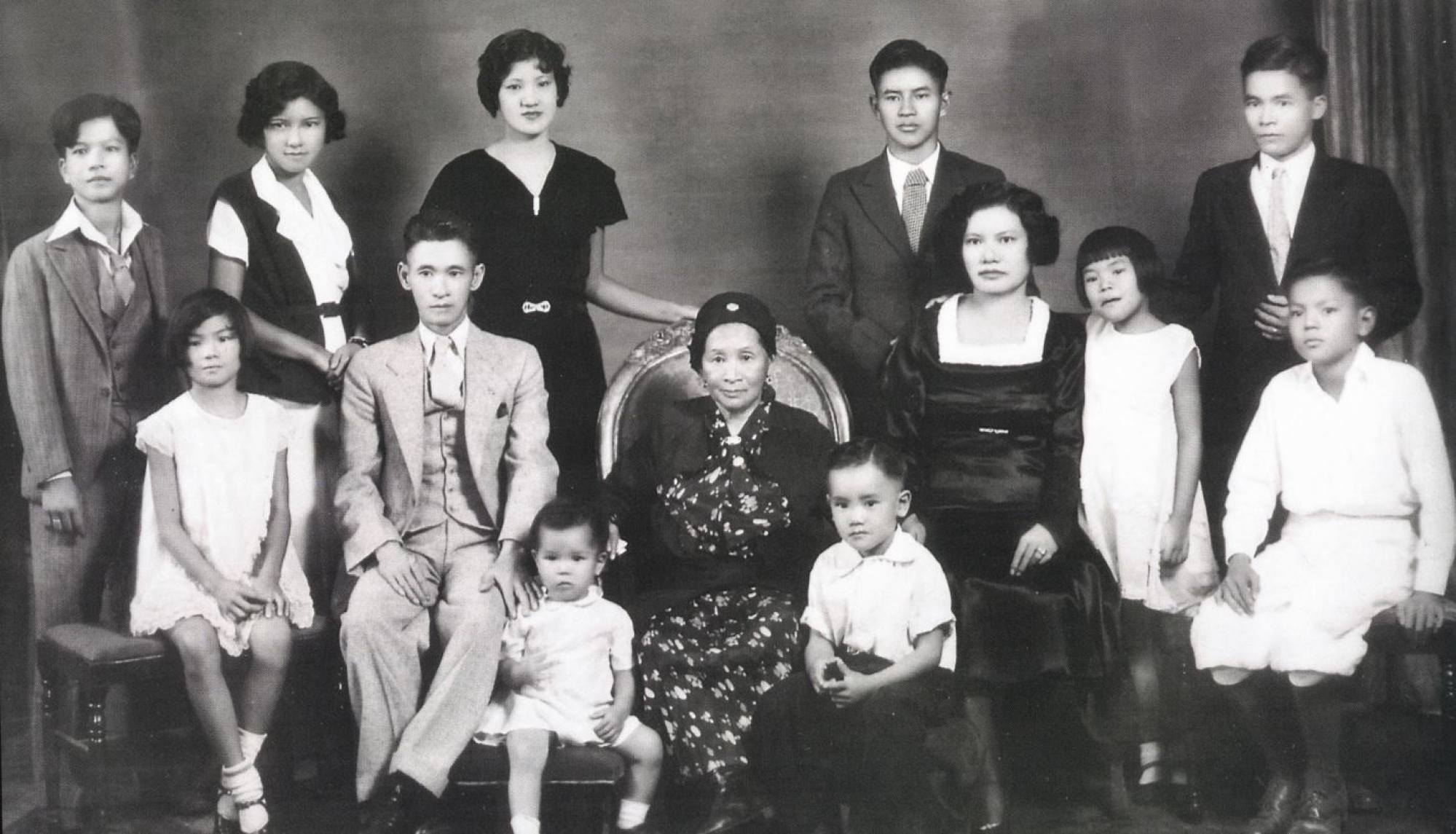
In 1922, Herlinda and Antonio settled in El Paso using this exemption, where they established more grocery stores.
Four of their children were born in Mexico and four in the US. In classic immigrant fashion, their eight children, including Linda’s father, Wellington Yee Chew, worked in their shops.
But Herlinda was careful to keep their other tradition alive.
“She made sure that they really understood their Mexican culture and their Chinese culture,” Linda adds.
Drawing on what she had learned, Herlinda became a de facto immigration specialist in El Paso, working directly with the railways and steamship lines to help Chinese people travel to the US or back to China.
Linda believes Herlinda would have become an immigration lawyer, if that had been possible at the time.
In 1943, the Chinese Exclusion Act was repealed when China and the US allied during World War II. While this restored eligibility for naturalisation, strict Chinese immigration quotas remained. But Herlinda and Antonio both died in 1939 and never became US citizens.
Generations of Chews help keep proud legal legacy alive
Generations of Chews have picked up Herlinda’s legal legacy. Wellington became an immigration lawyer and criminal defence lawyer in El Paso and was reportedly the first Chinese-American lawyer licensed by the State Bar of Texas.
“He was so proud of my grandmother and his parents, and the established community they created here in El Paso,” Linda says.
In addition, Linda became a judge, as did her sister Patricia, who serves on El Paso’s County Probate Court No 1. And her brother David became chief justice of the Texas Eighth Court of Appeals.
Many of the details of Herlinda and Antonio’s story are difficult to trace, a pattern seen with Chinese history more broadly, particularly among other families that left few written records, something historian Anna Fahy is working to remedy.
Concordia, a one-time ranch framed by the Franklin Mountains, gradually became a burial ground in the late 1800s. It now houses some 60,000 graves in a patchwork layout across 52 acres (21 hectares).
Its plots were sold over the years to church groups, the military and different organisations for burial grounds. The Chinese were one of these groups.
Among those buried there are the notable outlaw John Wesley Hardin and the lawman who gunned him down, as well as two Chinese men who built the rock wall around Concordia’s Chinese section and were later buried within its confines.
Entering the gates of the Chinese section, Fahy points out Chinese inscriptions on one side and English on the other. The Chinese community has always owned its plots outright within Concordia, she says. “The only Chinese cemetery in the state of Texas. Period,” Fahy adds.
Into the mid-1920s, El Paso had the largest Chinese community in Texas. Janine Young of the El Paso County Historical Society attributes this to the arrival of the Southern Pacific Railroad in 1881, just before the Exclusion Act.
While the Chew family built a generational legacy, far less is known about the Chinese railroad workers, many illiterate, who left faint footprints.
“They were such anonymous workers,” Young adds. “Most of them died without families here and if they had families, they would have stayed back in China.”
Most of the laundries in El Paso were initially owned and operated by Chinese, who developed their own business practices, Young says.
A newspaper from the time details how Chinese laundry owners kept notes to help them remember their non-Chinese customers.
“They have all these different descriptions about people,” says Fahy, citing an example as: “short woman who sneezes a lot”.
Almost all early Chinese immigrants in the area were men, Young adds, which was not strictly because of the types of work available. The Page Act of 1875, which treated Chinese women as potential sex workers, made it harder for them to enter the US, tearing apart families.
Nowadays, Chinese communities remain an established part of Texas, with sizeable populations in San Antonio, Houston, Austin and Dallas.
According to US Census data, Texas has the third-largest ethnically Chinese population of any state, at around 275,000, behind California and New York.
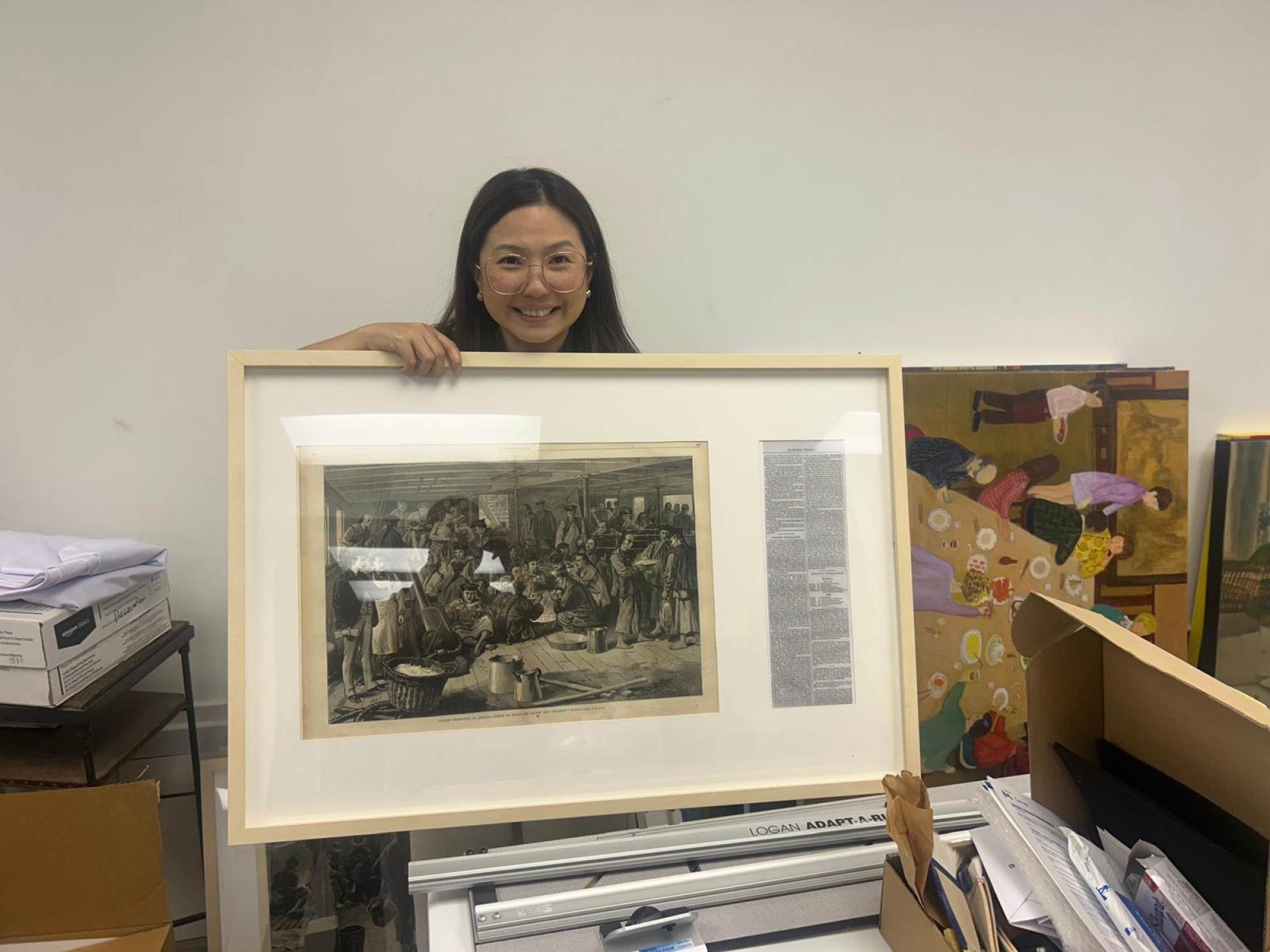
In 2025, Xu, the artist, launched an exhibit in Austin as part of the Asian-American Art & Culture Initiative that featured Herlinda.
Titled “Root Unveiled: Chinese-American History, 1783-1946” and curated by Xuhua Zhan, it aims to preserve “fading stories”. The Houston-based artist plans to bring it to her hometown early next year.
For Xu, the history of Chinese immigrants in the state has renewed relevance as lawmakers introduce new restrictions affecting foreign nationals, with parallels between historical discrimination and policies such as Texas Senate Bill 17, passed in 2025.
That law restricts certain individuals and entities linked to China, Russia, Iran and North Korea from acquiring interests in Texas real estate.
While supporters frame it as a national security measure, opponents see it aimed at the Chinese, in particular, given the minuscule investment by nationals from the other countries.
US citizens and lawful permanent residents are exempt. The law also provides a limited exception for a residential property used as a homestead by lawful US residents.
Documentary to explore historical legal issues over the years
Xu is producing a documentary called “Under Her Name” that explores links between historical restrictions such as the Chinese Exclusion Act and contemporary legislation governing foreign land ownership.
Xu hopes to bridge the gap between the long history of Chinese-Americans in the US and public understanding of their place in the country.
“People who arrived in the last 30 years often don’t know how long Chinese-Americans have been rooted here,” she says.
As Linda recounts her family history, she reflects on the debt owed to her ancestors and so many others in the community.
“This country was built on their backs,” she says. “On the backs of Chinese and on the backs of Mexicans.”


