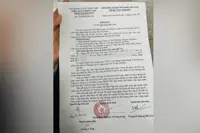
HANOI: A planned trip to Guangzhou came to an abrupt halt for 56-year-old Vietnamese businessman Nguyen Minh Hieu, when he discovered that he was barred from leaving the country over an old tax debt.
“I happened to look at my Vietnam Tax app by chance and saw an exit suspension order on me for some money I owed in the past,” Hieu told The Straits Times. “I froze for a minute.”
His case highlights the unintended consequences of a nationwide campaign to clean up Vietnam’s tax records, close hundreds of thousands of inactive business registrations and modernise tax administration.
While the authorities say the exercise will streamline the system, some former business owners have been caught out by long-forgotten tax obligations, while others say their identities were misused to register companies they knew nothing about.
A long-forgotten business, an unexpected ban
Hieu’s debt dated back to a failed business whose tax registration had apparently never been formally closed.
“My manufacturing business went bankrupt in 2010 and I filed for bankruptcy. I didn’t have any money to pay taxes, which I believe were very little.
“But after 16 years, they ballooned to nearly 200 million dong (S$9,900), plus another 200 million dong in penalties,” the Hanoi-based businessman lamented, adding that his mistake was “not closing the company down completely then”.
“In Vietnam, opening a business is relatively easy, but closing it is hard and takes a long time, so I left it at that.”
The travel ban, officially called an “exit suspension”, has caused serious problems for Hieu, whose current apparel business requires frequent overseas travel. He is also concerned about the implications of remaining on the tax authorities’ records as a debtor.
Hieu is not alone. Many people did not realise that ceasing business operations does not automatically terminate a business’ legal status or tax obligations. Some say they were not formally instructed to cancel their tax registrations when they stopped operating.
Some former business owners who owe only small sums in taxes and licence fees have also been barred from travelling abroad. Some reportedly discovered the restrictions only at the airport.
“On Sept 12, while attempting to return to Australia, my brother was prevented from leaving the country due to an unsettled tax code from the past,” wrote Do My Dung, a Hanoi resident, in a viral Facebook post that she later deleted, but which was widely shared on social media.
Her brother, a 62-year-old naturalised Australian citizen, had registered the tax code more than 20 years ago for a rental accommodation business intended to generate extra income for his children’s education.
“When the business struggled, he stopped (running) it. But back then, over a decade ago, closing a household business simply meant returning the business registration certificate to the local People’s Committee and paying off all taxes incurred during its operation,” she wrote, adding that “no tax official had instructed him to formally close the tax code itself”.
It took her brother and the whole family more than two weeks to settle the taxes and penalties, totalling 5.3 million dong, and close the long-inactive business. Only then was he allowed to leave the country.
Cleaning up a backlog of ‘ghost’ businesses
According to Vietnam’s Tax Department, more than 600,000 businesses have ceased operations without properly closing down and cancelling their tax codes – officially known as tax identification numbers (TINs) – or have become completely uncontactable at their registered addresses.
Since May 2026, the government has carried out a nationwide campaign to clean up TINs, get rid of “ghost” businesses and recover old taxes, as well as accelerate business closure procedures.
At an Oct 6 meeting at the Ministry of Finance, Tax Department vice-chief Le Long said the authorities had so far cancelled the TINs of nearly a third of the affected businesses.
The campaign is targeted for completion by end-2026, with the authorities seeking to resolve most outstanding cases and streamline and fully digitalise the system.
There are no official figures on how much in back taxes has been recovered so far.
The campaign’s primary aim is not to collect tax arrears, but to clear administrative backlogs and strengthen the digital transformation of tax administration, said Nguyen Van Phuc, managing partner of Ho Chi Minh City-based law firm HM&P, which specialises in business law.
“This initiative aims at both data refinement and the resolution of longstanding legal issues that create difficulties for both businesses and tax authorities,” he told ST.
“The law emphasises the application of technology and the integration and utilisation of data,” Phuc said. “Accurate, up-to-date data also enables tax authorities to coordinate more effectively with business registration agencies and other relevant bodies.”
When someone else uses your identity
The authorities say the clean-up campaign has uncovered numerous cases of suspected tax fraud among the businesses and registrations being investigated.
Trinh Thi Huong, a senior official in charge of private sector development at the Ministry of Finance, told the Oct 6 meeting that her department “had received reports of approximately 4,000 cases involving the suspected use of impersonated personal information to register businesses”.
Luong Thi Anh Nga, 35, a financial adviser, was stopped at the airport on Nov 10, 2025, before boarding a flight to Shanghai for a company trip. Immigration officers referred her to the Tax Department, which confirmed that her identity had been used in 2012 to register a construction business that was no longer operating at its registered address.
“I have no idea how my information was stolen,” Nga said. “That company has not been officially closed down and still owes the government back taxes, but I, the victim, am the person who has to bear responsibility now.”
The mother of one insists she will neither pay the “ghost” company’s taxes nor apply to close it down, as she was unaware of its continued existence.
Nga created a Facebook group, which now has more than 700 members, for people in similar situations to share their experiences.
“A lot of people are in the same boat. They find out only at the airport when trying to leave for a trip,” she said.
“The tax authorities have transferred my case to the police, saying it is the police’s job to find out who is responsible. But it has been nearly a year and they have not come back to me,” Nga told ST. “Meanwhile, I have missed three overseas trips.”
Nga’s case raises questions about how people can challenge tax records they say are inaccurate, and what recourse is available to those whose identities have allegedly been misused.
The burden may fall particularly heavily on smaller businesses, which often lack the resources to navigate complex tax and regulatory procedures. Lawyer Phuc noted that the impact on household businesses and small enterprises “may be more significant compared with businesses that have dedicated departments, dedicated accounting and legal staff”.
Rise in overall tax revenue
The wider tax reforms are also generating higher revenue.
The Tax Department said tax revenue in the first nine months of 2026 reached about 1.9 quadrillion dong, equivalent to around 86% of the full-year estimate and a 13% increase from the previous year.
The increase comes amid a broader programme of tax reforms, including the 2025 Law on Tax Administration and amendments to several tax laws after that.
More recently, the Ministry of Finance on Oct 12 requested that local governments coordinate closely with tax authorities to “urgently review, accelerate the progress of, and shorten the processing time for business closure procedures”.
But cleaning up Vietnam’s tax records must also mean giving taxpayers ways to check their status and challenge records they believe are wrong, Phuc said.
In his view, “the ultimate measure of tax reform lies not only in preventing revenue loss, but also in establishing a tax system that is transparent, equitable and easy to comply with”.
“It is necessary to establish a mechanism that allows citizens to easily check their tax obligation status and the risk of an exit suspension via a unified electronic system with timely information updates,” he added. - The Straits Times/ANN