




A potential conflict in the Taiwan Strait could see crossfire exchanged between two mobile rocket systems: the US-made High Mobility Artillery Rocket System (Himars), and its mainland Chinese counterpart, the PHL-16, also known as the PCL-191.
Taiwan is set to receive all 29 Himars systems from its initial orders by the end of this year, with another 82 systems approved for purchase in a follow-on deal, bringing the planned total to 111. This does not include the US military’s Himars systems already deployed in the region.
Meanwhile, the People’s Liberation Army (PLA) is estimated to have deployed more than 200 PHL-16 systems.
The real question, however, is ammunition.
Two long-range missiles fired from the Himars platform – the Army Tactical Missile System (ATACMS) and the Precision Strike Missile (PrSM) – are among the US munitions most heavily depleted during the war with Iran.
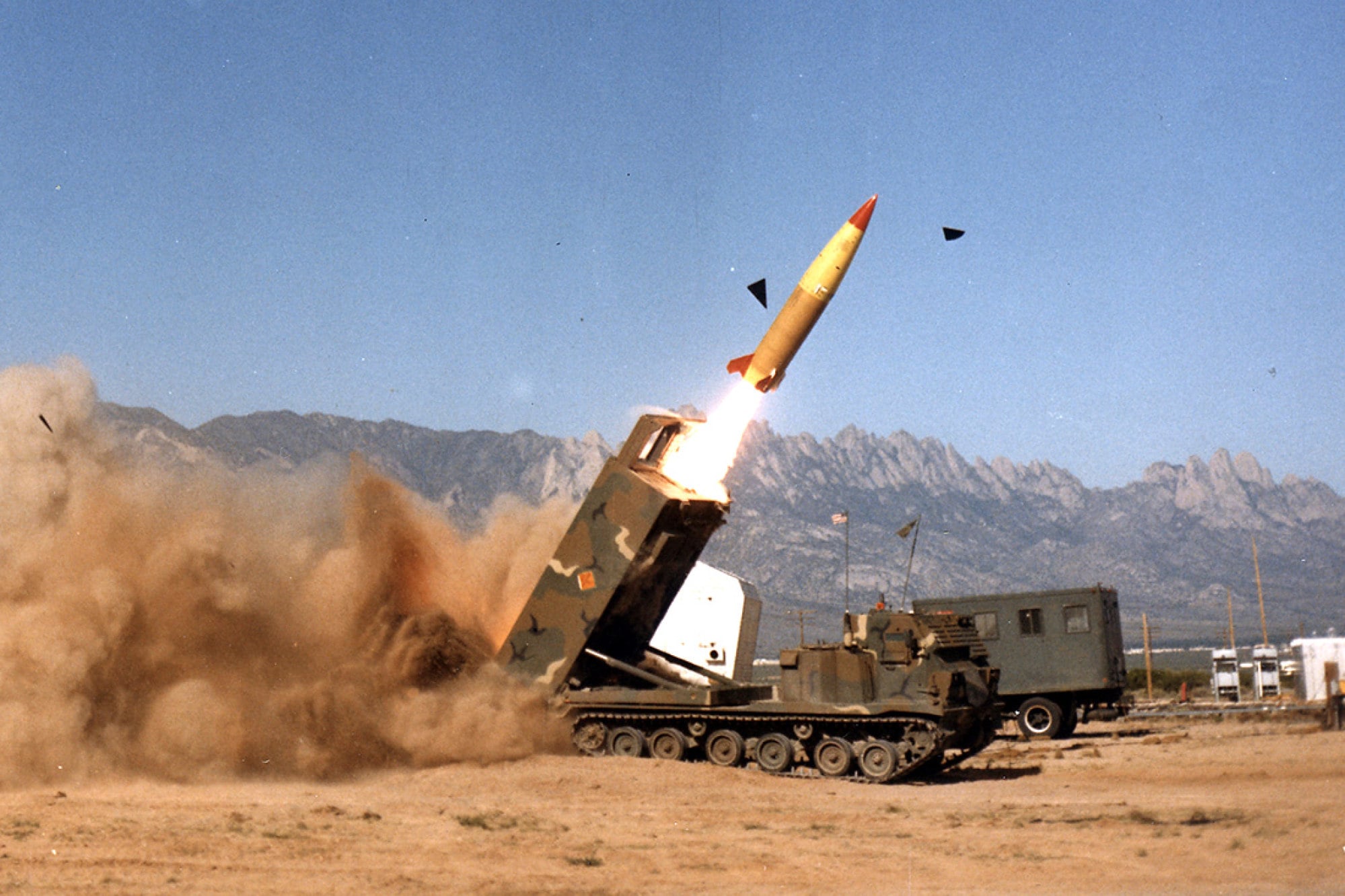
The US Army has used “virtually all” of its global stockpile of these two missile types, according to a Reuters report in August, citing people familiar with the data.
The draining of US stocks raises questions about Taiwan’s plans to expand its ATACMS inventory.
The island’s military has received 64 of the systems and is expecting 20 more this year as part of its initial order. Washington approved the sale of an additional 420 in December last year, which would bring the total number ordered to 504.
At the same time, Lockheed Martin, which makes the ATACMS, is in the process of phasing out its production. How fast the stocks can be replenished and delivered to Taiwan remains highly uncertain.
Meanwhile, although exact ammunition stockpiles remain classified, the PLA has recently released footage of live-fire training exercises involving the PHL-16 system, showcasing two distinct munition types.
These were an airburst “steel rain” guided rocket designed to disperse large quantities of high-velocity fragments over a wide area and a 750mm tactical ballistic missile with a 500km (311-mile) strike range, making the modular PHL-16 the world’s longest-range rocket artillery platform.
More broadly, mainland China’s defence industry appears to be operating at an elevated tempo.
The Pentagon estimates that, as of 2024, China had at least 3,150 ballistic missiles and 300 ground-launched cruise missiles. From 2015, those represented 147 per cent and 50 per cent increases respectively.
A Bloomberg analysis in May identified 81 companies in China’s missile supply chain – more than double the 32 firms identified in 2013, when President Xi Jinping first took office. Moreover, it found that nearly 40 per cent of these companies reported record sales in 2025, also the highest proportion since 2013.
“The build-up indicates that China is flush with missiles just as US stockpiles have been depleted,” it said.
The United States’ growing munitions shortfalls were explicitly acknowledged by the Pentagon’s inspector general in a recent report on the war in Iran.
Of the estimated US$33.4 billion spent on Operation Epic Fury between February 28 and June 30, some US$22.3 billion – 67 per cent of the total – went towards munitions, according to the inspector general’s first-of-its-kind report to the US Congress released on Monday.
“The munitions expenditure on [Operation Epic Fury] has resulted in strategic inventory shortfalls and revealed industrial base bottlenecks for munitions resupply,” the report said, referring to the joint US-Israeli military campaign targeting Iran.
This marked a rare official acknowledgement by the US Defence Department regarding its depleted munitions supplies and pressure on the industrial base.
Until recently, US President Donald Trump and top Pentagon officials had repeatedly denied reports concerning US munitions shortages.
In recent months, media outlets and think tanks have repeatedly warned of the rapid depletion of America’s critical munitions during the conflict with Iran, such as long-range precision-strike missiles and air-defence interceptors, noting that this exposed a vulnerability in the event of a western Pacific confrontation with Beijing.
Beijing sees Taiwan as part of China to be reunited by force if necessary. Most countries, including the US, do not recognise Taiwan as an independent state, but Washington is opposed to any attempt to take the self-ruled island by force and is committed to supplying it with weapons.
Besides the “virtually all” used up ATACMS and PrSM, nearly 80 per cent of the Terminal High Altitude Area Defence (THAAD) missile inventory and about half of the Patriot interceptors had also been depleted compared to pre-war stockpile levels by August, CNN reported.
The Washington Post detailed some consumption figures for key munitions during the first month of the conflict, which included more than 850 Tomahawk cruise missiles, over 1,000 Patriot and THAAD interceptors, and more than 1,300 army tactical ballistic missiles.
Although Defence Secretary Pete Hegseth has been urging the US defence industry to increase weapons manufacturing, it may take over three years for the inventories of Tomahawk, THAAD and Patriot systems to be restored to their pre-conflict levels, according to estimates by the Centre for Strategic and International Studies (CSIS).
Beyond these advanced munitions, the US has faced difficulties expanding production of lower-technology conventional ammunition because of a diminished industrial base, despite efforts to rebuild capacity in response to rising demand since the Ukraine war.
An example is a newly built artillery-shell plant in Mesquite, Texas. As part of the US Army’s effort to increase 155mm production, the US$469 million facility was intended to produce 30,000 projectiles a month by October last year, but as of March, nearly two years after coming online, it had yet to produce a single one.
According to Chinese military researcher Liu Yi, the origins of the problem can be traced back to a 1993 dinner hosted by then-US defence secretary Les Aspin, when the Bill Clinton administration outlined plans for post-Cold War defence budget cuts. This led to a wave of consolidation in the US defence industry in the following years.
Soon after the so-called last supper, the number of major US defence contractors fell from 51 in the 1980s to just five by 2000, Liu said in an article in Chinese military magazine Modern Ships in September.
The continued dominance of the “Big Five” – Lockheed Martin, Raytheon (now RTX), Boeing, General Dynamics and Northrop Grumman – has since left the industry highly concentrated.
Since the early 21st century, demand for these high-performance munitions had remained weak for an extended period, Liu said, as the US military shifted its focus towards counterterrorism operations.
“The profit margin on munitions is relatively low, and the procurement orders were limited for much of the time, with roughly half of them coming from overseas,” he added.
“This has driven the ‘Big Five’ to scale down their ammunition-production capacity,” Liu added, noting that the broader decline in America’s manufacturing base had left smaller contractors either unable or unwilling to fill the gap.
Military commentator Song Zhongping argued that the concentrated structure of the industry was keeping prices artificially high, weakening the US military’s bargaining power and making it difficult to bring down the cost of weapons, which had ultimately contributed to the lack of inventory.
“Excessively high costs per unit limit the quantities the US military can afford to procure, even as the defence budget continues to rise,” said Song, a retired PLA officer.
He also cited the large share of munitions production for overseas buyers, saying that foreign customers generally paid higher prices, giving contractors an incentive to prioritise exports.
Although China’s defence industry was similarly concentrated within a few mega contractors, its state-owned nature ensured strategic alignment with the PLA’s demands rather than pure pursuit of profit as happened within the US military-industrial complex, Song added.
One example highlights the difference.
The US Navy effectively abandoned plans to field the 155mm main guns on its Zumwalt-class destroyers, largely because the custom Long-Range Land Attack Projectiles, developed jointly by BAE Systems and Lockheed Martin, reached an estimated cost of about US$800,000 per round.
Meanwhile, Chinese defence reports have suggested that a 155mm naval gun under development could leverage the PLA’s existing 155mm artillery ammunition and technology base. If so, it could reduce duplicate research and development and supply-chain costs while accelerating development and deployment.
“There is still internal competition among state institutes and private companies are increasingly participating to improve drive efficiency,” Song said of the Chinese defence industry.
“By achieving full domestic sourcing across the supply chain and complete indigenisation of its defence production, China has ensured full control over production capacity, unit costs and delivery timelines.
“This means China’s war potential is immense.”
During the 1993 dinner that reshaped the US defence industry, China “wasn’t even on the cards”, according to attendee Norman Augustine, who at the time was chief executive of defence contractor Martin Marietta and later served as Lockheed Martin’s CEO from 1996 to 1997.
But 30 years later, Augustine warned in a 2023 interview that the US no longer had “as many companies as we need in the defence world ... particularly with the evolution of China and aggression from Russia”.
“We may have to restructure the industry,” he added. -- SOUTH CHINA MORNING POST


