




Introducing legislation to protect minors by regulating social media use is among the options on the table, Hong Kong’s justice minister has said, after the latest policy address unveiled plans to create a task force to review the situation.
Speaking to the South China Morning Post and other media outlets on Wednesday, Secretary for Justice Paul Lam Ting-kwok dismissed concerns that such measures could infringe on individual rights and freedoms, emphasising that the goal was to protect children from undesirable content such as pornography.
His remarks followed Chief Executive John Lee Ka-chiu’s policy address on September 16, when the city leader announced that the government would establish a dedicated task force to look at minors’ social media use.
According to the policy address, the interdepartmental group, spearheaded by the Department of Justice, would review the associated risks of minors’ use of social media and artificial intelligence (AI) platforms, and assess whether legislative and administrative changes were needed.
“Legislative intervention is one of the options, but it may not be the only option. In principle, I can imagine there are different ways to encourage minors to use [social media] in a more proper manner under proper supervision,” Lam said.
“We have hard law on the one hand; we have soft law, guidelines and codes of conduct, those sorts of things. And then we have education, propaganda, public relations. There are many options, and they are not mutually exclusive. They may run in parallel.”
Lam said there could be new guidelines for parents and teachers, as they had supervisory responsibilities. But he declined to specify measures or pre-empt the task force’s findings.
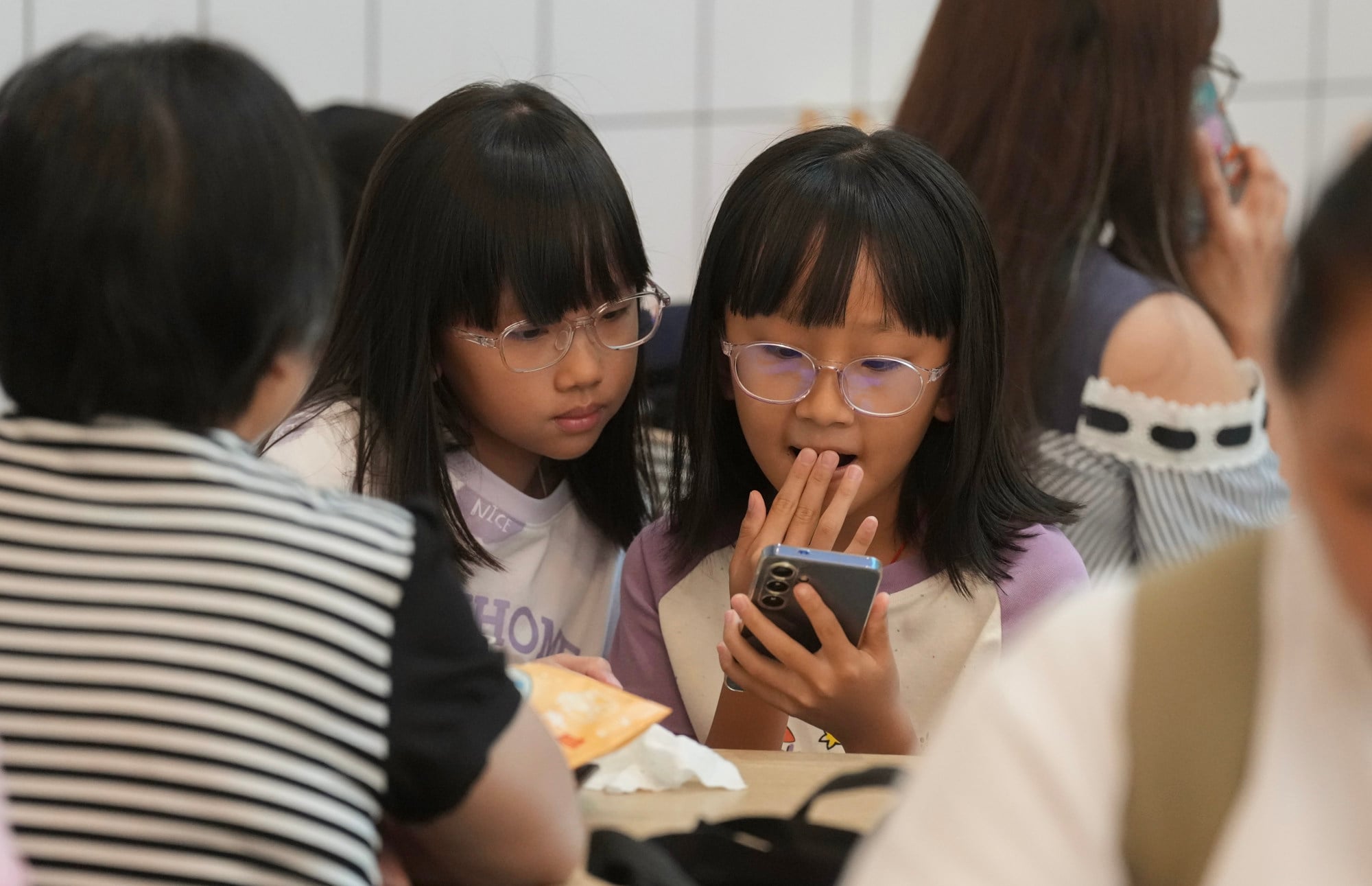
Last November, Australia became the first country to introduce a social media ban for minors under 16, barring children from using a variety of platforms, including Facebook, Instagram, YouTube and TikTok.
Under the groundbreaking rule, minors were prohibited from opening new accounts and existing ones were deactivated. Social media companies would face fines for breaches, while parents and children would not be penalised.
Countries including the United Kingdom, New Zealand and Denmark have since proposed similar bans for children.
Lam said the government would draw on overseas examples, including studying the effectiveness of Australia’s law and feedback on its implementation. But he noted that there was no uniform set of rules.
Asked whether the potential restrictions could curtail individual rights and freedoms, Lam said all legislation would comply with the entrenched rights set out in the Basic Law, Hong Kong’s mini-constitution.
“I am not very concerned about any potential infringement because the purpose is not to restrict any sort of freedom,” he said.
“We are only aiming at protecting our children to ensure that they will not be exposed to risks. In particular, the type of risk that I am sure everyone would agree contains undesirable elements, for example, pornographic materials, ideas that incite children to resort to violence.”
City leader Lee previously highlighted seven key areas of AI risk governance, including combating AI-related crimes such as deepfake porn, in his annual policy blueprint.
Lam acknowledged public concerns over AI-related crimes and said he was liaising with the Law Reform Commission’s cybercrime subcommittee to prioritise and accelerate its study of the relevant issues, seek public feedback, and provide recommendations.
“Legal reform often covers a wide scope and really takes time. But we cannot wait, and we understand that it is better if it is done faster,” he said without offering a timeline for the review, noting that the commission worked independently.
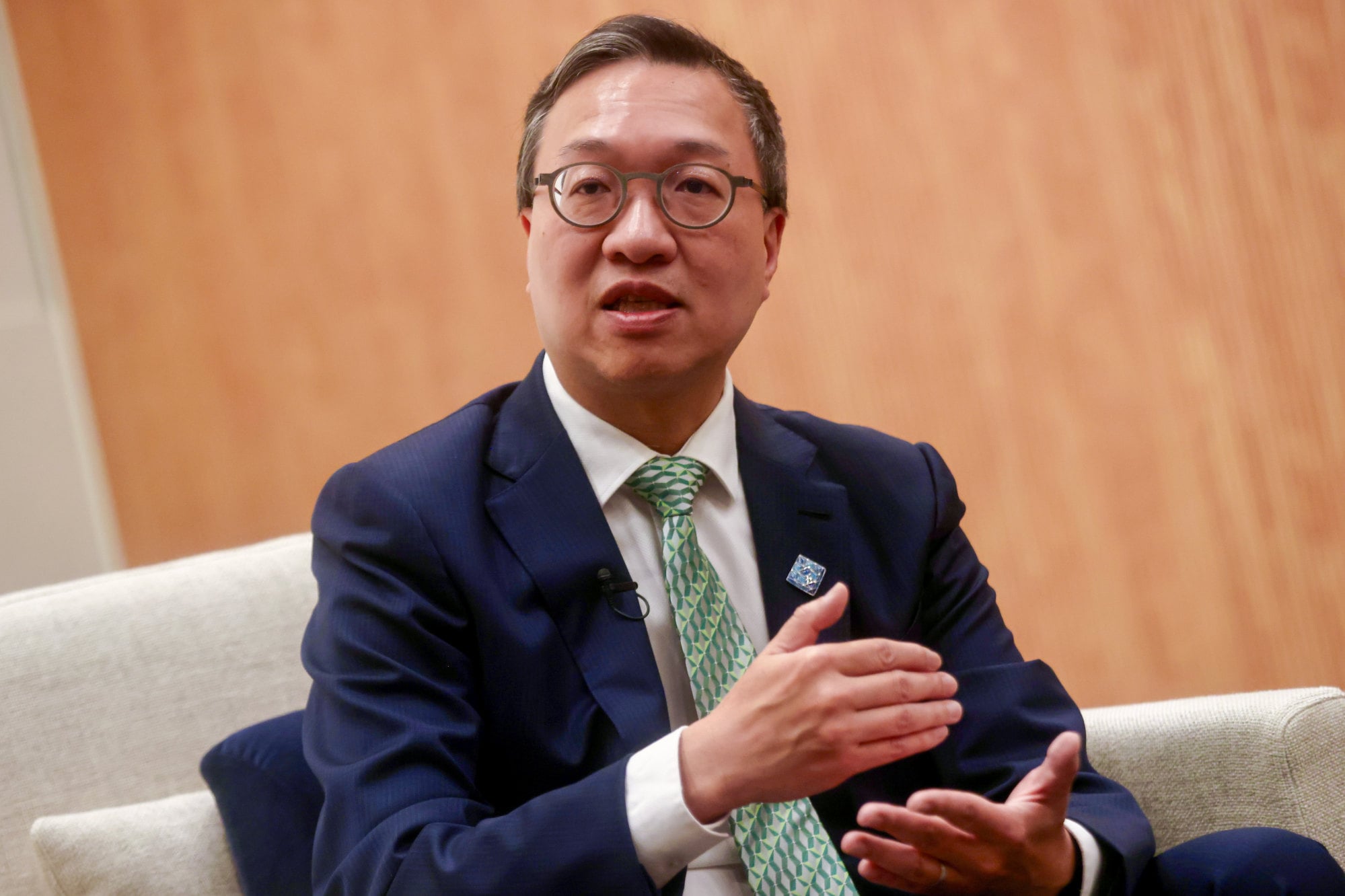
Lam also explained that existing laws were able to address AI-related crimes such as scams, but the goal of the review was to formulate more targeted legislation to keep pace with rapid technological advancement and handle cases more effectively.
Another issue highlighted in the policy address was whether current laws adequately addressed legal liability arising from accidents caused by AI products.
Lam said the government would establish another task force to look into the matter and hold its first meeting this year. But he declined to provide a timeline, citing the complexity of the issue and the need for a cautious and prudent review.
He added that authorities would refer to other jurisdictions and ensure proper consultation with all local stakeholders, including manufacturers, AI creators and consumers.
In the interview, the justice minister, who was among nine Hong Kong and mainland Chinese officials removed from an American sanctions list in July, was also asked whether he would consider visiting the United States.
Lam did not respond directly to the question but said it was important to enhance foreign confidence in Hong Kong’s rule of law, adding that he would visit other countries if there were suitable opportunities based on “sincerity and mutual consent”.
“Hong Kong is an international city. It is important to help others understand Hong Kong and to give them confidence in the city. If there is something I can do in my position, I will certainly do my utmost,” he said.
“Even if we may have fundamental disagreements on many issues [with other countries], that should not be a reason to hinder communication.” -- SOUTH CHINA MORNING POST


