SURKHET: It has been two decades since Netra Bahadur Giri from Barekot Rural Municipality in Jajarkot began travelling to the high-altitude pastures of Dolpa to collect yarsagumba, a prized medicinal fungus. In the third week of May this year, he travelled for four days with his wife Goma and their two sons to Kagmara pasture to collect the fungus.
The Giri family spent Rs60,000 on supplies and equipment for the trip but earned only Rs120,000.
“Given the hardship of travelling to and from the pastures, a family of four should earn at least Rs300,000,” he said.
“But this is work we have done for years. We cross cliffs and rugged terrain to reach remote grazing areas. Altitude sickness can be life-threatening, but with no other source of income, we have little choice but to keep going.”
Giri said the four family members spent about a month in the pasture and collected around 200 yarsagumba.
They sold the fungus for Rs800 to Rs1,000 per piece, but after failing to make much profit, he sent his two sons to India for work in the third week of July.
The produce from his five-ropani (2,544 square metres) plot is not enough to feed the family for even three months, and no one in the household has a reliable job.
Laxman Budha of Khatyad Rural Municipality in Mugu also depends primarily on collecting medicinal herbs.
He too has been collecting yarsagumba for two decades. This year, he travelled to Koiki pasture in Mugu with his wife Sulochana and managed to earn only around Rs150,000.
“The fungus has become harder to find in the pastures, and even what we collect does not fetch a good price,” Budha said. “The two of us collected around 220 pieces in a month. About 20 to 30 pieces were rejected by buyers because they had not developed properly.”
The couple spent nearly Rs50,000 on flour, rice and other supplies for the trip.
Six years ago, Budha earned as much as Rs500,000 from collecting yarsagumba. Despite the steady decline in income, he has continued collecting medicinal herbs. His two sons have gone to India for work.
The decline in the price of yarsagumba, which fetched up to Rs3.2 million per kilogram before the Covid-19 pandemic, has hit residents of Karnali’s mountainous and hilly districts who have long depended on collecting the fungus for their livelihoods.
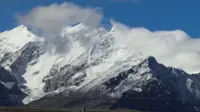
Yarsagumba is found in the high-altitude pastures of Dolpa and Mugu. Around 10,000 locals went to the pastures this year to collect it.
But collectors have been hit hard after local traders stopped buying the fungus, saying they could not find buyers.
“Ninety percent of the yarsagumba produced here goes to China. But Chinese traders have stopped coming because they are now collecting it themselves,” said Basanti Budha, a forest officer at the Division Forest Office in Mugu. “As a result, local traders have been unable to buy it from collectors.”
Last year, yarsagumba produced in Mugu sold for up to Rs1.8 million per kilogram. So far this year, the division forest office has issued transit permits for only 10 kg of yarsagumba. Last year, it issued permits for 22 kg, while Rara National Park issued permits for 33 kg.
Yarsagumba is found in Koiki, Thulo Koiki, Rimar, Tanke and other areas of Mugu’s Mugum Karmarong Rural Municipality. Around 4,200 collectors gathered the fungus from those pastures this year, generating Rs2.83 million in revenue for the rural municipality.
In Dolpa, the Division Forest Office has issued transit permits for 112 kg of yarsagumba this year, while Shey Phoksundo National Park has issued permits for around 60 kg.
“Local traders are also uncertain because they do not know whether Chinese traders will come,” said Jitendra Mahat, divisional forest officer in Dolpa. “So they have not been able to buy much yarsagumba from collectors.”
Yarsagumba produced in Dolpa sold for between Rs2 million and Rs2.4 million per kilogram last year.
“Yarsagumba also fetches different prices depending on its quality,” Mahat said. “High-quality yarsagumba has a light brown or blackish outer part and a clean, yellowish interior. It is also thicker.”
Mahat said the price has been falling as the quality of yarsagumba declines and collection has increased in China. Some collectors sold yarsagumba this year for Rs700 to Rs1,000 per piece.
In Dolpa, yarsagumba is found in 41 community forests under the Division Forest Office and in 21 pastures inside Shey Phoksundo National Park.
The falling price of yarsagumba has affected local traders as well as collectors. Sarwajit Bham of Chhayanath Rara Municipality in Mugu used to earn Rs500,000 to Rs800,000 annually from yarsagumba before the Covid-19 pandemic. He used the money to build a concrete house in Surkhet five years ago.
Since the pandemic, however, his annual income has not exceeded Rs150,000.
“Going to the pastures has become a losing proposition. A person can spend Rs20,000 to Rs25,000 getting there and back, yet collect only 60 or 70 pieces in a month,” said Bham, who went with his wife, Sabitri, in May.
“And what we do collect is hard to sell. A piece that once fetched Rs1,000 now sells for Rs700 or Rs800.”
The Bham couple spent Rs60,000 on their trip this year. Their income was no more than Rs120,000.
“We risk our lives to reach the pastures. People die from falls and altitude sickness,” Bham said. “We have to clear snow to find the fungus, but the cost and hardship are greater than what we earn.”
According to data from the Karnali Province Police Office, five people who went to collect yarsagumba died in Mugu and Dolpa this year. Since 2014, 78 people have died, and 106 have been injured or fallen ill while collecting the fungus, according to the office.
Yarsagumba collection was banned for three years during the Covid-19 pandemic. Although the pastures have reopened since then, many collectors have changed occupations because they no longer see much benefit in the work, Bham said.
“In the past, entire villages would empty as people went to the pastures,” Bham said. “Now most people in the villages prefer to go to the market areas for labour. This year, only people from eight or ten households in our area went to the pastures.”
Before the Covid-19 pandemic, herbal products trader Shankar Budha of Tripurasundari Rural Municipality in Dolpa would stay in the pastures for a month and a half from the third week of May.
He would provide money to collectors who ran out of cash, bring supplies for them and manage their food and accommodation. He would return only after buying yarsagumba from the collectors at the end of the season.
For the past two years, however, he has stopped going to the pastures.
“Herbs such as panchaule, jatamasi, chiraito and padamchal are mainly sold in India, while yarsagumba goes to China,” he said. “But Chinese traders have stopped coming in recent years, making the fungus difficult to sell even in Nepal.”
Budha now buys yarsagumba from collectors in villages rather than travelling to the pastures, where he says other medicinal herbs offer better returns.
Last year, he bought yarsagumba for Rs3.9 million and sold it for Rs4.4 million, at about Rs2.2 million per kilogram. “After all the expenses, we barely broke even,” he said. “The same investment in another business could have earned Rs800,000 to Rs900,000.”
Pasang Bhote Gurung, a trader from Mukot village in Dolpa’s Chharka Tangsong Rural Municipality, also said the trade had become unprofitable. He sold about 2 kg of yarsagumba for Rs4 million last year after buying it for nearly Rs3.7 million.
“We spent nearly 15 days in Kathmandu to find buyers. We also paid Rs31,000 per kilogram in taxes and about Rs50,000 for transport,” he said. “After adding everything up, we were actually at a loss.”
Gurung has traded yarsagumba and other medicinal herbs for a decade. Before the pandemic, he sold as much as 9 kg of yarsagumba a year and earned Rs500,000 to Rs700,000 per kilogram.
He has also stopped travelling to the pastures. Although he buys yarsagumba brought to the villages by collectors, he has not decided whether to buy any this year.
There are about three dozen medicinal herb traders in Mukot, according to Gurung. Nearly half have stopped buying yarsagumba in recent years.
Traders say Chinese buyers have also become less interested as high-quality yarsagumba has become harder to find.
Budha, from Tripurasundari, said yarsagumba from Karnali is divided into three grades based on quality.
“The outer part is light brown or blackish, and the inside is yellow. Thicker yarsagumba with less fungal growth is considered higher quality,” he said. “But thick yarsagumba has become difficult to find.”
Last year, yarsagumba with up to 4,000 pieces per kilogram sold for Rs1 million to Rs1.2 million. Those with 3,500 to 4,000 pieces fetched Rs1.5 million to Rs1.8 million, while those with 3,000 to 3,500 pieces sold for Rs1.8 million to Rs2.4 million, Budha said.
Botanist Kamal Sharma said the three-year suspension of yarsagumba collection during the Covid-19 pandemic affected both its reproduction and quality.
“Production has been declining every year, and quality has also deteriorated,” he said. “Unfavourable rainfall, increased human activity, deforestation, climate change and forest fires are among the factors behind the decline in medicinal herbs.”
Sharma said people in the hills and mountains continue to risk their lives collecting yarsagumba because they have little alternative. Many lack cultivable land, adequate irrigation, other jobs or reliable sources of income.
A three-member team led by Sharma studied yarsagumba in Dolpa and Mugu in 2023 with support from a non-governmental organisation.
Mahat, the divisional forest officer in Dolpa, said yarsagumba prices vary by quality.
“High-quality yarsagumba is thicker, with a light brown or blackish exterior and a clean, yellow interior,” he said. “But its quality has declined in recent years, and Chinese traders have stopped buying it, leaving both traders and collectors struggling.”
Government data also show a steady decline in yarsagumba production in Karnali.
The Provincial Directorate of Forests recorded about 494 kg last year, down from 807 kg in fiscal 2023-24, 1,405 kg in 2019-20 and 1,609 kg in 2018-19.
Collection was suspended from 2020 to 2023 because of the Covid-19 pandemic.
Based on transit permits issued so far this year by division forest offices and national parks, between 300 kg and 450 kg has been collected, estimated Sher Bahadur Shrestha, provincial director of forests.
He attributed the decline to uncontrolled human activity in the pastures, pollution, inadequate rainfall, rising temperatures and deforestation.
Chinese traders stay away as border markets remain shut
Karnali traders traditionally sell yarsagumba to Chinese buyers in two ways: at temporary markets along the border or in Kathmandu, where they travel by road to find buyers.
“The border market is our best option. Getting to Kathmandu with yarsagumba is a long and difficult journey,” said Purna Bahadur Mahatara, a medicinal herb trader from Mugu.
Mahatara has bought two kg of yarsagumba from collectors this year for Rs700 to Rs1,000 a piece. He is now worried about finding buyers.
Chinese traders traditionally hold 15-day temporary markets each year at Marimla on the Dolpa border and Hyajimar on the Mugu border. But the dates for this year’s markets have not been announced.
The uncertainty has made it harder for traders to buy from collectors. Local people sell yarsagumba, panchaule, jatamasi and other medicinal herbs at the markets and return with food, daily necessities and other supplies.
Last year, the markets ran from the first week of August through the third week of August in both districts.
Junu Hamal Dhakal, chief district officer of Dolpa, said there had been no word on the markets this year.
“The Chinese side decides whether to hold the markets. We are responsible for security,” she said. “Local representatives are also trying to resolve the issue, and we have written to the home ministry seeking action.”
Mahatara said traders have little choice but to store the yarsagumba they buy until Chinese traders arrive.
“Chinese traders set the price, and we have to accept what they offer,” he said. “But China has started collecting yarsagumba itself, so their interest has declined. How long can we keep taking these risks?”
Thsering Kyapne Lama, chair of Mugum Karmarong Rural Municipality in Mugu, said Chinese traders had become less frequent since domestic production began in China.
“Some traders have not even sold last year’s stock because they could not get a good price,” he said. “Karnali’s yarsagumba market depends on Chinese traders, so their declining interest is affecting the whole economy.”
Ajit Kumar Karna, secretary at the Karnali Ministry of Industry, Tourism, Forests and Environment, said a lack of laws, infrastructure and skilled personnel was creating major problems in the production, collection and marketing of yarsagumba. - Kathmandu Post/ANN