




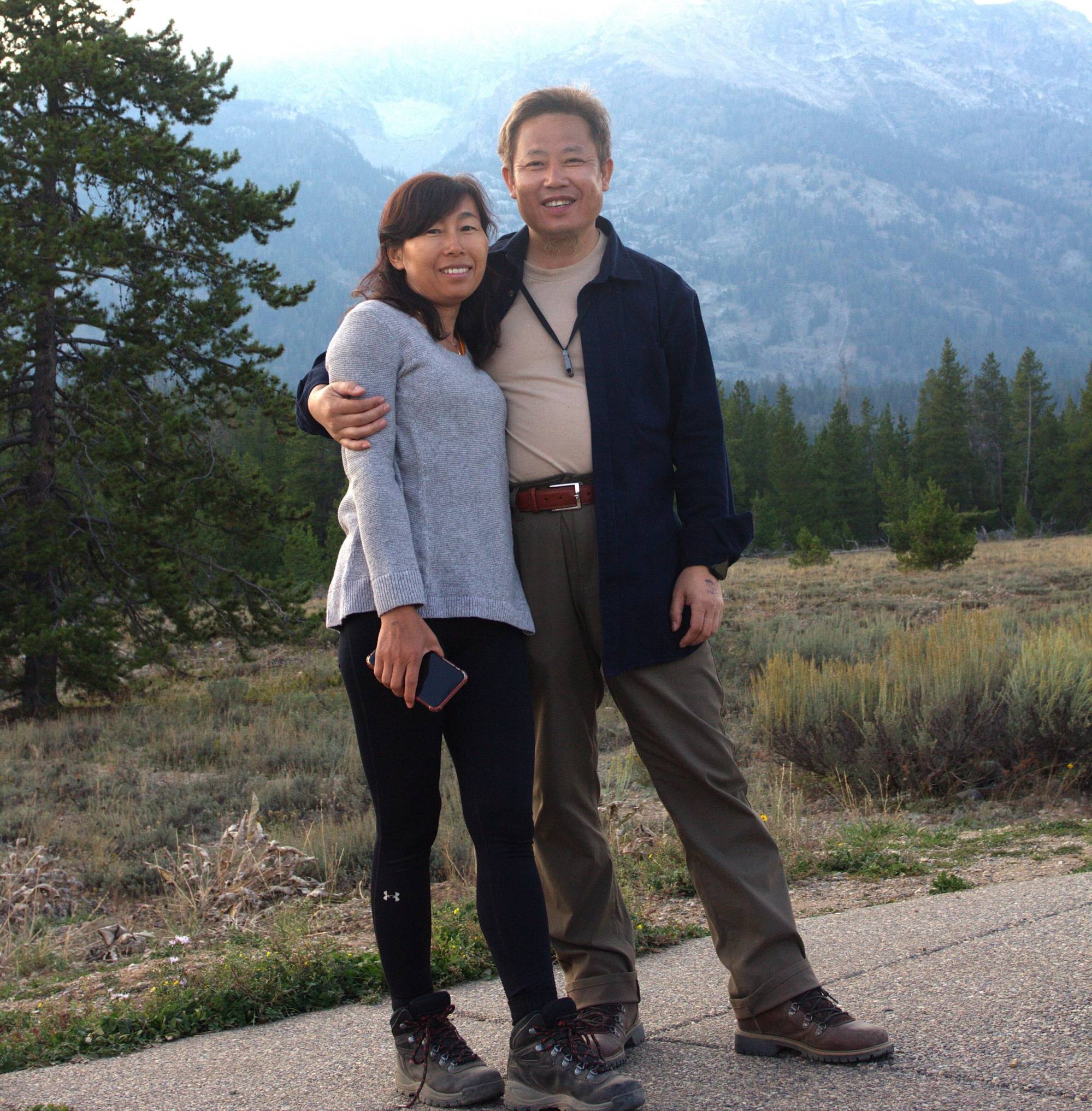
Chen Youlin, a Chinese-American scientist, travelled back to China in October 2024 for a month-long holiday, including to celebrate his mother’s 80th birthday. As he prepared to leave, authorities arrested him at the airport in Beijing.
For more than 670 days, his wife, Rong Yufang, and other family members have not been able to see or speak with him.
“Sometimes I realise I can no longer clearly remember the sound of his voice, and that breaks my heart,” Rong told the South China Morning Post. “Our home feels empty without him and the uncertainty surrounding his future has become a prison for our family as well.”
Ahead of Chinese President Xi Jinping’s expected visit to Washington next week, cases of several US citizens detained in China are gaining greater attention as their families step up pressure on the Trump administration to press Beijing for their release.
As well as Chen’s family, the relatives of Americans Min Zin, Dawn Michelle Hunt and Nelson Wells Jnr are pressing Washington to intervene with Beijing – but their cases vary. Chen and Zin are being held on national security-related allegations, while Hunt and Wells Jnr have spent over a decade in Chinese prisons over drug convictions.
Families like Chen’s face a dilemma: pursue quiet diplomacy or go public to pressure Washington and Beijing. Many initially favour a low-profile approach, but turn to public advocacy when private efforts fail.
The cases highlight the risks American citizens can face in China’s legal system, even as US President Donald Trump and Xi seek to stabilise ties and Beijing courts foreign investors, academics and tourists.
US government lists individuals as being ‘wrongfully detained’
Chinese authorities have accused Chen of espionage, likely linked to his previous work analysing seismic data, including North Korean nuclear tests.
Another recent well-publicised case involves American scholar Zin, who was detained in China in June. Chinese authorities accused him of espionage and endangering China’s national security.
Both Chen and Zin have been formally designated as “wrongfully detained” by the US government, a status that means officials will prioritise efforts to secure their release.
A lawyer has been hired to represent Chen and US consular officials have been allowed to visit him.
Rong, Chen’s wife, raised concerns about his health and weight loss during his detention. She told the SCMP that senior US officials had assured her that Trump would raise Chen’s case.
“President Trump and his senior team have been 100 per cent on my side,” Rong said.
The State Department’s Office of the Special Presidential Envoy for Hostage Affairs has also publicly addressed the issue, saying: “Hostage diplomacy has no place in the US-China relationship.”
Chen’s family initially worked behind the scenes, according to its representative, Eric Lebson of Global Reach. It went public after Trump raised Chen’s case with Xi in May but secured no breakthrough.
Trump also raised the cases of Pastor Ezra Jin, who was later freed, and jailed Hong Kong media boss Jimmy Lai Chee-ying. Lai’s family and supporters want Trump to raise his case again next week.
For Zin’s case, the circumstances are less clear. The Wall Street Journal reported that US officials believe his background as a former student activist in Myanmar and his US-funded academic work may have drawn the attention of Chinese security services.
Edgard Kagan, a China expert at the Centre for Strategic and International Studies, said the detention of Chen and Zin is likely linked to their academic work, and he expects Trump to press for their release.
Massachusetts Senator Ed Markey is leading a bipartisan resolution condemning China’s wrongful detention of American academics.
The James W. Foley Legacy Foundation says 12 Americans are currently wrongfully detained in China, including some subject to exit bans. It has assessed 42 cases since 1998, though the total number of Americans caught up in China’s legal system may be higher.
In 2024, US diplomacy secured the release of three Americans held for years; Beijing said the US returned four people to China.
The Chinese Embassy in Washington did not respond to a request for comment.
Beijing has firmly rejected the “wrongful detention” designations. Asked about Chen’s case, Foreign Ministry spokesperson Lin Jian said there is no “wrongful detention” in China and that judicial agencies handle cases in accordance with the law.
The embassy spokesperson offered more detail on Zin specifically, telling the Wall Street Journal that he is subject to “criminal coercive measures,” meaning he is under investigation, and that his “legitimate rights have been fully guaranteed.”
Two other high-profile cases involving Americans
Two other high-profile cases involve Americans Hunt and Wells Jnr, both of whom have been imprisoned in China for more than 12 years after being convicted on separate drug charges.
Unlike the scholars’ cases, which have been designated as “wrongfully detained”, the families are pursuing the humanitarian release route and say that they are speaking on behalf of ordinary “rank-and-file” Americans.
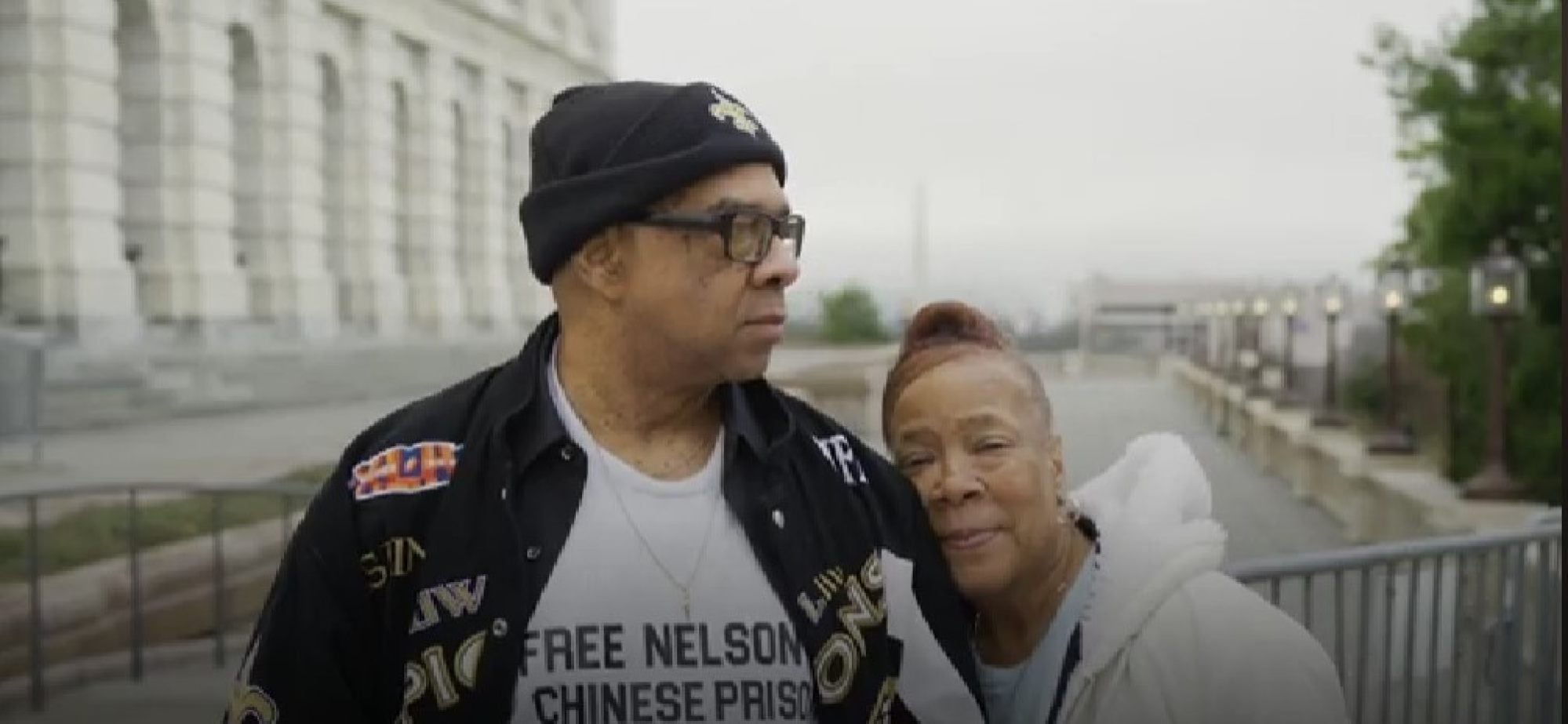
The families have joined forces, saying both detainees unknowingly carried drugs out of China. Dawn Michelle’s brother, Tim Hunt, said scammers lured her there with a purported competition prize, then gave her purses with drugs sewn into the lining. Wells Jnr was arrested after agreeing to carry someone else’s suitcase containing hidden narcotics, his family said.
Both have worsening health problems, their families say. Wells Jnr’s father said his son has seizures, high blood pressure and diabetes, and was recently diagnosed with hepatitis C.
Peter Humphrey, a former SCMP China correspondent and fraud investigator who was imprisoned in China with his wife from 2013 to 2015, is working with the families. Since his release, he has advised foreign detainees and their families on how to navigate China’s system.
“We have been constantly hearing from our lobbying contacts in Beijing that the Chinese side is very ready to consider a humanitarian release, so long as there is a request from the American president,” Humphrey said.
Joi Chaney, a legal expert working with the families, called the lack of a US-China prisoner transfer treaty a “blockade” the US has placed on itself. Chinese law allows transfers through bilateral negotiations in special cases, but Washington has historically maintained that US law does not, said Humphrey. He said the US State Department asked China in May 2025 to release Wells Jnr and Hunt on humanitarian grounds.
In response to an SCMP inquiry, a US State Department spokesperson said it has repeatedly raised serious concerns about Wells Jnr and Hunt’s health with Chinese officials.
“We have called upon the Chinese to release them unconditionally on humanitarian grounds, at every opportunity, and we will continue to do so,” it said, while adding that decisions on humanitarian release are at the discretion of the host government.
Additionally, in 2025, bipartisan lawmakers introduced the “Nelson Wells Jnr and Dawn Michelle Hunt Unjustly Detained in Communist China Act”, seeking to strengthen the government’s response to Americans detained in China and support their families. The bill has stalled since its introduction.
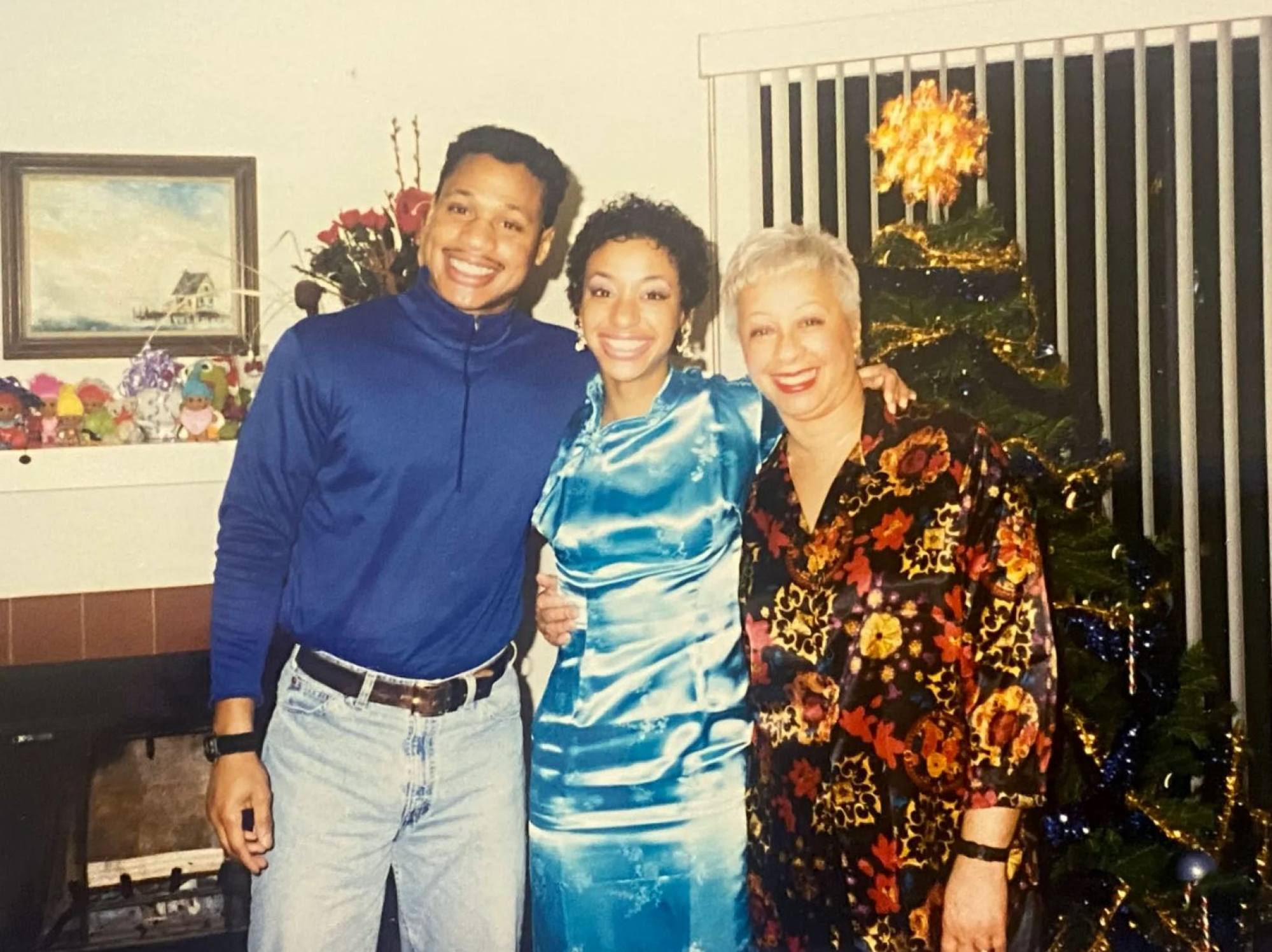
“We’re not famous people, we’re not sports stars,” Chaney said, arguing that ordinary Americans should be able to count on their government to bring them home. Both families have histories of military and public service. “If you say you respect the people who serve, show us,” Tim Hunt said in a plea to Trump. “Ask for their release.”
When asked about Hunt and Wells, the White House offered a general response rather than addressing the individual cases.
Families put faith in Trump as Xi summit approaches
“President Trump is always concerned about Americans detained abroad. That is why he has brought over 100 individuals – a record number – home from around the world,” White House spokeswoman Anna Kelly said.
Both families said they were disappointed when their loved ones were not released after the last Xi-Trump summit.
Wells Snr described feeling out of it in the weeks after, not wanting to talk. Tim Hunt found it hard to speak to his sister, who felt she had false hope in the lead-up to the meeting.
Addressing the US president directly ahead of next week’s summit, Wells Snr said: “I would tell President Trump that he’s a father. If he had a child that was in the same situation as our child or Tim’s sister, he would do everything in his power to try to bring them home.” -- SOUTH CHINA MORNING POST



