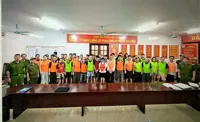
PHNOM PENH: Cambodia's Ministry of Environment has launched a US$30- million initiative to improve electronic waste management and accelerate the country's transition to a circular economy, according to a joint press release on Saturday (Sept 19).
The five-year project is supported by US$26 millions in co-financing from the Cambodian government and private partners, alongside a four-million-dollar grant from the Global Environment Facility (GEF).
Developed in partnership with the United Nations Development Programme (UNDP), the initiative aims to curb pollution and optimise resource use throughout the electronics value chain.
The initiative is projected to directly safeguard over 200,000 people by establishing safer working environments and reducing exposure to hazardous waste.
Additionally, the project targets a 27,000-tonne reduction in greenhouse gas emissions, the containment of toxic materials like mercury and persistent organic pollutants, and the prevention of more than 20,000 tonnes of pollutants from entering the environment.
"Our goal is to move from a linear 'take-make-dispose' model to a circular economy, one that values resources, reduces waste and protects our people and environment," said Chuop Paris, secretary of state at the Ministry of Environment.
Enrico Gaveglia, the UNDP resident representative in Cambodia, highlighted the striking scale and pace of the country's growing electronics consumption.
With an estimated 24 million electronic devices in use across the nation in 2024, Gaveglia emphasised that end-of-life waste systems must keep pace. He noted that enhanced capabilities and strict safeguards are critical to protecting workers and local communities from toxic substances and unsafe recycling practices.
"This initiative supports the shift toward safer, practical systems that protect public health and strengthen the foundation for a more sustainable and resilient economy," he said.
Claude Gascon, interim CEO and chairperson of the GEF, warned that managing the environmental footprint of electronics will become increasingly difficult without robust systems.
"Addressing e-waste requires changes in how markets operate, alongside clearer policies and standards that support safer and more sustainable practices," he said. "This initiative is an important step toward building that foundation in Cambodia." - Xinhua