




When Chinese President Xi Jinping met Indian Prime Minister Narendra Modi in New Delhi last week on the sidelines of the Brics summit, another country loomed large in the background, even in its absence: the United States.
After the meeting, both sides reaffirmed their commitment to maintain peace at the disputed border and strengthen economic ties.
Beijing’s readout, however, offered a pointed reminder of the US factor in India-China ties.
The official Chinese statement claimed that Modi assured Xi that India adhered to an “independent foreign policy” and that its ties with China are “not influenced by any third party”, an apparent reference to Washington.
While India did not endorse Beijing’s assessment, analysts said Washington’s shifting priorities in the Asia-Pacific region and strained US-India ties are reinforcing New Delhi’s instinct for strategic autonomy and influencing its approach to China.
However, they added that despite uncertainty about Washington’s strategy, it would likely stand by India in a potential border crisis with China as it did during the 2020 Galwan clashes, but New Delhi should be ready to defend the territory on its own.
“American assistance cannot be treated as automatic,” said Nirupama Rao, a former Indian foreign secretary.
“If China attempted a significant unilateral alteration of the status quo. American support would likely be substantially stronger.”
“India is going to its default position, which is strategic autonomy and multi-alignment,” said Aparna Pande, senior fellow at the Hudson Institute, adding that the policy has been “reinforced over the last year and a half because of concerns over the global order under the second Trump administration”.
During his second term, US President Donald Trump has frequently criticised allies and partners for taking advantage of the US, launched trade wars against them and questioned the security architectures in Europe and Asia as well as the costs of maintaining them.
In August, Trump ordered the Pentagon to significantly reduce joint military exercises with South Korea, citing their cost and saying the drills sent an inappropriate message to North Korea.
His approach has unsettled America’s friends, prompting a scramble among them to manage rivalries and forge new partnerships.
India’s attempts to stabilise ties with China come as its relations with Washington have frayed over trade and tariffs, oil sanctions, visa restrictions and rising anti-India rhetoric and racism from Trump’s Maga base.
While not a treaty ally of the US, India still maintains strong defence ties with Washington, focused on maintaining peace and security in the Indo-Pacific region, a euphemism for checking China’s growing influence.
Xi, Modi emphasise need for border stability
During his bilateral talks with Xi, Modi emphasised that “peace and tranquillity in the border areas remain an essential basis for the continued development of bilateral relations”, while Xi said both sides should commit to “parallel development and mutual promotion of bilateral relations and border issues”.
Xi’s first visit to India in seven years followed the prolonged freeze in ties after the deadly Galwan clashes in June 2020, which killed 20 Indian soldiers and four Chinese troops. Both sides deployed thousands of troops and heavy weaponry along the ill-defined border for more than four years.
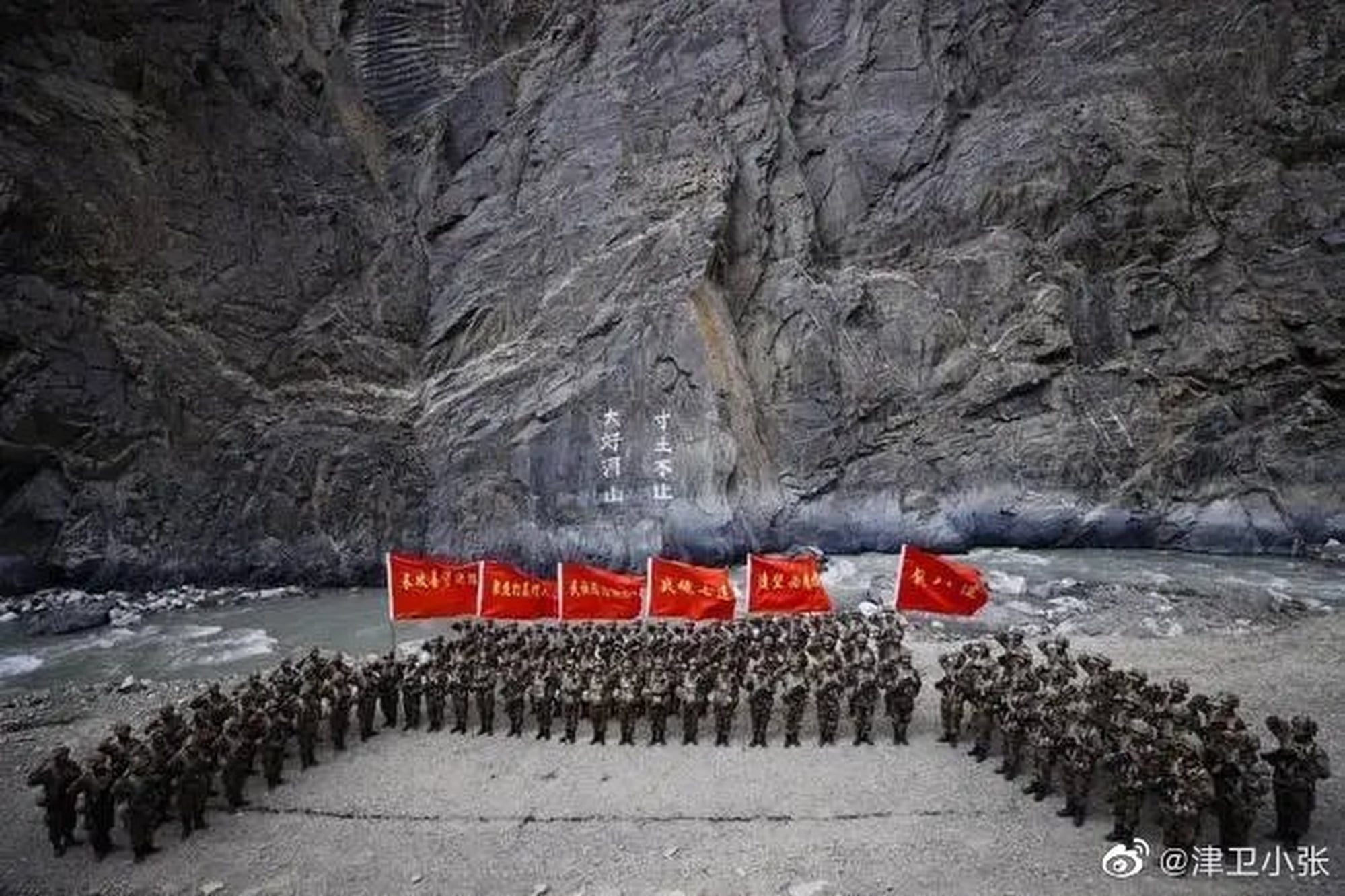
Border arrangements that began in 2024 eased tensions and revived high-level dialogue, regular flights and people-to-people exchanges.
However, disagreements appeared to resurface last month over patrolling points in Arunachal Pradesh, a province in India’s northeast that Beijing claims as Zangnan or south of Tibet.
The two sides contained the latest crisis and agreed to an eight-point consensus, including an “early and substantial harvest of boundary delimitation and border management”.
Despite multiple border arrangements, thousands of troops remain deployed on either side, while the two countries continue to expand physical infrastructure across the difficult terrain.
India’s Ministry of Defence said in its annual report last week that it witnessed a “significant reduction in the deployment of People’s Liberation Army [PLA] forces” along the LAC in the northern front, with around 40,000-50,000 PLA troops at the border and an equal number in designated training areas.
The report did not disclose India’s troop numbers, describing its deployment as “robust, well poised and prepared to deal with any emerging contingency”.
“All India is trying to do is manage, to the extent possible, the border issue so that it doesn’t flare up,” said Pande of the Hudson Institute.
She added that New Delhi is attempting to balance a “very strong” China, a weaker Russia and a less dependable, transactional and “semi-isolationist America”.
“India has to manage that,” Panda said.
Rao, who has served as India’s ambassador to both China and the United States, said that “difficulties with Washington undoubtedly reinforce India’s instinct for strategic autonomy and increase the value of stabilising relations with China”.
But she cautioned that there isn’t a “direct causal connection” between the two, noting that the India-China stabilisation process began well before the recent deterioration in India-US ties.
Will US support India in a Galwan-like clash with China?
During the 2020 India-China border crisis, the US largely stayed in the background but played an important supporting role, providing India with surveillance drones and logistical assistance.
It reportedly provided India with MQ-9 drones for surveillance in record time, along with cold-weather clothing, tents, rifles and spare parts.
In 2022, Washington shared real-time intelligence on Chinese positions along the LAC with New Delhi, according to reports, in what was the first known instance of the US providing such active assistance.
Hundreds of Indian and Chinese troops wielding spiked clubs and tasers engaged in fistfights in December that year in the Tawang sector of Arunachal Pradesh.
Neither side officially confirmed the extent of the US assistance, as details of the cooperation remain classified.
On whether the US would extend its support to New Delhi again despite tensions in bilateral relations, Sameer Lalwani, a senior fellow in the South Asia Programme at the Carnegie Endowment for International Peace, said he was optimistic and confident that it would.
“I think our relationship is even better now than it was in 2020,” he said, adding that “there’s a lot more structural support” for defence cooperation.
The India-US defence relationship has expanded in recent years from arms sales to technology cooperation and plans for greater defence co-production in India.
Under the current administration, the two countries signed a new 10-year framework last October, focusing on operational coordination, information sharing and bolstering defence industrial capacity.
The previous Joe Biden administration launched INDUS-X, the India-US Defence Acceleration Ecosystem, in 2023 to connect US and Indian defence companies, start-ups and investors.
New initiatives help strengthen US-India relations
The Trump administration has since strengthened the partnership through TRUST, a broader technology initiative, and INDUS Innovation, a network connecting defence start-ups, investors and research institutions in the two countries.
The two militaries have also expanded joint exercises, including the tri-service Tiger Triumph and the Malabar naval exercise, alongside cooperation across air, land, sea, space and cyberspace.
They also cooperate through the Quad, an informal grouping of the US, India, Japan and Australia that focuses on maritime security, including maritime domain awareness, coastguard cooperation and disaster response.
Rao argued that the “precedent of 2020 is important” and any valuable assistance “would probably be discreet”.
She added that Washington would probably “encourage de-escalation” and avoid “unnecessarily internationalising the incident” in the event of a small patrol confrontation, but American support would likely be “substantially stronger” if China attempted a significant unilateral alteration of the status quo at the border.
“The essential qualification is that India is not a US treaty ally,” she cautioned.
“US partnership should multiply Indian capability, not substitute for it.”
According to Lalwani, India is seeking to build guardrails with China through the latest border arrangement to prevent “inadvertent crisis escalation”, but a meaningful thaw remains unlikely.
“These two countries are clearly rivals, if not adversaries,” he said. -- SOUTH CHINA MORNING POST


