




BEIJING (SCMP): Despite being bitten nine times and losing a finger to its venom, 77-year-old “Snake Doctor” Chen Yuanhui remains on the front lines of researching and protecting the Mangshan pit viper, the rare species he discovered 37 years ago.
Originally from southern China’s Guangdong province, Chen graduated from a clinical college in central China’s Hunan province at the age of 19 and worked at a snakebite research centre.
The centre was discontinued in 1982, but Chen chose not to pursue a conventional career in the city. Instead, he settled as a snakebite doctor deep in the Mangshan Mountains.
In 1984, Chen treated a forestry worker bitten by a strange venomous snake. Nicknamed by locals as the “little green dragon,” the snake was described as “yellow and green all over, with a white tail and patterns that look like squares when viewed from above and triangles from the side.”
Sensing that it might be a species that had never been officially recognised by the scientific community, Chen began searching for it.
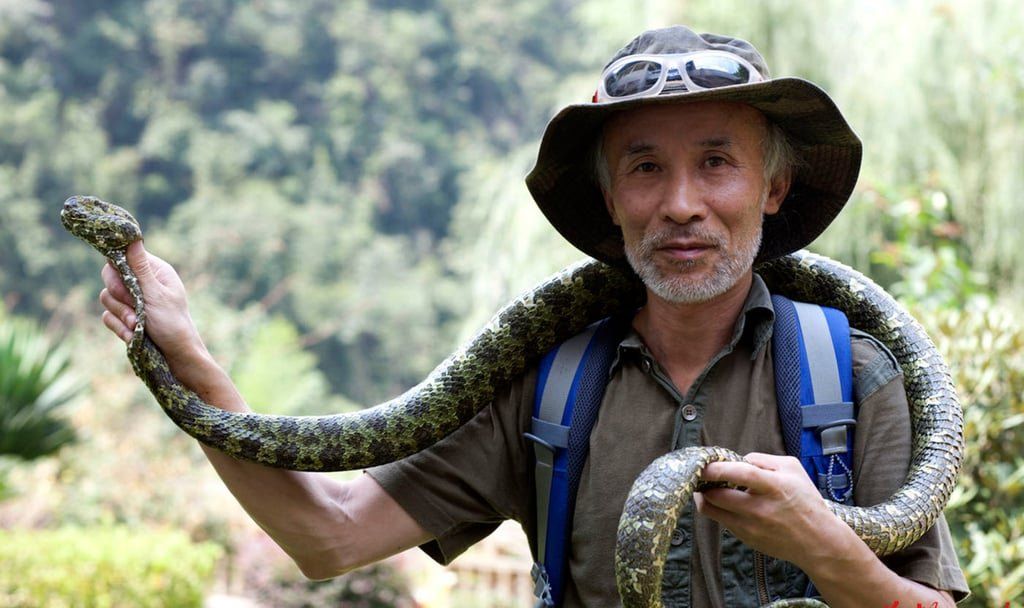
After five years of searching, Chen heard that a worker had captured a nest of 23 snakes that matched the description of the “little green dragon.”
Hiding it from his wife, he used the money his family had saved for three years to buy a refrigerator to purchase the snakes.
After consulting with snake experts in China and the US, in 1990, Chen officially announced the discovery of China’s 50th venomous snake and named it the “Mangshan pit viper (Protobothrops mangshanensis).”
When discovered, only about 200 Mangshan pit vipers existed. For the next three decades, Chen dedicated his life to studying and protecting the species.
He and his family never left their 51-square-metre bungalow. He also artificially bred the species at home. In 1994, he successfully bred the Mangshan pit viper in captivity for the first time. In 2017, he successfully incubated 10 snakes under simulated natural conditions.
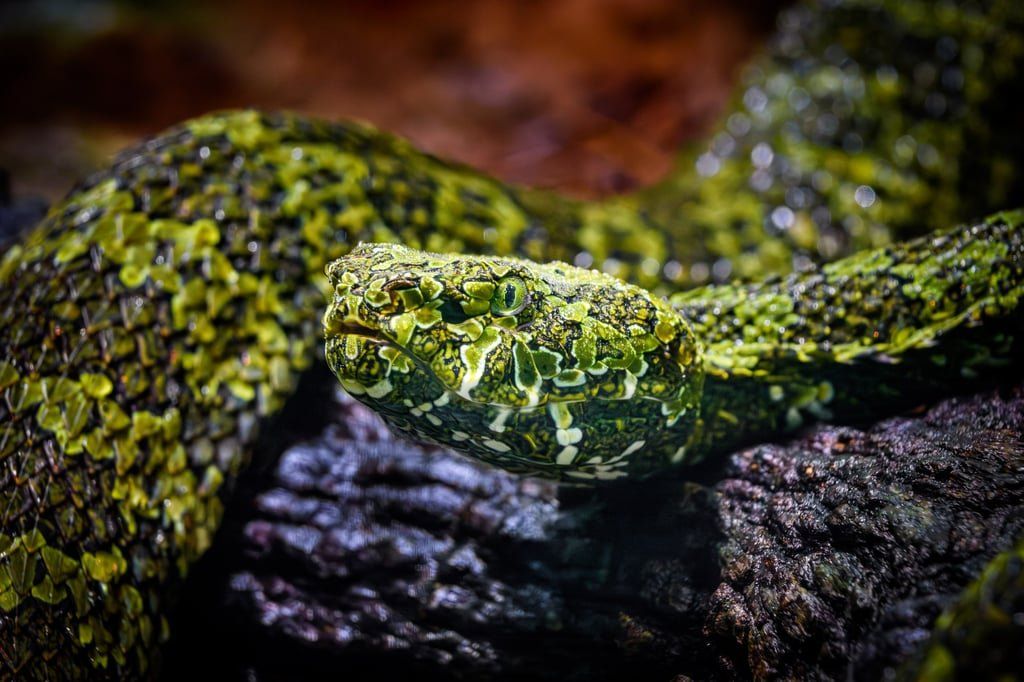
Up until 2022, Chen had bred 160 Mangshan pit vipers, all of which were released into the mountain’s nature reserve.
To this day, Chen said there are still fewer than 600 Mangshan pit vipers. The species has been listed as Endangered on the IUCN Red List of Threatened Species since 2011.
The rare species endemic to China is also nicknamed “the giant panda of snakes.”
After its listing on the IUCN, the price of the Mangshan pit viper in the black market reportedly soared to over one million yuan (US$150,000) each.
Chen declined many tempting offers and even moved the snakes he bred into his own home after a snake dealer stole one from his pit.
His wife also quarrelled with him many times and even threatened to divorce him, but gave up the idea after witnessing his unwavering passion for snakes.
Chen was bitten nine times by the Mangshan pit viper. He wrote his last words just in case after being bitten eight times, and he lost a part of his left middle finger after being bitten the ninth time.
On the ninth occasion, he chose to photograph the bite marks for scientific records instead of applying first aid during the first critical minutes. He was unconscious for three days and nights, and fortunately ended up with just a loss of a finger.
Despite this, Chen said he never regretted the path he chose.
His passion for snakes earned him the nicknames “Snake Doctor,” “Snake Immortal,” and “Snakeaholic.”
Chen’s remarkable work was brought to the spotlight after the National Zoological Museum of China denounced a man for encouraging his two children to play with a specimen of the Mangshan pit viper, causing it to be damaged.
Chen, who donated the specimen, said he was heartbroken and confused why adults would let children play with such precious specimens as toys.
He believed the parent was fully responsible for the damage.
“Children don’t understand, but adults should,” he remarked. -- South China Morning Post



