
China’s biggest box-office surprise this year – a Teochew-language family drama that became a hit in Southeast Asia – is finally coming to North American cinemas on September 4.
Dear You, whose Chinese title translates as “Love Letters for Grandma”, has grossed nearly US$300 million in mainland China. Its North American release will test whether a Chinese film rooted in migration, family, and regional culture can find an audience beyond the Chinese-speaking diaspora.
The seemingly non-political film also sparked debate over China’s cultural influence among overseas Chinese communities, raising questions about the role Chinese cinema can play in shaping perceptions of China overseas, and whether that cultural reach can translate into soft power.
The film follows a debt-ridden grandson from the Teochew, or Chaoshan region of Guangdong Province, as he travels to Thailand to find the grandfather he believes abandoned his family, hoping the man behind years of qiaopi – letters sent by overseas Chinese migrants to their families, often accompanied by remittances – can help him repay his debts. He instead learns more about his family’s past and his grandparents’ relationship.
Its distributors hope its near-universal themes will transcend language and cultural barriers even as others are sceptical.
Bringing Dear You to the US
Dear You is being released by Well Go USA, a Texas-based, family-owned distributor focused on bringing Asian cinema to North American audiences.
The film will open in 86 screens across 23 US states and two locations in Canada, including major metropolitan areas, a modest roll-out for an indie film but with more showings expected.
Doris Pfardrescher, president and CEO of the company, said the director “has crafted a deeply moving story about family, sacrifice, and the enduring power of human kindness that resonates across cultures”.
Well Go USA released 17 Chinese films last year and is set to release 10 this year, positioning it as a major player in this niche market alongside China Lion Film Distribution, CMC Pictures, and Sony Pictures Classics.
The distributor has also tailored its marketing for North American audiences with a trailer featuring highlights from film critics and media reviews, according to Will Zang, a Los Angeles-based publicist specialising in Asian cinema who is helping promote Dear You.
“We expect [Dear You’s] North American release to connect with more audiences and help them appreciate the richness and emotional power of Chinese cinema and culture,” he said.
Simon Abrams, a New York-based film critic, told South China Morning Post that Dear You is an old-fashioned melodrama with a “big three-hankie conclusion”. Still, he said, “it’s genuinely disarming and a real crowd-pleaser”.

The release comes as Chinese films are increasingly seeking audiences outside China.
In 2025, Chinese films generated US$140 million in overseas box office through October 20, according to a blog post by China’s National Film Administration, with films released in 46 countries and regions.
Fifteen of China’s 20 highest-grossing domestic films had also received overseas releases.
In North America, 54 new Chinese films were released in 2025, generating $US$38.44 million in box-office revenue – up 158 per cent from 2024, according to the state-affiliated Global Times.
Ne Zha 2, helped by an English-dubbed version, became the fifth-highest-grossing Chinese film of all time in North America, surpassing Jackie Chan’s The Medallion.
Will it win over American audiences?
Chinese-language cinema was a strength of China’s soft power in the early 2000s, particularly through martial arts films, said Stanley Rosen, a professor at the University of Southern California who specialises in Chinese politics and soft power.
Crouching Tiger, Hidden Dragon, an Oscar-winning Chinese film released in 2000, grossed US$128 million in the US and held the record for the highest-grossing foreign-language film for two decades.
But success in China does not necessarily translate into comparable success in North America. Today, Chinese films are reaching North America in greater numbers, although they remain far from mainstream.
One recent example is Jia Ling’s YOLO, a 2024 Chinese New Year blockbuster about a woman who turns to boxing and rebuilds her life after a series of personal setbacks.
The film grossed more than US$400 million in China, but earned only about US$2 million in the US and Canada after Sony Pictures acquired its international distribution rights and released it in more than 200 North American cinemas.
China’s film industry still lags well behind Japan’s in the US market. Demon Slayer: Infinity Castle, a Japanese anime, alone made about US$135 million in the US market in 2025.
Rosen expects Dear You’s audience to be primarily Chinese-speaking Americans, although he said it could perform better if strong reviews and positive word of mouth accompany its box-office success in China.
“If it makes US$2 million, that would be very good,” he added.
When cinema becomes soft power
Despite its massive box-office success in the China market, Dear You has been embroiled in a wider debate over whether the film is strengthening a sense of shared Chinese identity among the diaspora.
Beijing has strategic reasons to cultivate the diaspora beyond sentiment. Overseas Chinese communities are viewed as a channel for expanding geopolitical influence abroad – shaping opinion and cultivating sympathetic voices.
In May, Singaporean journalist Sim Tze Wei argued that the film could be understood as a form of “non-coercive” United-Front work, a reference to Beijing’s external propaganda arm, suggesting its emotional appeal could strengthen a sense of Chinese identity among overseas Chinese.
That drew a sharp rebuke from Chinese state media and Chinese online commentators, who accused the writer of politicising a film about ordinary family sacrifice.
Wang Yan, an associate research fellow at Beijing Foreign Studies University, argued in a CGTN commentary titled “It’s cinema, not politics” that to call Dear You a “United Front work” is to impose a “contemporary political label onto a heritage that transcends borders and generations”.
Rosen also expressed scepticism that uniting the Chinese diaspora was the filmmaker’s purpose.
He noted that director Lan Hongchun has made films promoting Teochew culture before, suggesting that the film’s focus on shared Chinese identity does not necessarily mean it was designed as a united-front project.
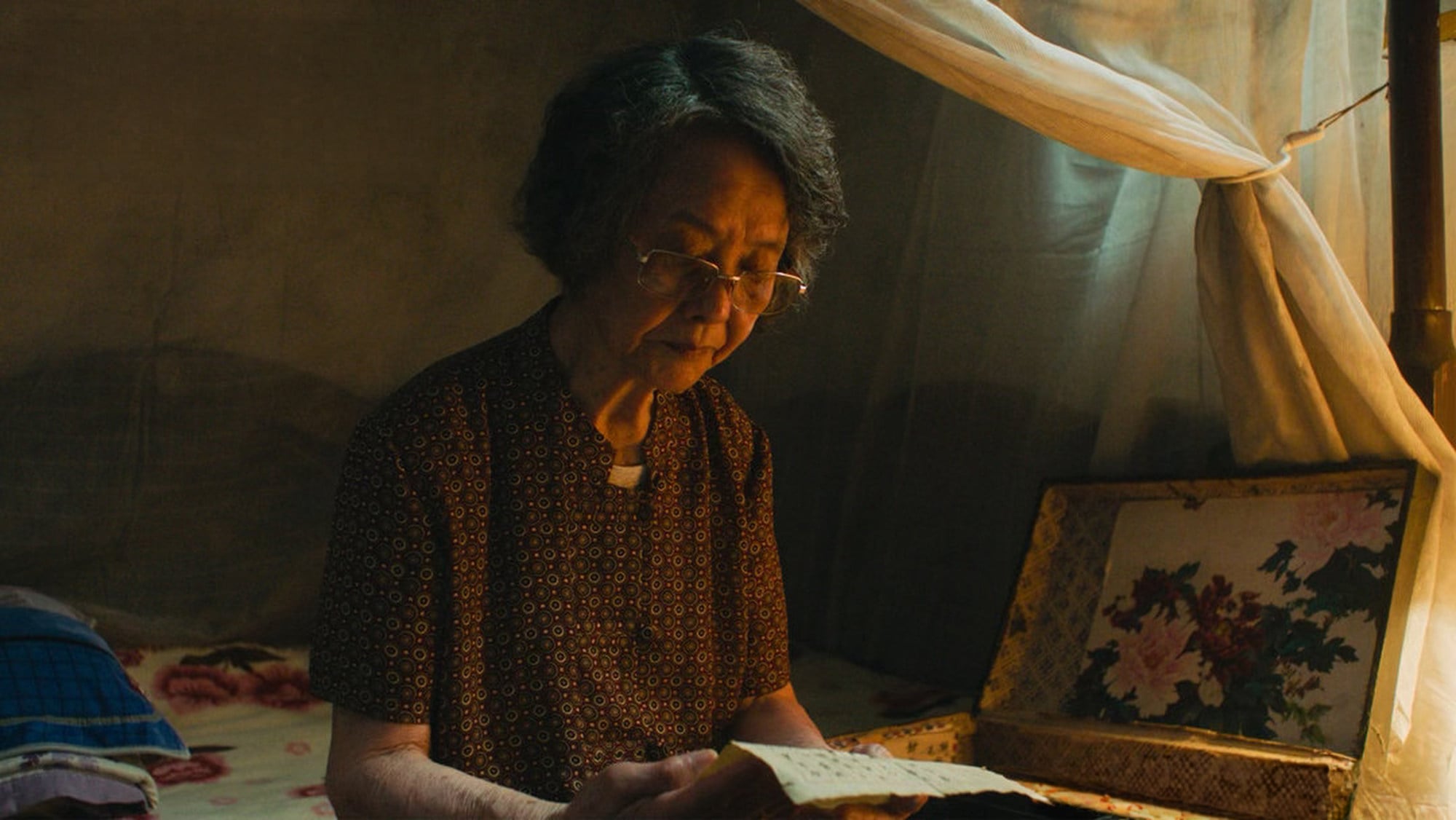
But he said the Chinese government may welcome the film as an opportunity to unite overseas Chinese, while noting it was unclear how China’s censorship system may have influenced the script.
A 2025 report by scholars from Hong Kong and Germany found that Chinese-language film releases in North America have expanded steadily since 1992, shifting from festival-driven art-house pickups to genre films such as martial arts, horror, and triad films, and to day-and-date releases timed to the mainland market.
The researchers argue that distributors’ acquisition, marketing and release strategies have played a critical role in determining which Chinese-language films reach North American audiences – a factor they say should be considered alongside questions of Chinese soft power.
Rosen said China’s cultural influence extends beyond film, from Labubu dolls to Chinese coffee brands entering Western markets.
But US-China rivalry remains a bigger factor in China’s global image, he added, citing Pew data showing perceptions of China improving as views of the US have declined.
“What is moving the needle much more is Donald Trump,” Rosen said, referring to the US president.
“That’s been much more helpful to Chinese soft power than [Dear You].” -- SOUTH CHINA MORNING POST