




US President Donald Trump has already announced the date: September 24.
That is when, Trump says, Chinese President Xi Jinping will come to the White House for a visit following the “America first” leader’s own three-day trip to Beijing in May.
But there is a diplomatic wrinkle.
The Trump administration has publicly put the date on the calendar. Beijing has not formally announced Xi’s Washington visit.
According to sources familiar with the plan, Xi is expected to arrive in Washington on September 23 and depart on September 25, mirroring Trump’s last three-day itinerary in China.
The South China Morning Post first reported on August 1 that Xi is likely to remain in Washington rather than travel to another American city.
Traders are already pricing the odds of the visit. As of August 27, Polymarket contracts on whether Trump would meet Xi in September and whether Xi would visit the US by September 30 were both priced at about 95 per cent.
Polymarket put the probability of Xi visiting the US by the end of September at 94 per cent. At Kalshi, another prediction market, the chance of a visit before October stood at 88 per cent.
The wager, however, is about to get more complicated. As the expected summit approaches, traders will move beyond the simple question of whether the Chinese president will get on the plane and begin pricing what will happen once he arrives.
Will Trump and Xi announce a trade deal, cut tariffs, make progress on artificial intelligence, or discuss semiconductor controls? Will they say something about Taiwan, or at least strike a conciliatory tone?
Sub-markets linked to Trump’s May visit to Beijing even included the prospect of the two leaders embracing, with “yes” odds that at one point ran into the teens before the market later resolved to “no”.
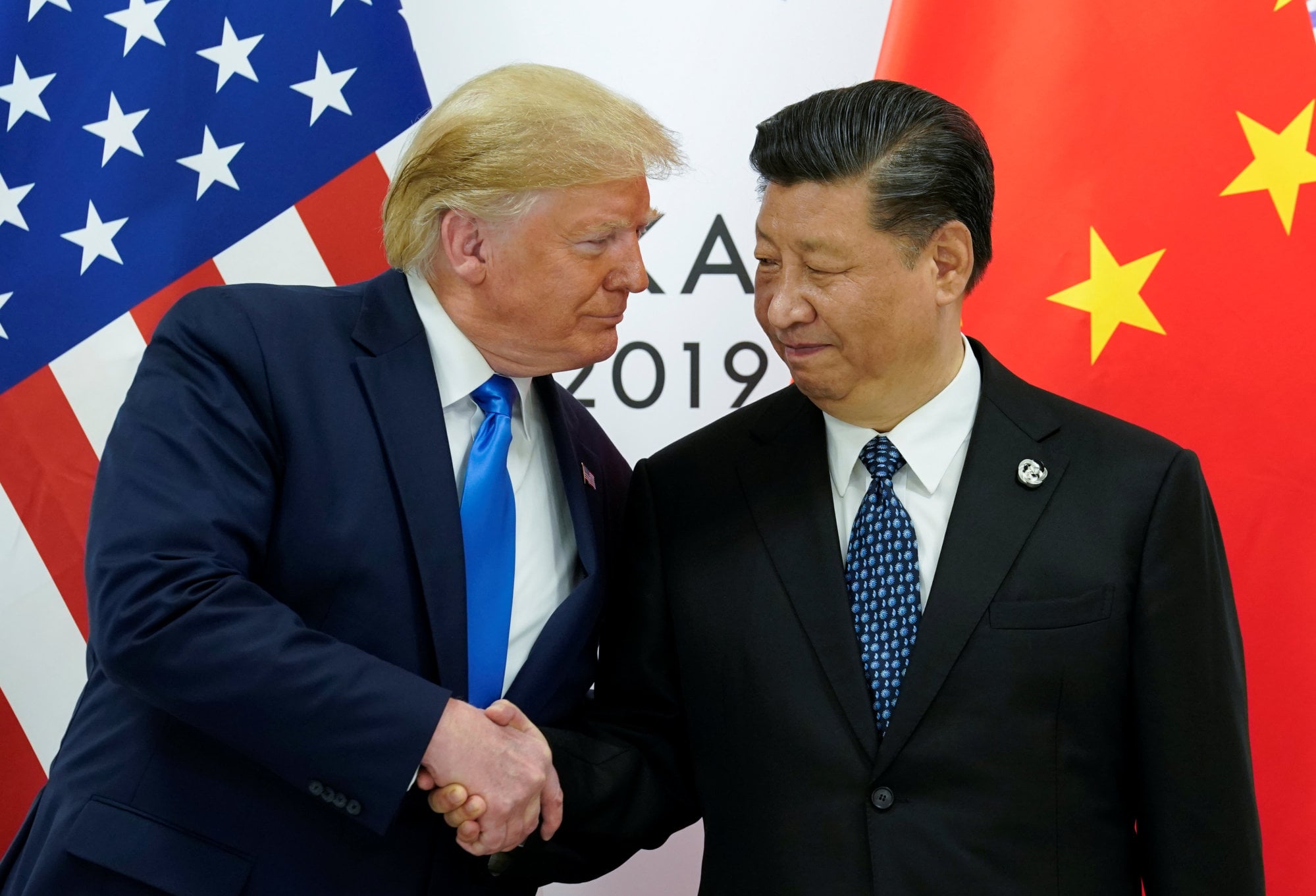
The growing range of such wagers, observers note, may offer a new way to measure what the world expects next – while also creating the risk that those expectations begin to shape what happens next.
Samuel Lazarus, a research associate at the Council on Foreign Relations, anticipates a “litany” of contracts to emerge around the expected Xi-Trump summit, covering everything from major policy decisions to the “buzzwords” the two leaders might use.
“We should expect markets on potential tariff reductions, progress on the US-China Board of Trade, potential cooperation on AI safety, possible revisions to semiconductor export controls, new or updated purchase and sale agreements, the United States’ pending arms sales to Taiwan, and, of course, rumblings about a ‘fourth communique’,” Lazarus said.
Some contracts will be tied to concrete policy outcomes. Others will be “mention markets”, where the wager comes down to whether Trump or Xi say a particular word or phrase.
But Lazarus cautioned against mistaking every market movement for a meaningful shift in the relationship.
“Markets and analysts are hardly pricing in a major shift in bilateral relations, such as major changes to baseline tariff levels or the status quo in the Taiwan Strait,” he said.
Trump’s “spontaneity and bluster”, he added, made for “good fodder in mention markets, but his statements have generally proved to be noise, not signal, with respect to the trajectory of the relationship”.
“Instead, the inertia of strategic competition has proved dominant, while prediction markets have proved useful in pricing tactical shifts,” he said.
Hilton Root, a professor of public policy at the Schar School of Policy and Government of George Mason University, in Virginia, noted that during the May meeting markets covered attendance, particular words Trump might use, specific announcements and the possibility of a tariff agreement.
“Kalshi has also offered contracts on a Xi visit to the United States, the tariff rate on China, and even the duration of a Trump-Xi handshake. I would expect many more contracts of this kind as another meeting approaches,” he said.
However, Root added that the prediction markets’ “limitation is equally important to recognise”.
“Prediction markets favour outcomes that are defined beforehand, publicly observable, and easy to settle,” he said.
“They can price whether a tariff is reduced, an agreement is signed, or a particular phrase is used. They cannot readily price what may be the summit’s most valuable result,” he said, referring to the possibility of greater stability in the US-China relationship.
That distinction could be particularly important for Beijing. Chinese officials have spent years learning how to operate around Trump’s unpredictability.
Sourabh Gupta, a senior fellow at the Institute for China-America Studies, said Beijing was unlikely to let individual presidential comments, or the prediction markets reacting to them, derail its broader objectives.
“Beijing has learned to look beyond the president’s individual, erratic utterances,” Gupta said. It could still watch the overall direction of Trump’s comments “as a general pulse check of his inclinations”, he added, but individual statements would be unlikely to affect Beijing’s strategy.
“While individual utterances may move prediction markets, [they are] unlikely to deflect Beijing from its summit goals and priorities,” Gupta said. Chinese officials “have learned to disregard that which is realistically beyond their control”.
Instead, Beijing will focus on what actually happens. “Actions and adherence to commitments, and not sweet or sour words, are the bottom line by which they operate in their dealings with this administration,” Gupta said.
But the markets carry risks of their own.
The recent case of Gabriel Perez, a White House teleprompter operator placed on unpaid leave after using advance access to Trump’s remarks to bet on Kalshi, showed how quickly privileged information can acquire a dollar value.
A US Army Special Forces soldier was also accused of using advance knowledge of the operation to capture Venezuelan leader Nicolas Maduro to place winning bets on prediction markets.
The stakes are potentially higher around a Xi-Trump summit. Knowing a president will utter “China” in a speech is one thing. Knowing in advance that the US is preparing to loosen semiconductor restrictions, change its position on Taiwan or announce a major tariff concession is something else entirely.
Geopolitical prediction markets create “perverse incentives for government officials to trade on closely held, often classified, information”, according to Lazarus.
At the same time, market transparency provided some protection, and most insiders were either prevented from trading or identified after the fact, he said.
Still, regulators should narrow the scope of listed markets, particularly on offshore exchanges, to “minimise the risk of sensitive information leaking by way of insider trades”, Lazarus said.
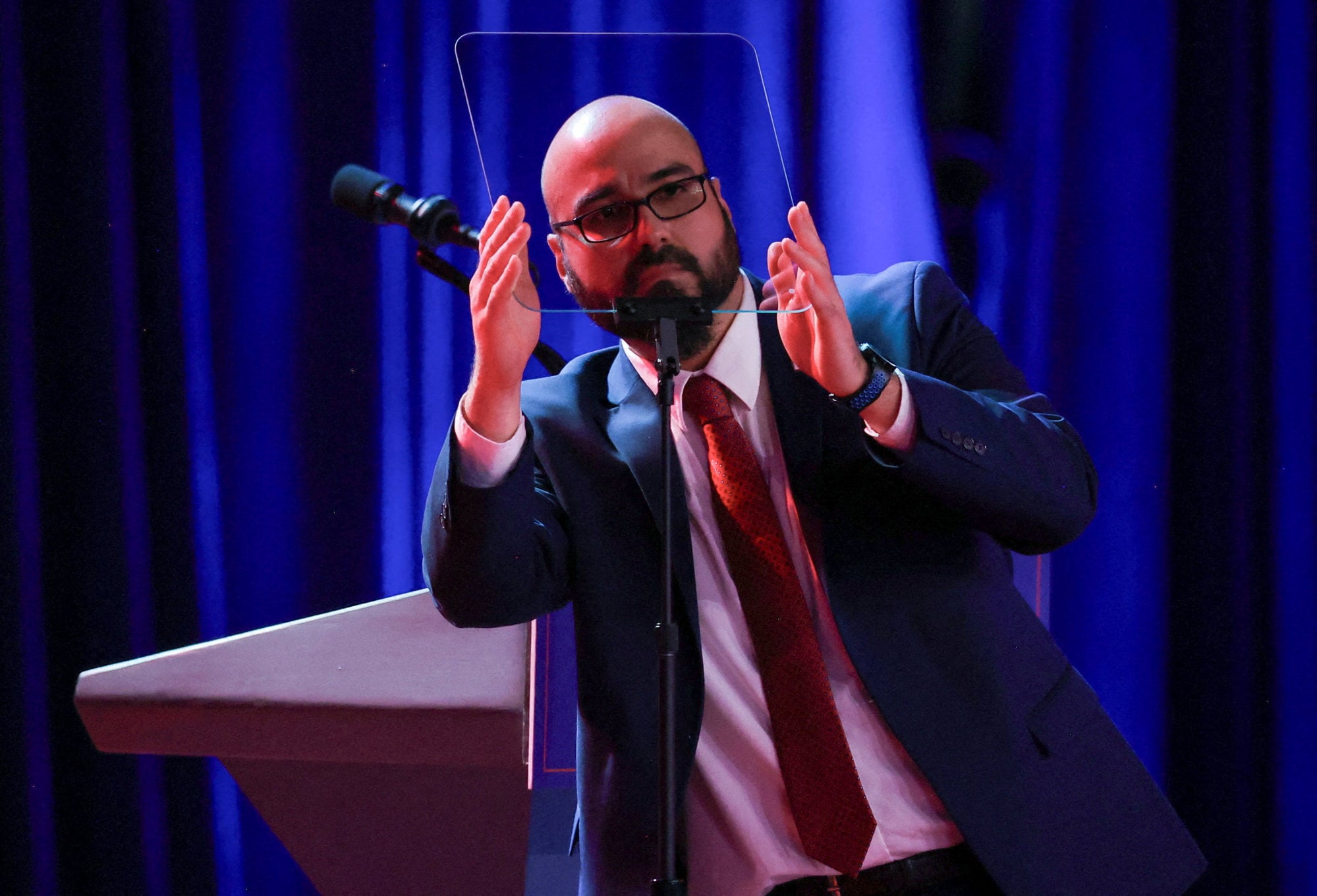
The damage caused by leaked government secrets, he warned, had the potential to be both permanent and highly costly.
Prediction markets do not need privileged information to become influential. A relatively small amount of money can move a thin market, and the resulting price can take on a significance far beyond the original bet.
Matthew Wein, a US national security policy expert, warned in a February commentary published by the Atlantic Council that a thinly traded market “could be meaningfully shifted by a single six-figure trade”.
When it comes to a Trump-Xi summit, a sudden move in the odds on a tariff deal or Taiwan-related announcement could be interpreted as a signal that someone knows something, even when it may simply reflect one large bet.
Treating such movements as transparent reflections of public belief, Wein cautioned, risked “granting disproportionate narrative power to actors with both the capital and the incentive to shape prices”.
That possibility is especially interesting in the case of China, where summit diplomacy is typically tightly controlled and carefully choreographed. But Beijing may simply decide to ignore the noise.
Gupta argued that prediction-market distortions could “throw a curveball or two and sour the atmosphere”.
Still, he said, “Beijing is not the type of protagonist to be deflected by such forces”. These are “trivialities in the course of statecraft that just have to be stared down or, better yet, ignored”.
Yun Sun, director of the China programme at Washington-based think tank the Stimson Centre, is similarly cautious about reading too much into the market.

“As it stands now, the trip is expected to happen,” she said. But she sees a more fundamental question ahead: what can the summit actually deliver?
“The market will react to any potential news,” Sun said. “But for this trip, it will be hard to expect major deliverables on specific industries or sectors.
“The low-hanging fruits were picked during the May trip,” she said, adding that “implementation of existing agreements remains difficult, including follow-up to the Boeing deal”.
“Rumours will always bubble,” Sun added. “But having a practical baseline expectation is more important at this stage.”
Still, Lazarus contended that prediction markets remained “an indispensable tool for navigating an increasingly volatile international landscape and, of course, a uniquely improvisational president”.
With appropriate guardrails, they could provide a “weighted average of popular expectations” at a time when geopolitical forecasting was becoming harder.
“The stakes today are simply too high to outsource all geopolitical forecasting to the commentariat, the whims of the algorithm, or the promises of those who lead us.”
And that may be the real test of the Xi-Trump summit: whether these markets can help reveal what the world expects next, without becoming part of what happens next. -- SOUTH CHINA MORNING POST


