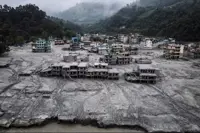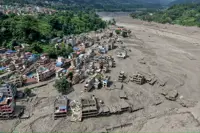
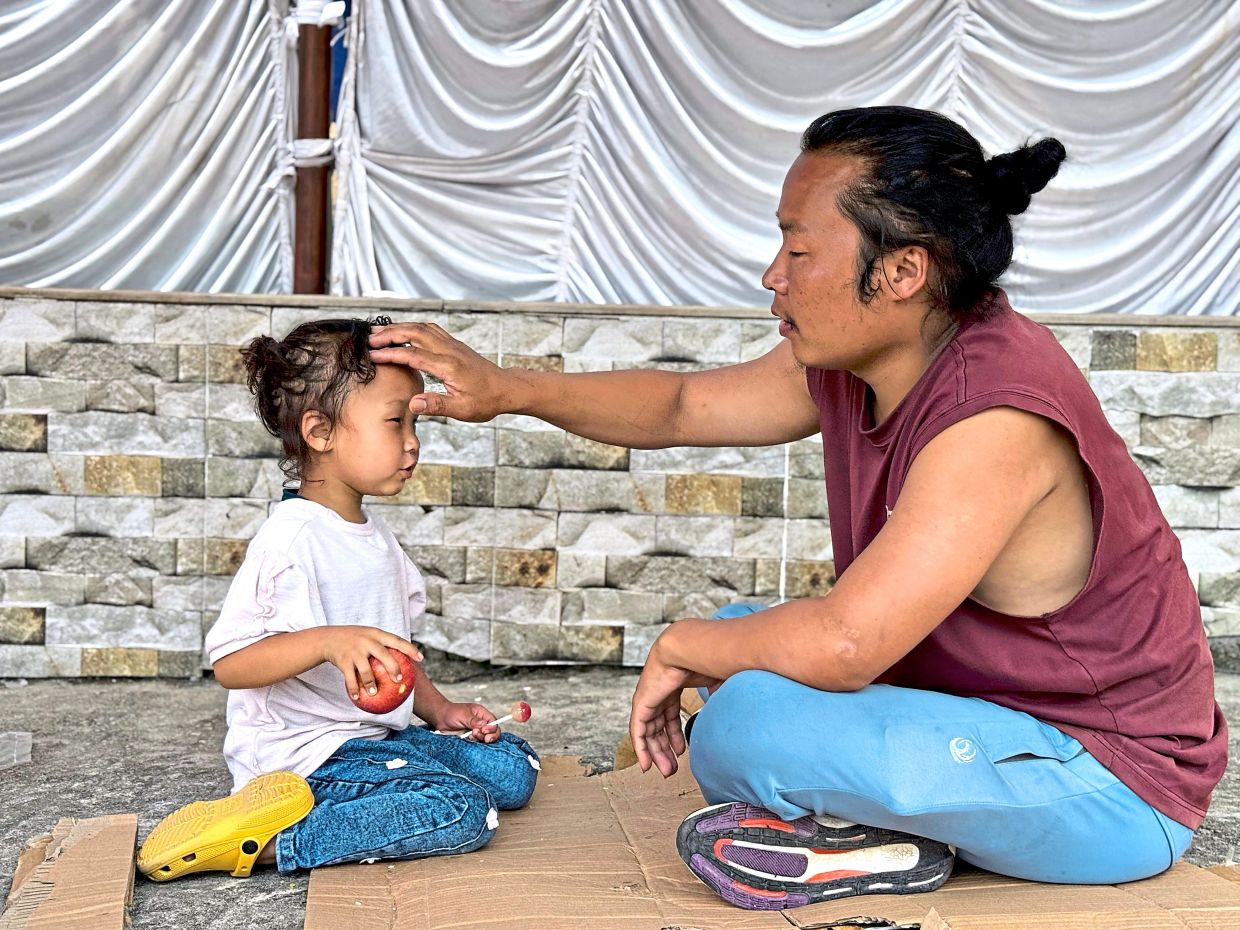
IN the days since Tsering Gelbu Lama’s wife was swept away by devastating floods along the Nepal-Tibet border, he still hasn’t told his four-year-old daughter that her mother is dead.
Lama wiped away tears as he sat on the floor of a Buddhist monastery turned makeshift shelter for hundreds of others evacuated from remote villages to the capital, Kathmandu.
“I don’t know how I will pass on our culture to her,” he said.
For Lama and a rising number of others displaced by the floods, the losses go beyond homes and belongings.
Communities whose culture and practices, often tied to ancestral land, are eroding as young people leave for the city now worry if their sacred traditions can be preserved.
“We’ve become homeless not only because we’ve lost our land – we’ve become homeless with our culture and tradition,” said Tsering Sherpa, 36, from Rasuwa, as he sat on the monastery steps.
Nepal is home to more than 120 ethnic groups, with many preserving distinct languages, rituals and festivals that have been passed down for generations.
Rasuwa, a district in the Himalayas along the Nepal-Tibet border, is known for its distinct Buddhist culture and Indigenous communities.
The Tamang Heritage Trail has become a popular trekking route for tourists looking to see Tibetan Buddhist culture.
Flood survivors now living in the monastery described their villages’ forests as thick with trees and filled with bears, deer and butterflies. Others showed pictures of steep hills along a river.
Survivors at the monastery also shared photos and videos of what life in their villages was like before the floods: women chopping juniper together to make incense, making new decorations for a monastery being built, men and women wearing colourful traditional clothing and dancing during festivals.
Survivors described how they fled the surging river water by climbing to the top of hills, seeking refuge in monasteries they had built just a year earlier, after the older ones were destroyed by a 2015 earthquake.
Many said they didn’t have time to take anything from their homes and are now left with only the clothes they wore when being evacuated by helicopter.
Others spoke of losing important heirlooms that are usually passed down from generation to generation.
Several survivors sheltering in the monastery said children who have become orphans during the floods are a particular concern.
“We don’t know who will teach them,” said Alina Lama, 26, a shelter volunteer from Rasuwa.
With local monasteries destroyed and monks with highly localised knowledge gone, Sherpa said important Buddhist autumn festivals would be an example of further loss of cultural practices.
“We used to celebrate these festivals in our monasteries. Right now we don’t even have a monastery,” he said.
“Culture and tradition are passed generation to generation by practice. If I can’t follow the tradition now, how can I pass it on to the next generation?” — AP