KATHMANDU (Bloomberg): About a decade ago, a powerful Nepal earthquake killed 9,000 people and devastated a tourism industry built around Himalayan treks. While the destruction from last week’s glacial flood is smaller in scale, this time officials aren’t even sure how to start reconstruction.
"After an earthquake, if your house fell, you still had your land - you could rebuild it,” said Govind Raj Pokharel, former head of Nepal’s National Reconstruction Authority, who helped lead the post-earthquake reconstruction in 2015. "Here, where do we rebuild?”
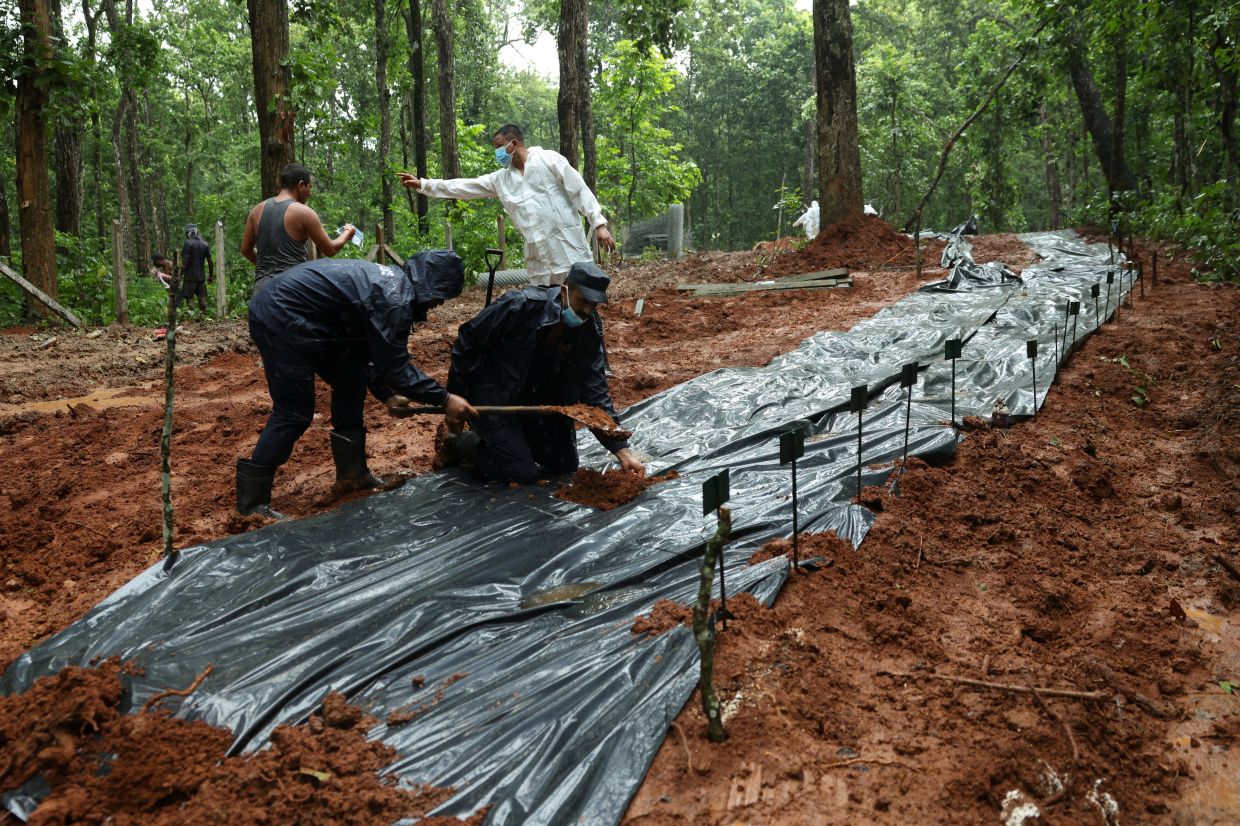
A collapsed glacier last week sent a deluge of water, mud, rocks and ice hurtling at speeds around 100 miles-per-hour (160-km per hour), leaving a trail of death and destruction that transformed the landscape of two major river valleys in Nepal and neighboring China. Rescue teams are still racing to find survivors, with the death toll climbing to 987 on Tuesday.
The disaster has left thousands of people missing, including hundreds of tourists, and damaged roads, bridges and hydropower projects, another key engine of Nepal’s $45 billion economy. For one of Asia’s poorest countries, whose mountains and trekking routes are among its biggest international draws, the devastation threatens to reverberate well beyond the communities directly in the flood’s path.
The blow to Nepal’s critical growth pillars presents the starkest challenge yet to the new government led by Balendra Shah, a 36-year-old former rapper and ex-mayor of Kathmandu. He came into office earlier this year in the wake of a bloody Gen-Z uprising fueled by dissatisfaction over corruption and lack of economic opportunities in the country of 30 million people, where per capita income is around $1,500 a year.
Officials in the South Asian nation estimate reconstruction alone could cost as much as $5 billion, equivalent to more than a tenth of Nepal’s economy. While authorities raised more than $4 billion from international donors after the 2015 earthquake, few expect similar generosity this time around.
Many developed countries have cut foreign aid budgets, especially in the US in the wake of President Donald Trump’s shutdown of USAID. The US contributed $190 million toward Nepal’s 2015 earthquake relief, mainly via USAID.
"The international situation in terms of financial assistance is totally different than what it used to be around 2015,” said Madhu Marasini, a former Nepali finance secretary who helped organize the 2015 donor conference as part of the post-quake reconstruction efforts.
The economic hit has been compounded by the destruction of a major border crossing that in the 2025 fiscal year handled about a quarter of Nepal’s imports from China. Before it was swept away in last week’s flood, the Friendship Bridge on Nepal’s northern frontier carried trucks laden with Chinese electric vehicles and other goods in one direction, and tourists and pilgrims toward Tibet in the other.
The flood-battered area, particularly in the now largely inaccessible Rasuwa district along the Tibet border, handled more than $600 million worth of cross-border trade in the 2025 fiscal year and accounted for nearly 5% of Nepal’s total imports, according to the Nepal Economic Forum, a think tank. Its closure will likely curb Nepali imports of critical Chinese-made goods like garments and household items, leading to higher prices for ordinary people, according to Marasini.
"This will have an inflationary impact because you need to import from somewhere else,” he said.
There’s also the risk of food shortages in Kathmandu since the disaster struck a fertile Nepali agricultural vein responsible for a large share of the country’s vegetable production.
"No big trucks and containers can go over these roads” in the wake of the flooding, said Vijay Kant Karna, executive chairperson of the Centre for Social Innovation and Foreign Policy, a Nepal think tank.
Hydropower Projects
Apart from being a busy trade corridor with China and a gateway to major trekking routes, including a high-altitude pilgrimage to Mount Kailash, the area also served as a hub for hydropower development.
Bhim Prasad Gautam, chief executive of the Independent Power Producers’ Association Nepal, or IPPAN, a Kathmandu-based industry group, estimates that Nepal’s hydropower ambitions have been set back by five to six years. In the most recent fiscal year, Nepal exported 30 billion Nepali rupees ($198 million) worth of electricity to India, from being a net importer just a decade ago, he said.
"This is the one area where we have so many rivers for potential hydropower projects,” he said. "This is also the area around the capital city of Kathmandu. This is where we are living - this is the load center and the main demand area for energy.”
Gautam estimated that the flood damage to hydropower would cost the country around 130 billion Nepali rupees ($850 million). The cost to the country’s technical and engineering expertise is also significant: Of the roughly 900 people missing in the wreckage of damaged hydropower projects, Gautam estimates that 400 to 500 are highly skilled workers.
Currently, hydropower’s share in Nepal’s gross domestic product remains small overall, though its importance is growing as new plants come online and exports grow, especially to India. The sector accounted for 1.6% of Nepal’s economic output in 2024, according to the World Bank, but electricity exports have the potential to add $3 billion to Nepal’s GDP through 2033.
Shah’s government is also facing some pressure from opposition figures.
Rajan Bhattarai, a senior opposition party leader, said the central government coordinated poorly with local officials in the rescue effort leading to delays in getting help to survivors, and also took too long to open a route to badly affected areas in the Rasuwa district, where some of the worst flooding is thought to have taken place, close to the Chinese border.
"There is a lack of proper coordination,” Bhattarai said. "They seem confused about prioritizing what should be first, second, third in terms of rescue, in terms of providing treatment to people and giving relief to those who’ve been suffering.”
Shah’s government has said it is prioritizing saving lives and is making its best efforts to coordinate among different government agencies given the circumstances, according to Ram Lama, a member of parliament for the ruling Rastriya Swatantra Party.
"This government is trying its best in terms of rescue, as well as relief,” Lama said. Many affected areas remain inaccessible still, "but we are trying our best,” he said.
- With assistance from Shristi Kafle, Stephen Stapczynski and Rajesh Kumar Singh. -- Bloomberg