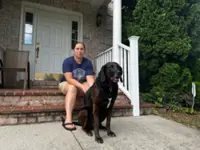
When Beijing-based neurosurgeon Jin Shanmu pulled up a chair at his computer, he was not looking to make mathematical history. He was simply trying to crack a problem related to brain ultrasounds.
Instead, the self-taught maths enthusiast, with help from OpenAI’s latest flagship artificial intelligence (AI) model, solved a two-decade-old mathematical puzzle that had frustrated experts around the world since 2004.
Jin, a postdoctoral researcher and resident at the Peking Union Medical College Hospital, managed to prove Crouzeix’s conjecture, a problem in numerical linear algebra.
His tool? A 16-hour autonomous run on GPT-5.6-Sol, operating on the ChatGPT Work platform.
Proposed by French mathematician Michel Crouzeix, the conjecture posits that the norm of applying any function to a matrix is no larger than twice the function’s maximum value on that matrix’s numerical range.
While abstract, it has long been an intriguing problem in matrix analysis – a field Jin stumbled into while undertaking research on transcranial ultrasounds.
The breakthrough came to light when Cornell University mathematician Alex Townsend and University of Washington professor Anne Greenbaum published an account on Tuesday detailing their email correspondence with the Chinese doctor.
For over a year, Townsend had been routinely prompting GPT models to solve Crouzeix’s conjecture. Then, on July 30, the AI did something unexpected: it pointed Townsend to a paper uploaded online just three days earlier, claiming the problem was solved.
The author was Jin.
Townsend and Greenbaum said both of them, as well as Crouzeix himself, had reviewed the manuscript and confirmed that the proof was correct, although the paper had yet to undergo formal peer review.
The breakthrough highlighted “how strikingly capable” GPT-5.6 had become in the past few weeks, especially given Jin’s lack of specialised training in mathematics, Townsend and Greenbaum wrote.
Jin’s journey to maths fame has been unconventional. An undergraduate geology major who later transitioned to medicine, Jin told the mathematicians that his formal maths education was limited to basic undergraduate science requirements. Apart from that, the doctor said, he was self-taught.
His achievement comes as frontier AI systems play an increasingly prominent role in driving mathematical breakthroughs.
In May, US firm OpenAI said an internal general-purpose reasoning model had autonomously tackled an 80-year-old planar unit distance problem posed by Hungarian mathematician Paul Erdos in 1946.
Earlier this month, the company published a list of 10 more mathematical problems that an internal version of its next major model, Astra, had resolved or made major progress on.
Rival Silicon Valley firm Anthropic also said on Monday that an unreleased research version of its Claude model had been trying to solve a famous maths problem known as the Riemann hypothesis.
Though Claude had failed to prove the hypothesis, it had “unexpectedly made strides” on a related problem, according to the company. “Claude, like many of us, underestimates the rate of AI progress,” it said in a blog post. -- SOUTH CHINA MORNING POST