US President Donald Trump on Monday demanded that Iran compensate the victims of attacks, conflicts and domestic repression he blamed on Tehran, adding a new condition to negotiations over reopening the Strait of Hormuz.
The demand came after Iran reiterated that Washington must compensate it for damage caused by more than five months of US and Israeli strikes before the strategic waterway can be fully reopened.
“It is an interesting idea because now I am likewise demanding compensation from Iran, for all of the people that they have killed and gravely wounded with their roadside bombs and many conflicts,” Trump wrote on social media.
“I have instructed my representatives to put this firmly into any, and all, future negotiations.”
Trump also called for compensation for the families of people killed during anti-government protests in Iran and those killed in the October 2000 bombing of the USS Cole in Yemen.
The attack on the US Navy destroyer, which killed 17 American sailors and wounded more than 30 others, has been attributed by the FBI to al-Qaeda, not Iran.
Trump gives no details on how compensation is to be calculated
Trump provided no details about how compensation would be calculated, who would receive it or whether the demand had been formally presented to Tehran. The issue had not previously been publicly identified as a US condition in the negotiations.
Speaking to reporters at the White House, he reiterated his demand for compensation and said the US had the capability to escalate the conflict if it chose to do so.
“We have certainly that ability if we want to do that,” Trump said. “Yeah, you’ll find out.”
He also claimed that American military controls the Strait of Hormuz and its own blockade is “infallible”.
“We have mine-swept the entire strait,” Trump added. “But we control the strait 100 per cent. Now, can they make trouble? Yeah, they can make trouble, but they’re broke.”
While a ceasefire was agreed upon in April, Washington implemented its own counter-blockade targeting commercial vessels entering or leaving Iranian ports.
Iran said over the weekend that it was nearing an agreement with neighbouring Oman defining shipping lanes through the Strait of Hormuz, but stressed that reopening the waterway remained contingent on several US concessions.
Iranian Foreign Ministry spokesman Esmaeil Baghaei said Washington would have to compensate Tehran for wartime damage, lift sanctions and military threats, withdraw US forces from the region and release frozen Iranian assets.
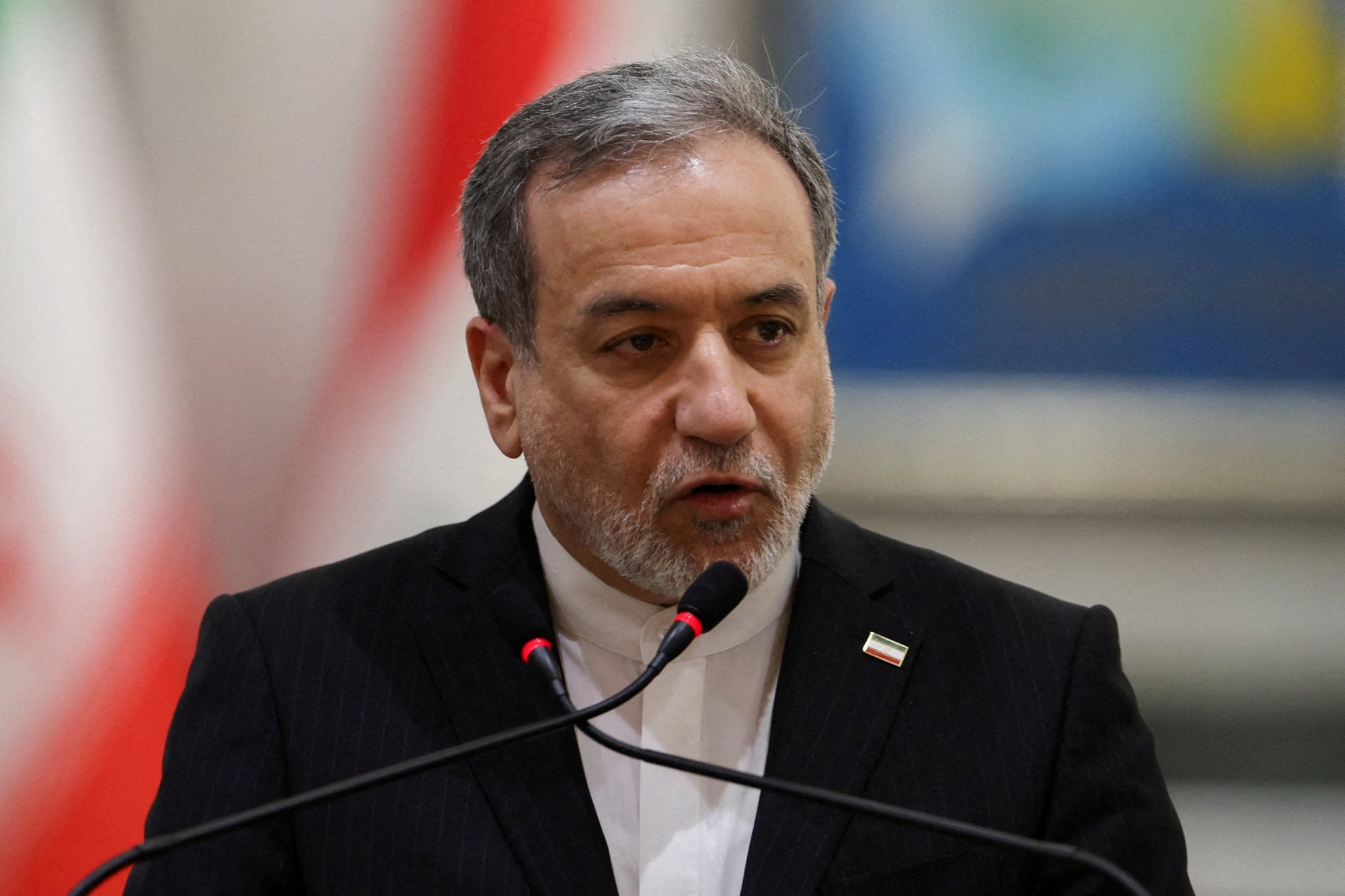
“From our perspective, until the violations of the memorandum of understanding end and the US compensates for what it has violated in the memorandum, there is no possibility of restarting negotiations,” Iranian Foreign Minister Abbas Araghchi said on Sunday.
Washington and Tehran agreed to a 14-point memorandum of understanding in June to reopen the Strait of Hormuz and begin the complex process of addressing Iran’s nuclear programme.
However, the ceasefire soon unravelled as the two sides clashed over how to interpret the memorandum’s provisions governing the Strait, including requirements for vessels to use designated shipping routes.
Iran says it is nearing an agreement with neighbouring Oman on transit routes for inbound and outbound vessels, a move expected to tighten its control over the Strait.
Tehran’s effective closure of the Strait of Hormuz, a key transit route for roughly one-fifth of global oil and liquefied natural gas supplies, has pushed up energy prices and added to global inflationary pressures.
Trump on Sunday said that he was “low-keying” talks with Iran, indicating that the administration may instead focus on further increasing economic pressure on Tehran.
“We are only semi-negotiating with them. We are just watching Iran with its huge inflation and the fact they have no money,” Trump told Axios.
Tit-for-tat threats, contradictions continue to blight negotiations
The developments mark the latest turn in a conflict marked by escalating hostilities and repeated US threats to intensify military operations, including Trump’s warning early this month of the “biggest attack since World War II” – a threat he later called off, citing progress in diplomatic efforts.
On August 1, Trump first threatened and then suspended further strikes, saying Middle Eastern countries and Iran had agreed on the contours of a deal to end the conflict.
“Based on this request, I have agreed, for the future benefit of the WORLD and, likewise, the survival of a successful and prosperous Iran, to cancel the attack, subject to being able to rapidly make a DEAL,” he posted on social media.
On February 28, the United States and Israel launched coordinated air strikes on Iranian military installations, nuclear facilities and leadership targets, killing Supreme Leader Ali Khamenei and several senior officials within hours.
Iran responded with missile and drone strikes on Israel and neighbouring countries, including Qatar, the UAE, Saudi Arabia, Bahrain, Oman and Kuwait. Tehran also effectively closed the Strait of Hormuz, causing major disruptions to global trade in oil, natural gas and fertilisers. -- SOUTH CHINA MORNING POST