KATHMANDU: Students who have had to discontinue their studies or move to another university will now be able to transfer the academic credits they have earned and continue their education under a new system introduced by the University Grants Commission (UGC).
The UGC has issued the Academic Credit Bank Establishment and Operation Directive 2026, setting common standards for storing and transferring credits earned at universities and other higher education institutions in Nepal and abroad. The directive, made public on Friday, aims to make credit transfer more transparent and consistent among universities.
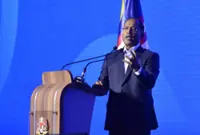
“Universities can carry out credit transfers. The directive has been issued to establish a credit bank, but much work remains before the bank can be fully operational,” said Kedar Prasad Acharya, director at the UGC. “It will take some time.”
The commission plans to establish the Academic Credit Bank itself. Under the directive, credits earned by students will be stored on a single digital platform and can later be transferred, at their request, to another institution or another programme within the same institution.
Nepali universities have been allowing credit transfers through their own arrangements, but there has been no common standard or formal system recognised across institutions. The UGC decided in April to introduce a national framework for credit transfer and subsequently prepared the directive.
Former UGC chair Devaraj Adhikari said the absence of clear and uniform rules had made credit transfers difficult in Nepal. “Standards have been set to make credit transfer easier by bringing uniformity,” he said. “Universities can work according to the directive.”
Adhikari said the system would particularly benefit students who return to Nepal after having to stop their studies abroad, those who need to change universities for various reasons and people who leave or resume higher education while working.
The need for a common system gained attention after the death of a Nepali student at Kalinga Institute of Industrial Technology in Odisha, India, in February 2025. Following the incident, Nepali students studying there announced plans to discontinue their studies. Tribhuvan University, Kathmandu University and Purbanchal University subsequently offered to admit affected students through credit transfer, but each institution followed different criteria.
Acharya said the new directive was intended to remove such inconsistencies. “The directive provides a uniform basis for credit transfer, which universities can implement through their own academic rules,” he said.
The proposed Academic Credit Bank will serve as a digital, virtual and online repository of academic credits earned at higher education institutions. Students will have to apply to deposit their credits in the system. The credits can then be transferred after the receiving institution determines that the subjects and academic fields are sufficiently equivalent.
The system will also apply to students who studied at institutions established under the laws of foreign countries, including those who interrupted their studies midway.
However, there are limits. Credits earned for a bachelor’s degree can be transferred and used only within seven years, while those for a master’s degree can be transferred within five years. The amount transferred cannot exceed 50 per cent of the total credits required for the programme in which a student seeks admission.
Universities will also have to record transferred credits on the academic certificate issued to students. The UGC said the directive was designed to promote student mobility and continuity in higher education by allowing credits earned inside and outside Nepal to be accumulated and transferred.
The directive allows federal and provincial universities, as well as academies, to amend their rules and regulations to implement the provisions. Universities have generally treated 16 hours of learning under the semester system as equivalent to one academic credit.
Officials say the new framework could be especially useful for students whose education is disrupted by unforeseen circumstances. Rather than forcing them to start a degree again after changing institutions, the system will allow them to carry forward eligible academic work.
The commission says the digital credit bank will eventually provide a national record of students’ academic credits, although its full operation will require further technical and administrative work.- Kathmandu Times/ANN