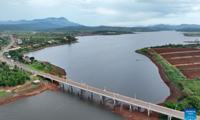
PHNOM PENH: Cambodia has introduced advanced environmental DNA (eDNA) technology, an innovative scientific tool that can identify aquatic species through the analysis of water samples, in a move expected to strengthen conservation efforts for the endangered Mekong dolphin, as well as rare species and the general biodiversity of the Mekong River.
The new technology was introduced during a two-day regional consultation workshop on Aquatic Biological Identification Using Environmental DNA (eDNA), held in Cambodia on August 4–5, according to the Ministry of Agriculture, Forestry and Fisheries.
The workshop was chaired by Im Rachna, ministry undersecretary of state responsible for fisheries conservation, and brought together senior researchers from Cambodia, China, Laos and Myanmar.
Rachna explained that expanding knowledge and application of eDNA technology would improve the effectiveness of biodiversity conservation, help protect rare fish species and contribute to safeguarding the endangered Mekong River dolphin, which inhabits the deep pools of the Mekong in Kratie and Stung Treng provinces.
“The application of eDNA methods will provide countries along the Mekong River with accurate and rapid baseline data, enabling them to identify and designate fisheries conservation areas more effectively,” she said.
Environmental DNA, or eDNA, consists of genetic material shed by aquatic organisms into the water. By analysing a water sample in a laboratory, scientists can determine which fish and other aquatic species are present in a particular area without having to capture or directly observe the animals.
The technology will be used to improve monitoring and conservation of Mekong dolphins, rare fish species and aquatic biodiversity.
The regional workshop was organised by the Fisheries Conservation Department of the Fisheries Administration with financial support from the Mekong-Lancang Cooperation project.
It was attended by fisheries officials from Kratie and Stung Treng provinces, along with representatives from World Wide Fund for Nature (WWF), the Royal University of Agriculture and the Prek Leap National Institute of Agriculture.
Following the successful conclusion of the workshop, the regional research team travelled to Kratie province on August 5 to conduct a field visit on the Mekong River, home to Cambodia’s most important natural habitat for the endangered Mekong dolphins.
Rachna said the event demonstrated not only the strong commitment of Mekong countries to work together, but also marked an important step in putting eDNA technology into practical use for scientific research, biodiversity conservation and the long-term protection of the Mekong River ecosystem for future generations. - Phnom Penh Post/ANN