
Brazil intends to sell yuan bonds in China every year rather than once, a senior Brazilian treasury official said on Wednesday, in a plan that would make the Chinese currency a permanent fixture of its external debt.
The debut is expected before the end of the year and is small enough that the government is not relying on the proceeds, with external debt at four per cent of the federal stock.
Francisco Segundo, deputy secretary for public debt at the National Treasury, told a webinar hosted by the China-Brazil Business Council that the value of the sale lies elsewhere.
“Given our size, it is much more qualitative than quantitative for now,” he said. “It is obviously a welcome resource, and it tends to be cheap. But it is much more about unlocking new investors.”
What the treasury wants is a price, because selling Brazilian companies to Chinese investors is harder without a sovereign curve to borrow against, and Brazil has never had one in yuan.
“In every market where we conclude there is success and there is potential, we have to be active,” Segundo said. “We have to go once, we have to go twice, three times. We have to be there every year.”
Panda bonds are debt sold inside China by foreign issuers, in yuan and to Chinese investors, reaching a deeper pool than the offshore bonds sold in Hong Kong. They were of little use to foreigners until December 2022, when regulators dropped the requirement that proceeds stay in the country.
Bloomberg data show foreign issuers pricing at an average coupon of 1.97 per cent this year, against dollar borrowing costs of 4.5 to 5.5 per cent. The deals are small and short, typically a fifth of what the same borrower would raise in dollars, at three to five years.
Move would make Brazil first Latin American sovereign in market
Brazil applied in June, when Finance Minister Dario Durigan handed a letter of intent to People’s Bank of China governor Pan Gongsheng, who said the bank was ready to facilitate it.
A sale would make Brazil the first Latin American sovereign in the market, though Kazakhstan, Pakistan, Slovenia and Indonesia debuted this year.
How much Brazil will raise remains unsettled, with Durigan telling Reuters in June that the debut would be up to five billion yuan (US$735 million) and Brazilian Treasury Secretary Daniel Leal telling Bloomberg in July that the target was about 10 billion yuan (US$1.48 billion).
Neither official has explained the difference, which determines whether the sale will set a record, since Indonesia raised seven billion yuan on July 23, in the largest sovereign debut recorded.
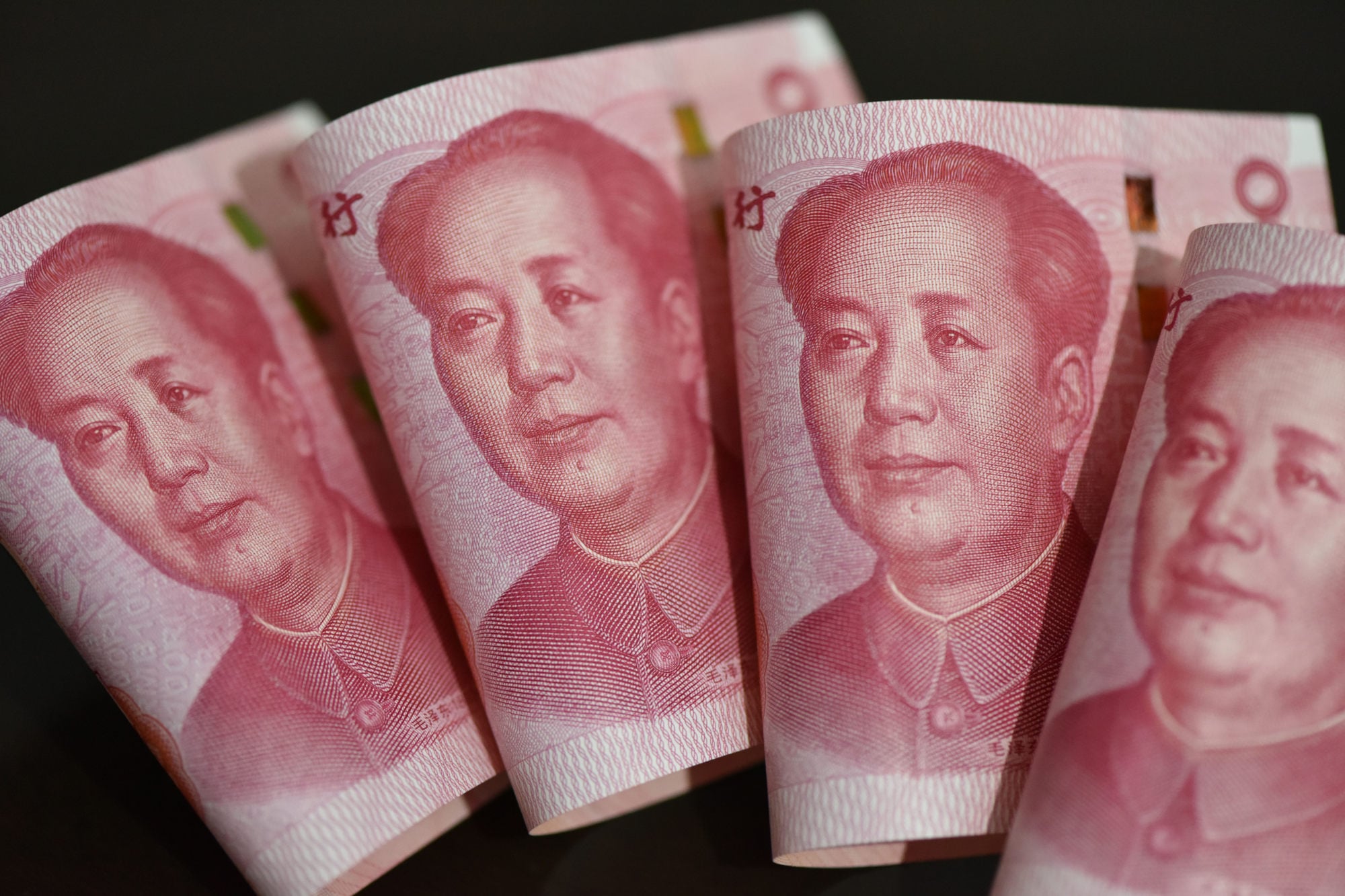
Segundo said the application has been cleared and that what remains is procedural, including hiring a Chinese rating agency that has never covered the republic. The treasury has not said what tenor it will sell or what the money will fund.
“Will the issuance happen this year? The objective is yes, but we cannot guarantee it,” he said.
The insistence on returning every year comes out of Europe, where Brazil sold euro debt in 2014, stayed away for more than a decade and came back in April with a five billion euro (US$5.7 billion) deal, its largest external offering.
Segundo said the absence had left the sovereign’s euro curve distorted by scarcity.
Announcing that result, the treasury said external debt serves to establish liquid benchmarks and a sovereign curve Brazilian companies can use as a reference abroad.
“That was a conclusion we drew from the European experience,” he said. “It makes no sense to go there, do the issuance, and then stay away for so long.”
Time is right for companies to take up challenge
Whether a sovereign curve pulls companies behind it is the assumption the plan rests on, and Alexandre Lowenkron, who runs Bocom BBM (a Brazilian bank controlled by China’s Bank of Communications), said the effect is consistent in the data.
“After a sovereign issuance, shortly afterwards is when most of it happens,” he said. “More than 50 or 60 per cent of corporate issuances in a given window concentrate after the Brazilian government comes to market.”
Suzano, the first non-financial, non-government company in the Americas to issue panda bonds, has raised 2.6 billion yuan across three deals since 2024, starting with a green bond at 2.8 per cent.
Emilio Yeh, chief financial officer of Suzano Asia, said the pricing came in more than 50 basis points below the company’s dollar curve even after the swap. The missing sovereign came up constantly with investors, he said, from Shanghai.
“When we did the issuances, they always asked about the sovereign, when it was coming, because there were already rumours,” Yeh said. “The sovereign issuance can anchor expectations and prices, create a solid reference.”
Lowenkron said Chinese investors screen for scale, for credit rating and for what he called “China flavour”, meaning some operational tie to the country. He named Petrobras, Vale and WEG as plausible candidates.
Brazil itself sits below that line, because all three major agencies rate the country below investment grade, the threshold many large funds must stay above when they buy debt.
Vale is rated two notches higher than its own government and Suzano one notch higher. Petrobras is held down to the sovereign’s level, though Fitch judges the company on its own to be investment grade.
Durigan said in June that Brazilian companies had asked the government to issue in yuan, both to make their own deals viable and to reduce currency volatility at home.
Suzano remains the only Latin American company to have sold panda bonds, two years after its first. -- SOUTH CHINA MORNING POST