




Colombian prosecutors are investigating allegations that executives of a Chinese state-owned contractor building the Bogota metro demanded cash from a local subcontractor in exchange for releasing payments owed for work on the project, according to an investigation published over the weekend by Semana, the country’s leading news magazine.
The consortium building the line has denied any wrongdoing, saying the money seen changing hands was a retention payment agreed upon between the two firms in a contractual dispute over the quality of the subcontractor’s work.
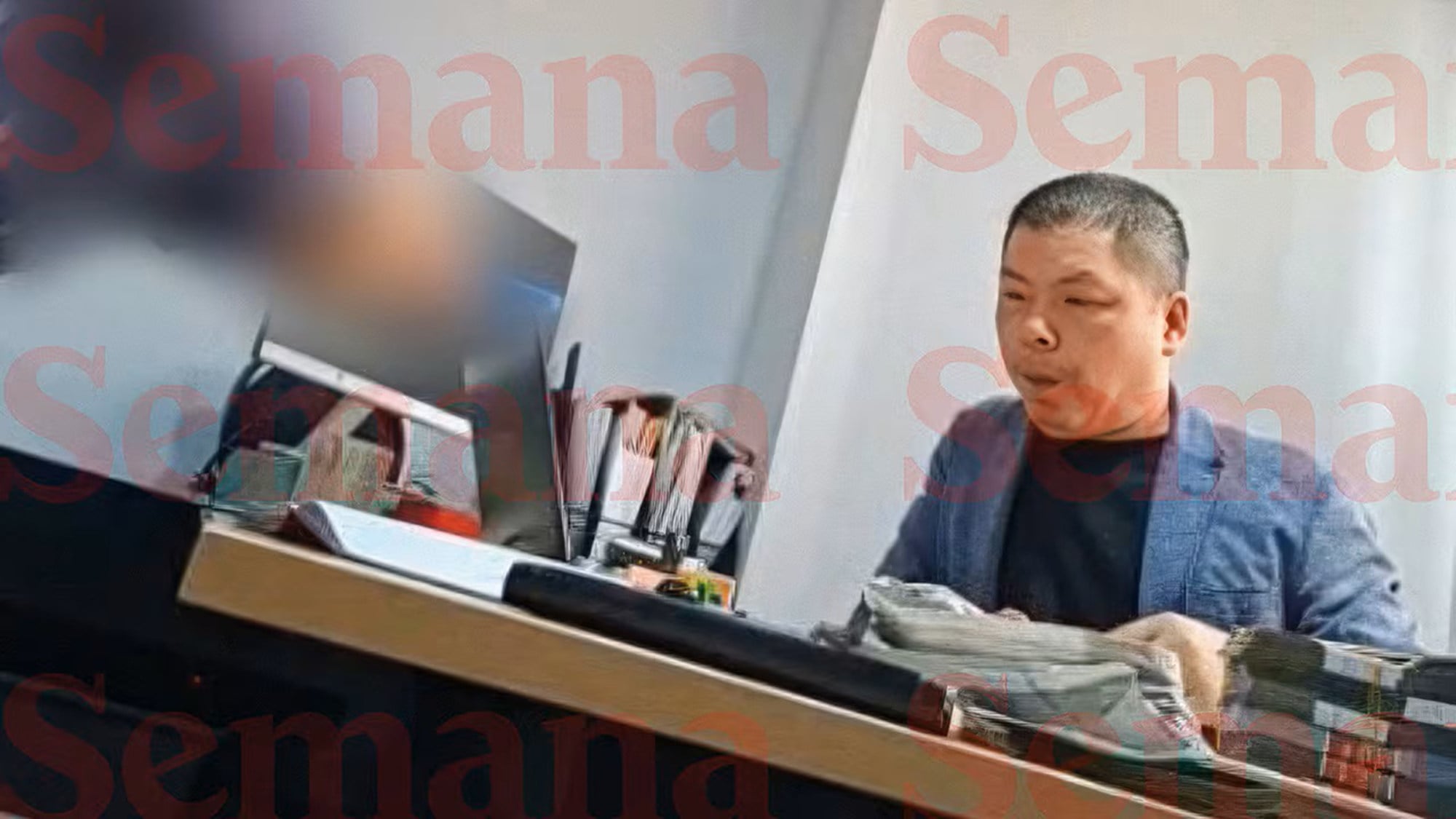
The allegations centre on a 26-minute video showing the legal representative of a Colombian subcontractor handing over 60 million pesos (US$19,000) in cash to a commercial manager of China Harbour Engineering Company (CHEC) at the firm’s former offices in Bogota’s Teusaquillo district on April 18.
In the footage, the Colombian contractor pulls a dark bag from his suitcase and passes it to the Chinese executive, identified in the criminal complaint only as Yang, telling him in English that each package contained 5 million pesos (US$1,600).
The executive then spends roughly 10 minutes counting the banknotes before writing what appears to be a receipt in a notebook.
According to the complaint cited by the magazine, the payment was demanded as a condition for CHEC to approve invoices worth from 1 billion to 1.2 billion pesos (US$320,000 to US$380,000) that the subcontractor, Union Temporal Metrobuild, said it was owed for work carried out in March.
The subcontractor told prosecutors it agreed to pay because it had more than 350 workers on its payroll, along with obligations to suppliers, banks and other creditors arising from the financing of the work.
South America’s biggest building site
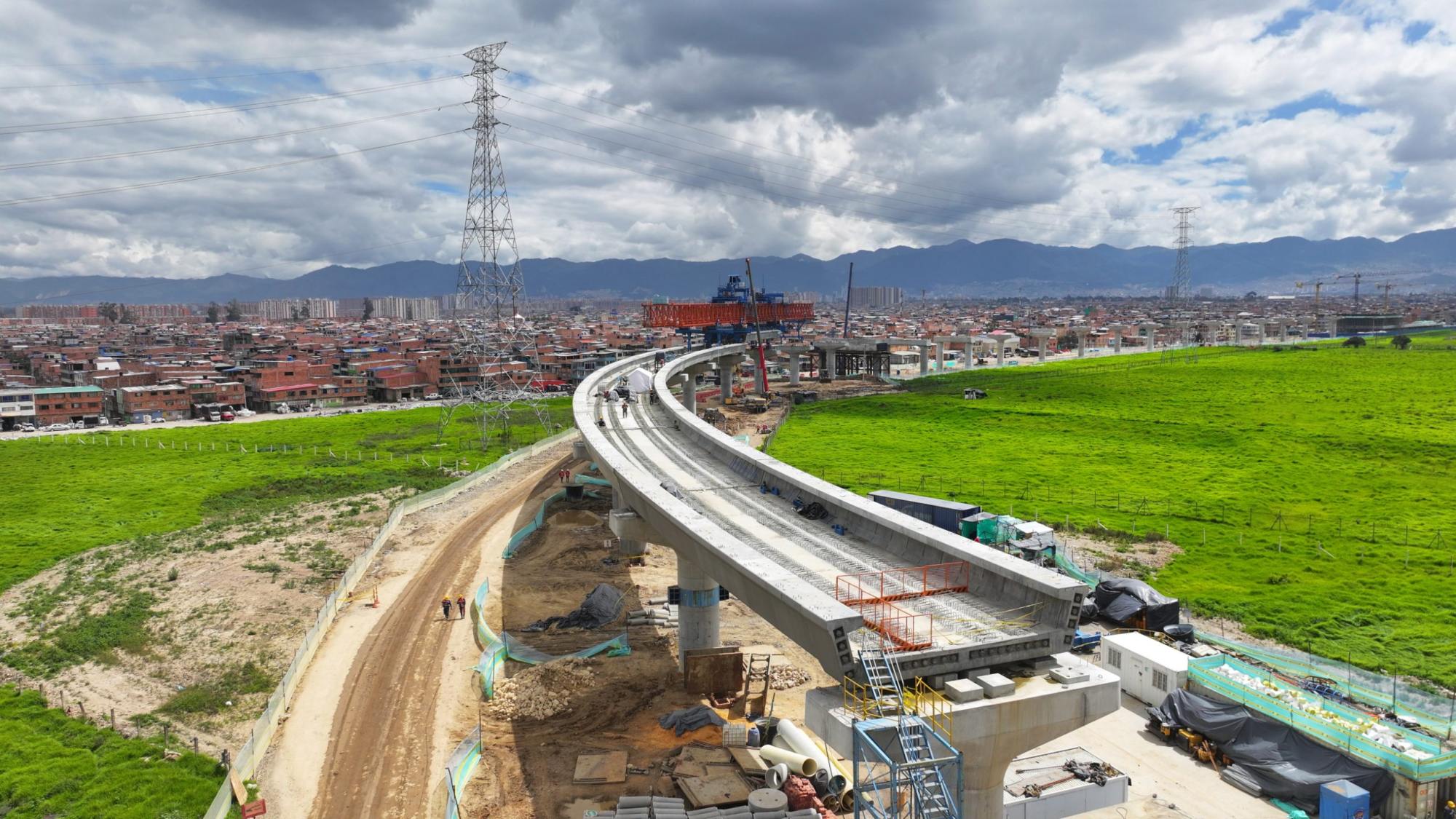
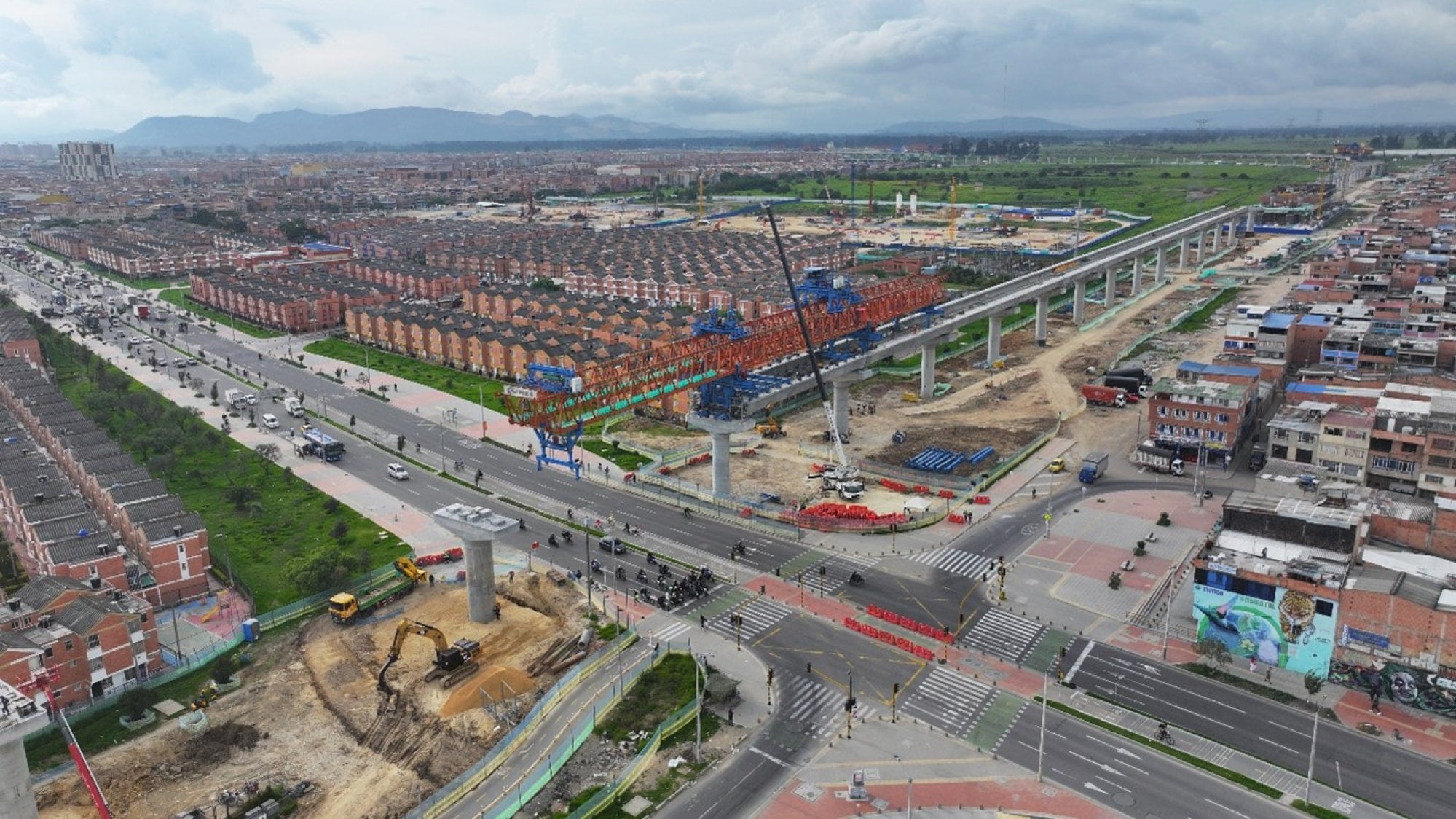
The 24km elevated line was awarded in 2019 to a consortium led by CHEC, with a 15 per cent stake held by Xian Rail Transportation Group, under a concession worth some US$4 billion at the time of signing.
It is the largest infrastructure project currently under construction in South America, with more than 15,000 workers on site and the works just past 80 per cent complete at the end of June.
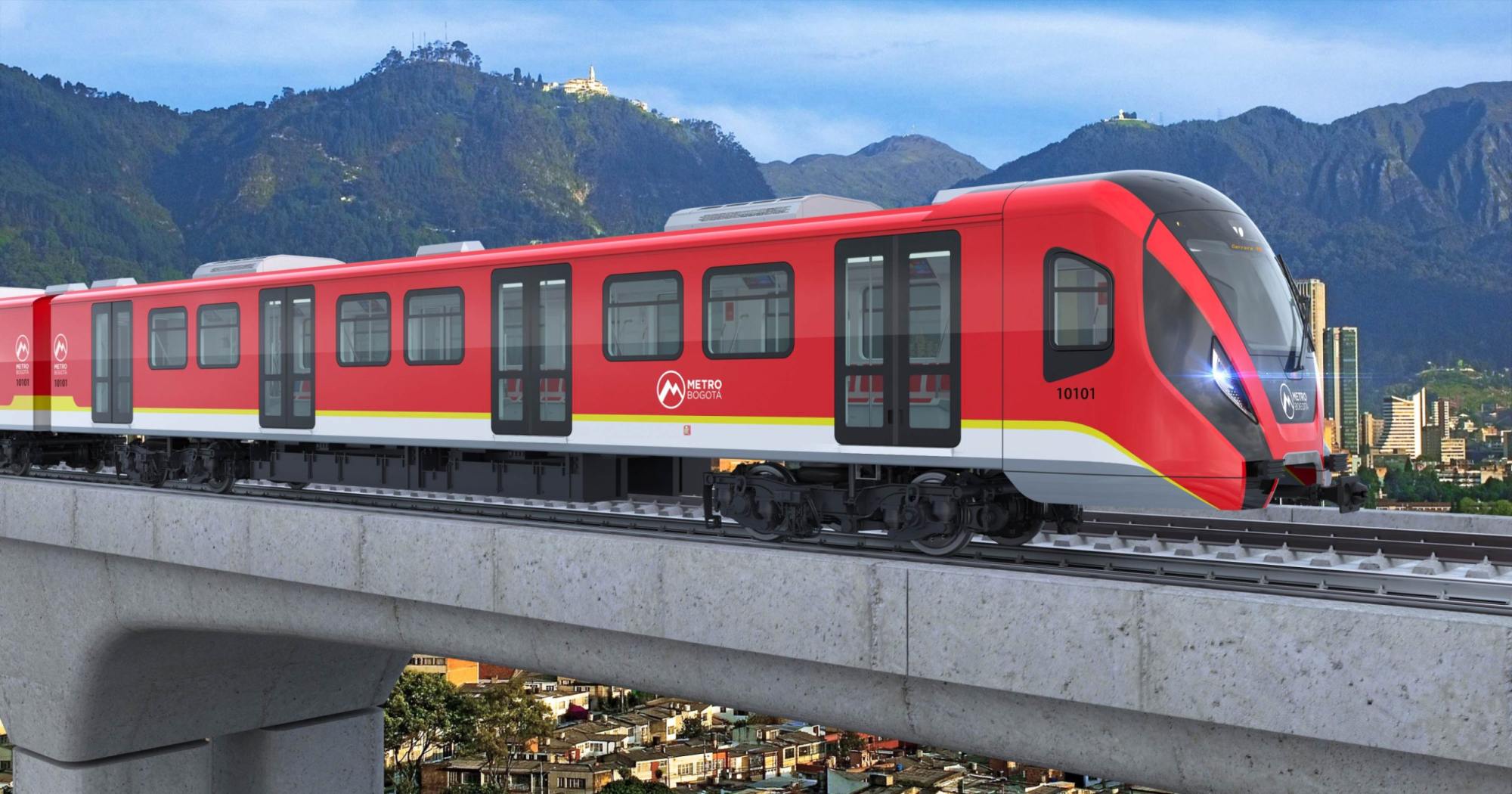
The system’s 30 driverless trains are being built in Changchun by Chinese state-owned rolling stock manufacturer CRRC, and 15 have arrived in Colombia. Trial runs are due to begin in September 2027, with commercial operation planned for 2028.
Bogota debated building a metro for more than half a century before the first line was contracted, and the project has been fought over throughout its construction.
Outgoing president Gustavo Petro pressed for years to convert part of the line into an underground route, raising the idea with the consortium during a 2023 visit to Beijing, while mayor Carlos Fernando Galan was elected that same year on a promise to keep the elevated design.
The report was published days before president-elect Abelardo de la Espriella, a right-wing lawyer backed by US President Donald Trump, takes office on August 7.
De la Espriella has instructed his incoming cabinet to deepen ties with Washington and to approach the relationship with China “with pragmatism”, after Colombia joined the Belt and Road Initiative under Petro in 2025.
‘If you do not do it this way, he does not sign’
Semana reported that the April 18 handover followed a meeting on April 8, which the subcontractor also recorded in audio.
At that meeting, according to the complaint, Yang said that CHEC’s general manager of projects, identified as Wang Chuang, would only sign off on the March payment cycle if the subcontractor delivered 60 million pesos in cash to the company’s offices.
Metrobuild told prosecutors it had signed at least four contracts with CHEC since 2024, worth a combined 32 billion pesos (US$10.2 million), to build foundations, columns and other substructures for the metro viaduct.
The firm said delays in payment approvals began in March 2026, with Wang’s signature the only one missing.
The subcontractor argued that the 2026 contract contained no mechanism for the discounts CHEC cited, and that the Chinese company already held more than 1.2 billion pesos in quality-guarantee retentions deducted from every payment.
It added that no further demands were made after the cash was delivered, but that CHEC still held back more than 2.5 billion pesos (US$800,000) in invoices awaiting a signature.
Julian Quintana, the lawyer representing the subcontractor, told Semana the conduct could amount to extortion and collusion, a crime under Colombian law involving officials who extract payments by abusing their position.
He asked prosecutors to seize the devices used to record both meetings to preserve the chain of custody.
A sanctioned parent company
CHEC is a subsidiary of China Communications Construction Company (CCCC), one of the world’s largest construction groups and a major contractor under the Belt and Road Initiative.
The World Bank barred CCCC and all its subsidiaries from bidding on bank-financed road and bridge projects until 2017 over fraudulent practices in a Philippine road programme, as successor to a firm sanctioned in 2009.
In 2020, the US Commerce Department placed CCCC units on its Entity List over their role in building artificial islands in the South China Sea.
The parent company’s corporate structure has already caused problems in Bogota. In 2024, two consortiums were disqualified from the tender for the metro’s second line after the city and its multilateral lenders found a conflict of interest, since CCCC both controlled CHEC and held a stake in Portugal’s Mota-Engil, a member of a rival bidding group.
That tender was later declared void after no offers were submitted, and was relaunched this year. The contract is expected to be awarded under the new government in early 2027.
Consortium says payment was agreed
Consulted by the Colombian magazine before publication, the Metro Linea 1 consortium said through its public relations office that it would open an internal investigation if it received detailed information, but did not provide a formal statement by the time the magazine went to press.
In a statement issued after the report was published, the consortium denied that any illegal demand had been made and gave a different account of the cash handover.
According to Metro Linea 1, the subcontractor had submitted an invoice for 960 million pesos that CHEC’s unit disputed over the quality of the work, but the company decided to pay it anyway to avoid further delays in workers’ salaries.
The 60 million pesos seen in the video was a “provisional retention” agreed between the two firms while Metrobuild corrected technical defects, the consortium said, delivered to the finance area of CHEC’s unit four days after the invoice was paid and backed by a signed receipt.
The statement said the video had been “covertly recorded” by Metrobuild representatives, and that its release generated “confusion in public opinion”.
The consortium said it had opened a priority internal investigation under its compliance programme, repeated that it held a policy of zero tolerance towards bribery and corruption, and pledged to act if any breach of internal procedures was established.
The Empresa Metro de Bogota, the public company that oversees the project, said it “categorically rejects any conduct that could constitute acts of corruption” and filed its own criminal complaint with the attorney general’s office.
The company identified Wang as the manager of the girder-launching process for the subcontractor and asked prosecutors to establish whether “criminally relevant” conduct took place.
In its complaint, the public company stressed that the executive had no “labour, contractual or functional relationship” with it, and that the events “occurred in the sphere of private dealings” between CHEC, its unit and third parties in the project’s subcontracting chain.
It added that it had notified the multilateral banks backing the project, that the money involved was private and did not compromise the works, and that it had paid the concessionaire on schedule, meaning Metro Linea 1 was obliged to pay its own subcontractors on time.
The Chinese embassy in Bogota did not immediately respond to a request by the South China Morning Post for comment.
The case has also drawn demands in Bogota’s city council.
Councilman Juan David Quintero, of the Nuevo Liberalismo party, called on the city and mayor Galan to ask CHEC to immediately suspend the executive named in the complaint, saying that not even a suspicion of corruption could be tolerated in what he called the most important project in the city’s history.
Andres Barrios, of the opposition Centro Democratico, filed a motion for a formal oversight debate to examine whether the project’s supervision mechanisms had failed. -- South China Morning Post



