US President Donald Trump’s nominee to lead the United States’ international broadcasting agency pledged on Thursday to sharpen its media challenge to China, including by expanding into short-form videos, podcasts and diaspora group chats.
Sarah B. Rogers told a Senate committee hearing that Asia would remain a top regional priority for the US Agency for Global Media (USAGM), which oversees Voice of America (VOA) and funds Radio Free Asia and other international broadcasters.
“China is rapacious and it is expanding all of its propaganda efforts,” Rogers said. “Chinese adversarial propaganda is a problem, and combating it has been a cornerstone of my public diplomacy strategy.”
But Rogers would inherit an agency weakened by the Trump administration’s own efforts to dismantle much of its operations last year. Around 1,000 VOA employees were placed on paid administrative leave, while VOA and Radio Free Asia continue to publish Chinese-language coverage at reduced levels.
At the hearing, Rogers claimed that Chinese propaganda increasingly promotes leftist anti-colonial narratives and antisemitism through automated or semi-automated social media accounts that coordinate to spread disinformation.
USAGM would expand beyond traditional news formats into newer platforms including short-form video, diaspora group chats, podcasts and other timely forms of engagement, Rogers said. And Asia would remain the agency’s top priority, alongside Cuba and the Middle East, while USAGM also hopes to expand its presence in Africa to counter China’s growing influence.
The nomination of Rogers, who currently serves as under secretary of state for public diplomacy, comes after months of chaos at USAGM following former Trump appointee Kari Lake’s push to scale back VOA and other US-funded broadcasters.
A federal judge ruled that Lake had unlawfully served as the agency’s acting CEO and voided many of her actions, including mass layoffs, leaving USAGM in legal and operational limbo. VOA’s and Radio Free Asia’s Chinese-language websites continue to operate with reduced output and were still being updated as of Thursday.
Asked whether she would bring back employees who have been placed on leave, Rogers said she was committed to rebuilding the agency but declined to discuss specific personnel decisions before being confirmed.
Rogers accuses China of spending billions on propaganda
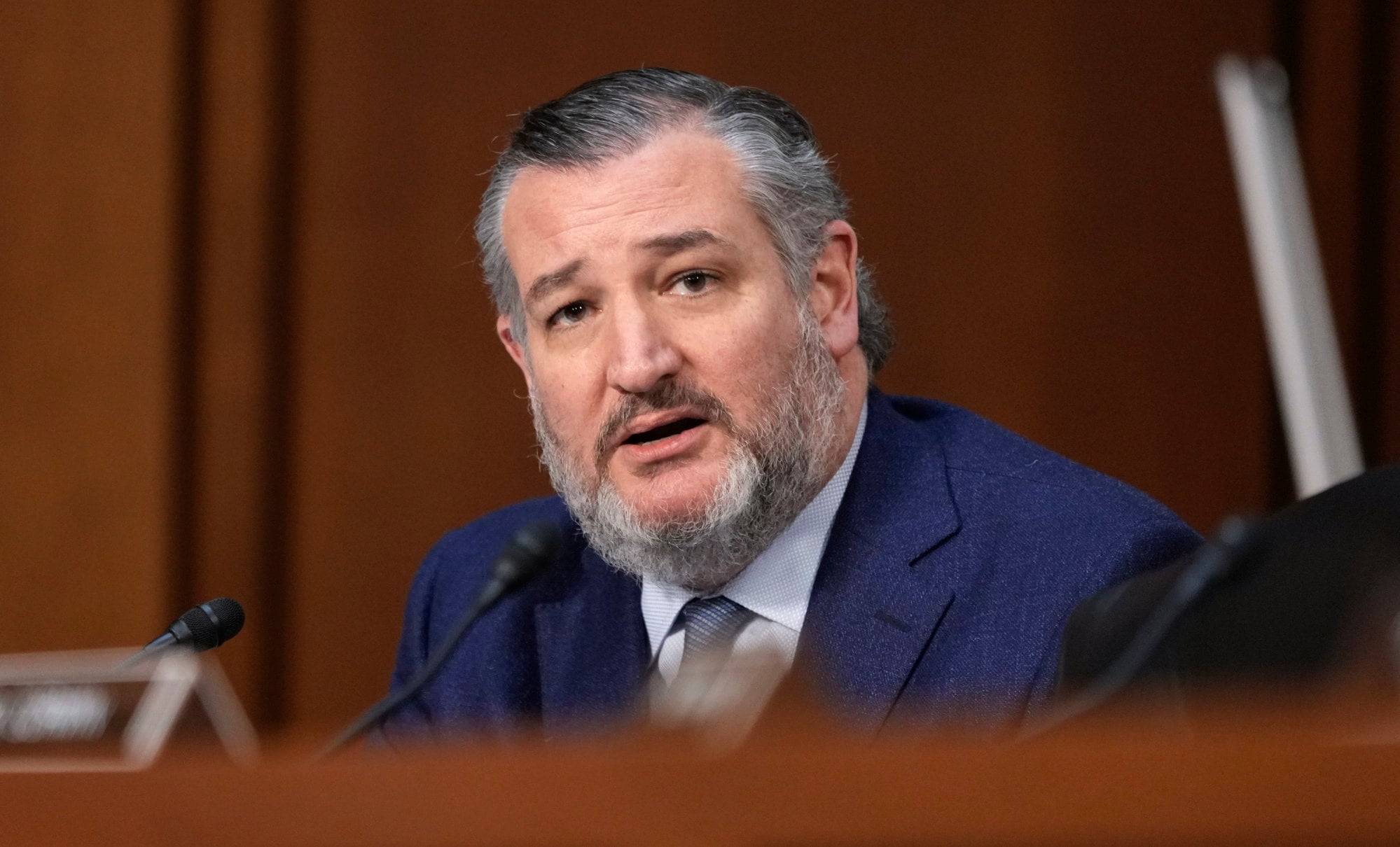
Rogers also asserted that China spends about US$40 billion annually on propaganda and influence operations, an estimate that Senator Ted Cruz, a Texas Republican, described as “staggering”.
“Just repeat that statement,” Cruz asked after Rogers cited the figure.
Rogers did not identify the source of the estimate during the exchange. In 2023, the US State Department said China spent “billions of dollars annually” on foreign information manipulation, while the Washington-based Foundation for Defence of Democracies estimated in 2024 that Beijing spent about US$10 billion annually on overseas propaganda.
The Chinese embassy did not immediately respond to a request for comment. Beijing has consistently rejected accusations that it conducts global propaganda and influence campaigns.
The hearing came as the United States’ global standing has deteriorated relative to China’s. A Pew Research Centre survey released this month found China was viewed more favourably than the US among 45,000 respondents surveyed across 37 countries.
Pew said the reversal reflected both improving perceptions of China and worsening views of the US, suggesting that Beijing’s information operations were not the only reason for the shift.
Senator Jeanne Shaheen, a New Hampshire Democrat, cited the findings in raising concerns about the effectiveness of US public diplomacy efforts.
“I find that really troubling,” Shaheen said. “How do we reverse that?”
Concerns over loss of editorial independence
Shaheen and other Democratic senators worried that VOA could lose its editorial independence, particularly if its reporting became more aligned with the president’s political priorities.
Rogers said she would not “copy edit individual stories” but instead provide strategic guidance to the agency and its grantees. She also cited the law governing USAGM, which requires its broadcasting to be consistent with broader US foreign policy objectives.
“I absolutely commit to respect the professionalism and independence of broadcasting. That’s what the statute says,” Rogers said. “I don’t think the statute says, though, that there should be no ‘interference or interaction.’”
Rogers’ nomination will require the Senate’s confirmation. -- SOUTH CHINA MORNING POST