




Rebeca Grynspan, the former vice-president of Costa Rica, emerged as an early front runner to be the next United Nations secretary general on Thursday, as the Security Council began the selection process, with a first “straw poll” held behind closed doors to evaluate support for candidates vying for the role at the embattled world body.
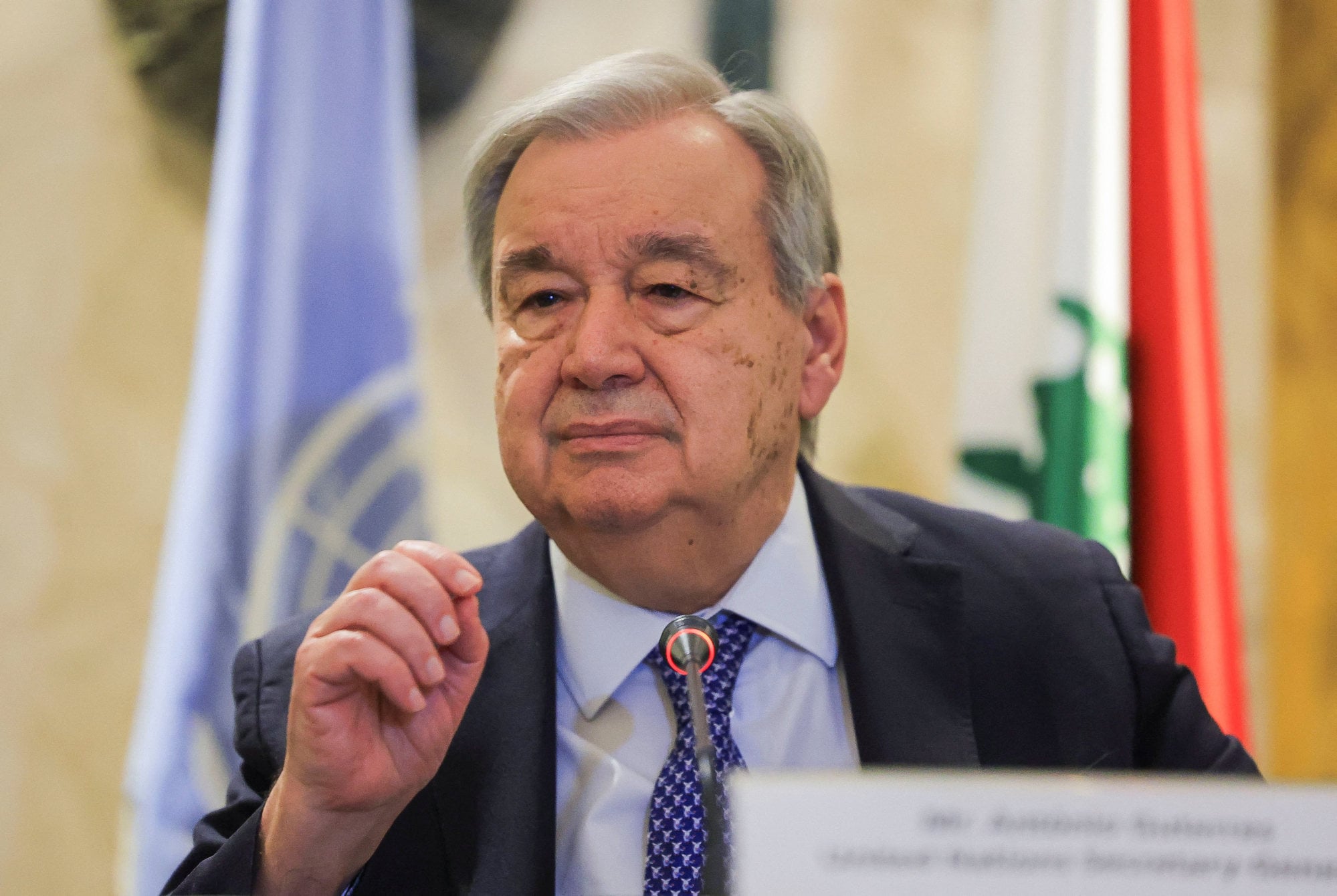
Antonio Guterres, the current UN chief, is set to complete his second five-year term on the final day of 2026, leaving the high-profile role open for a new leader whose first day would be January 1, 2027.
The four women and three men currently in the running for Guterres’ replacement are Grynspan, Michelle Bachelet of Chile, Maria Fernanda Espinosa of Ecuador, Rafael Grossi of Argentina, Olara Otunnu of Uganda, Carolyn Rodrigues-Birkett of Guyana and Macky Sall of Senegal.
Grynspan received 10 votes in her favour while former Guyanese foreign minister Rodrigues-Birkett came in second with nine votes and Grossi, the head of the UN nuclear watchdog, received seven.
The 15-member Security Council is responsible for picking the next UN chief before submitting its recommendation to the General Assembly for approval.
While the winning candidate requires nine votes to secure the position, they must avoid a veto, which ultimately means none of the council’s five permanent members must vote against them.
All five permanent members have the right of veto. If one does not fully agree with a proposed person but does not wish to cast a veto, it may choose to abstain.
The United States, Russia, China, France and Britain, the Security Council’s veto-wielding permanent members, have not yet publicly indicated their preferences, leaving diplomats reluctant to predict who could win the race.
The members of the council met behind closed doors on Thursday to each anonymously assign candidates an “encourage”, “discourage”, or “no opinion” label as part of a “straw poll”.
Grynspan reportedly received one “discourage” vote and four “no opinion” votes, with two diplomats saying the results were encouraging for her, assuming the “discourage” was not from a permanent member.
The system was devised in the early 1980s as an attempt to break a deadlock and has persisted in various forms, despite pushback from some countries over its opaqueness.
The mechanism also gives those without support the chance to withdraw, even though they are not obliged to do so.
“The straw polls may show that some candidates are just not viable, and allow them to bow out in a dignified manner,” Richard Gowan of the International Crisis Group told AFP.
“I would be surprised if any one candidate emerges with a decisive numerical advantage.”
While Otunnu only joined the race in the last few days, the other six hopefuls made their arguments last week as to why they would be the best pick to replace Guterres.
The candidates emphasised the importance of restoring the UN’s credibility, which has faced a crisis of confidence and finances in recent years, amid ongoing global conflicts, budget shortages and heavy criticism from the Trump administration.
Historically, the UN chief position has rotated among regions, but this is not an official policy. If this tradition is kept, the next will be Latin America and the Caribbean.
Sall and Otunnu, both from Africa, are the only two candidates running for the top job who are not from this region.
There has been a push by several states for the UN to be led by a woman – a position only held by men in the past. -- SOUTH CHINA MORNING POST


