PHNOM PENH: The Cambodian government has renewed calls for a transparent, independent investigation into the detention of 18 Cambodian soldiers that followed the July 28, 2025, ceasefire with Thailand.
The kingdom’s officials have argued that the troops were arrested after responding to what appeared to be a gesture of reconciliation rather than during active combat, raising questions over compliance with international humanitarian law.
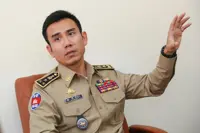
Minister of Information Neth Pheaktra revisited the incident in a July 27 social media titled “The Most Dangerous Handshake”. He described it as one of the most painful episodes of the border conflict and warned that the alleged incident had undermined trust, which is essential for maintaining ceasefire agreements and lasting peace.
According to the minister, the ceasefire agreed by Cambodia and Thailand came into force at midnight on July 28, 2025, bringing hope that months of fighting along the border had finally come to an end.
However, later that morning, Thai soldiers allegedly approached Cambodian troops positioned in an area Cambodia considers part of its sovereign territory and invited them to shake hands, creating the impression that hostilities had ended and relations were returning to normal.
The minister alleged that shortly after the handshake, Thai forces surrounded the Cambodian soldiers and detained them.
Of the 20 Cambodian soldiers involved, 18 were taken into custody, one was killed and another managed to escape.
The detained soldiers remained in Thai custody for more than five months, before being released on Dec 31, 2025, following diplomatic efforts by the Cambodian government and support from the international community.
The episode has since become one of the most emotionally charged incidents of the conflict, particularly among military families who spent months without knowing when or whether their loved ones would return home.
When the soldiers were finally released at the end of last year, scenes of emotional reunions unfolded as family members embraced fathers, husbands and sons whom many had feared they might never see again.
Relatives welcomed them with tears, hugs and prayers after more than five months of separation, while communities celebrated their return as a symbol of resilience after months of uncertainty.
For many families, the homecoming brought relief but did not erase the emotional scars left by the prolonged detention.
The minister said the experience had caused profound psychological suffering not only for the soldiers themselves but also for their families and Cambodian society more broadly.
Pheaktra argued that the incident should not be regarded as the capture of prisoners during active hostilities because, from Cambodia’s perspective, the ceasefire had already taken effect and fighting had ceased.
Instead, he said the soldiers were allegedly detained after trust had been established under the ceasefire, making the circumstances fundamentally different from a battlefield capture.
“This incident raises serious questions,” the minister wrote, asking whether soldiers detained after a ceasefire had entered into force, while stationed in territory Cambodia considers its own, could legitimately be classified as prisoners of war.
He argued that the alleged use of a handshake to facilitate the detention transformed what should have been a symbol of peace and reconciliation into one of betrayal.
“A handshake should be a symbol of peace, reconciliation and mutual trust,” Pheaktra wrote. “But when it is used as a means to lure soldiers into detention, it becomes a symbol of betrayal and shattered confidence.”
The minister warned that such actions, if left unexamined, could weaken confidence in future ceasefire arrangements and undermine efforts to build lasting peace between the two neighbouring countries.
He called for transparent clarification, an independent investigation and accountability to establish the full circumstances surrounding the incident.
According to Pheaktra, such measures are necessary to ensure ceasefire commitments are respected, military personnel are protected in accordance with international humanitarian law and similar incidents do not occur in future conflicts.
The renewed focus on the detention comes as Cambodia commemorates the first anniversary of the 2025 border conflict, highlighting what it describes as unresolved humanitarian and legal issues stemming from the fighting, while maintaining that lasting peace depends on accountability, respect for international law and the restoration of trust between the two sides. - The Phnom Penh Post/ANN