SEOUL (The Korea Herald/ANN): An AI-generated female weathercaster delivering a forecast has sparked widespread debate in South Korea over the portrayal of women in the media, highlighting growing ethical concerns as broadcasters increasingly turn to AI-generated anchors, reporters and virtual presenters.
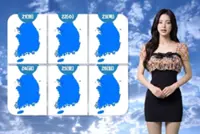
The controversy stemmed from a generative artificial intelligence video uploaded on July 20 to the YouTube channel Weather Environment Agency, operated by Kweather, a meteorological and air-quality service provider.
The video featured a virtual presenter named Kim Si-a delivering a weather report, accompanied by a disclaimer stating that the segment was produced using AI. Throughout the broadcast, Kim performed standard on-air gestures and referred to meteorological maps.
Critics, however, took issue with the character’s tight, revealing outfit, arguing that it objectified female presenters and reinforced gender stereotypes.
The controversy has since broadened into a wider debate over the design of AI-generated female characters. Experts warn that AI systems can reproduce existing gender biases and beauty standards, shaping characters’ appearance and roles in ways that reinforce stereotypes.
The debate comes as South Korean broadcasters move quickly to incorporate AI into news and weather programming.
In April, Kweather and general programming channel MBN jointly held an audition to select AI weathercasters for next-generation weather content.
Terrestrial broadcaster MBC has also begun incorporating AI into its radio news broadcasts. Since July 21, AI-generated voices modelled on those of MBC announcers have been used to deliver the network’s news bulletins, with reporters inputting scripts into an AI system trained to replicate the announcers’ voices. The system then generates the audio and delivers the news.
General programming channel TV Chosun, meanwhile, introduced an AI reporter named Aion on its morning news program News Parade on June 8. Aion selects news items, generates scripts and produces videos, while a human-operated news desk remains responsible for the final stage of production.
The growing use of AI reflects, in part, broadcasters’ efforts to reduce production costs and streamline content production.
Once developed, AI anchors and reporters can be deployed repeatedly without the need to hire human talent for studio appearances or filming. The technology is particularly well suited to structured formats such as weather forecasts and brief news updates, where content follows standardised formats and can be produced at scale.
At the same time, the growing use of AI in broadcasting is raising questions about the future of workers whose roles the technology is designed to replicate, as well as concerns that it could erode human judgment and oversight in journalism. -- THE KOREA HERALD/ASIA NEWS NETWORK