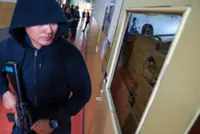
SINGAPORE (The Straits Times/ANN): Three Singaporean teenagers aged between 14 and 19, who were self-radicalised by violent extremist ideologies and planned to carry out separate attacks here, have been detained under the Internal Security Act (ISA). The cases are unrelated.
One of them was a 14-year-old student who was arrested in May, a month before his intended attack on his school.
The Secondary 2 student supported militant group ISIS, idolised mass shooters and made plans to carry out a mass stabbing at his secondary school during the June holidays, said the Internal Security Department (ISD) on Monday (July 27).
ISD withholds the names of detainees under 18 years old.
The student drafted a 21-page manifesto setting out his attack plan, including his choice of weapons and a list of his targets, including non-Muslim teachers and students.
Speaking to reporters on July 27, Senior Minister and Coordinating Minister for National Security K. Shanmugam said: “He had gotten quite close to carrying out his plans. It is worrying, but every case is worrying.”
Shanmugam, who is also Home Affairs Minister, said: “ISD and the Ministry of Home Affairs (MHA) have got to get it right every single time. The would-be attacker needs to get it right only once.”
The second case involved tertiary student Tan Jun Jie, 19, who hatched plans to carry out knife attacks against Singapore Armed Forces (SAF) personnel at Sembawang Air Base and LGBTQ students in the tertiary educational institution he attended.
He also attempted to conduct distributed denial-of-service (DDoS) cyberattacks against the websites of Muslim organisations, which he deemed deviant, ISD said. In a DDoS attack, attackers flood servers with internet traffic to prevent users from accessing online services.
Tan was arrested in April and given a detention order in May.
The third student, a 15-year-old student in Secondary 4, who wanted to further ISIS’ cause, aspired to carry out an attack in Singapore using pressure-cooker bombs, as he viewed the Republic as an enemy of ISIS.
The boy searched for ways to make a pressure-cooker bomb, and while he had not yet devised a timeline, location or target for his attack, he visualised that it would be conducted in an urban setting with many civilian casualties.
ISD said the teen’s family and friends were aware of his extremist views, but none reported him to the authorities.
The department said the three youths harboured a strong resolve to enact violence and were at varying stages of their attack plans or preparations when they were each arrested, adding: “These three cases drive home the severity of the youth radicalisation threat in Singapore.”
ISD noted that it was worrying that the youths had identified weapons that were easily available, including those with blades, for their intended attacks, and had sought out information online about making explosives.
More than half of the 23 youths dealt with under the ISA in the past decade – including the three youths – had intended to mount attacks in Singapore, said ISD, noting that radicalised youth are also getting younger.
Shanmugam said that in all three cases, the boys had shared their extremist views with those around them.
“One added his family members and friends into chat groups, where he spread pro-ISIS content. Another shared ISIS videos with his friends and schoolmates. So we need the public, parents to stay vigilant (and) safeguard children,” he said.
Radicalised at age 12
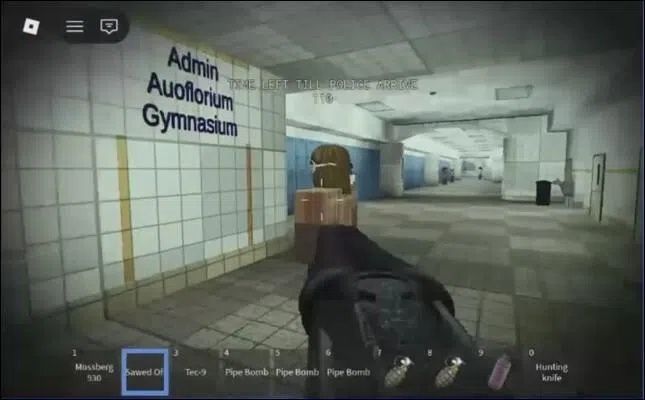
The 14-year-old boy who planned a mass stabbing at his secondary school encountered first-person shooter games on online gaming platform Roblox in 2024, when he was 12.
In 2024, the boy came across ISIS supporter Omar Mateen’s 2016 mass shooting on a gay nightclub in Florida, US, on social media. The shooting claimed 49 lives and injured 58 others.
He idolised Mateen as he related with Mateen’s experience of being bullied, and admired Mateen’s high kill count during the attack. He believed it was justifiable to kill gay people, whom he considered to be forbidden in Islam, said ISD.
The boy also considered travelling to Syria to join ISIS, but did not pursue this, given a lack of resources. The youth shared ISIS-related videos with his friends to flaunt his support for the group and promote it. None of his schoolmates were radicalised by his attempts, said ISD.
By late 2025, fuelled by personal grievances at being bullied by his schoolmates and put under academic stress by his teachers, the boy planned a mass-casualty attack against non-Muslim teachers and schoolmates at his school in June 2026.
He timed his planned attack with the school holidays as he thought there would be fewer teachers present to stop his attack, and had identified specific days when he and his targets would be present in school for co-curricular activities.
The boy wanted to use firearms for his attack, but changed his mind because of Singapore’s strict anti-gun laws.
He then explored using a homemade bomb, and researched bomb-making materials and how to buy them. He later abandoned the idea as he did not have enough money to obtain the materials or a suitable place to build and test the bombs.
Instead, he chose to use a knife, saying he had gained confidence in his ability to carry out a stabbing attack after repeated online viewings of ISIS execution and stabbing tutorial videos.
ISD said the boy identified a kitchen knife and penknife from his home as potential weapons.
He saw recreations of real-life school shooting incidents on Roblox, including the 1999 Columbine High School shooting in the United States that left 14 dead and 23 others injured.
The boy searched for more information online and learnt that several mass shooters had been victims of bullying, and their acts of violence were a form of retaliation against those who had wronged them.
Identifying with these mass shooters as he, too, claimed to be a victim of bullying, the boy avidly consumed violent gore and mass shooting content.
He found such content on social media based on algorithmic recommendations, as well as from online channels he had joined, which were linked to the true crime community.
While playing first-person shooter games, the boy imagined his bullies as the victims, and himself as the perpetrator of the violent acts.
The youth intended to live-stream the attack and saw his actions as a form of jihad, planning to kill himself after the attack and die a martyr.
His manifesto, titled “A Call to Action”, featured neo-Nazi and far-right symbols, and glorified mass shooters whom the youth idolised. He wanted to encourage others who were bullied to stand up for themselves and respond with violence.
He planned to disseminate his manifesto on his social media accounts one day before his attack.
ISD said someone in his school noticed signs of radicalisation and alerted the authorities, and he was arrested before he could execute his plans.

Targeting soldiers at Sembawang Air Base
Tan, the 19-year-old student, is a Muslim convert who began practising Islam in 2022 after being introduced to the religion through social media.
In late 2022, he was exposed to the online extremist teachings of foreign preachers and later to rigid and fundamentalist religious beliefs. They primed him to be susceptible to pro-ISIS and other radical content online, said ISD.
By January 2026, Tan saw himself as an ISIS member and took the pledge of allegiance in his heart.
He admitted that if ordered by ISIS, he would be willing to undertake any task, including carrying out attacks in Singapore, to further the group’s cause.
Tan planned to target SAF personnel stationed at the entrance of Sembawang Air Base as he deemed them enemy combatants serving the “kuffar Government” of Singapore. Kuffar refers to those who reject or disbelieve Islamic teachings.
He also planned to attack LGBTQ students at the tertiary institution he attended, which was not identified, as he perceived their behaviour to be un-Islamic.
Tan was arrested after his acquaintances reported him to the authorities because of his extremist views.
Meanwhile, the 15-year-old Secondary 4 student supported terrorist groups fighting against Israel, including Hamas, Hezbollah and the Houthis.
He planned to conduct an attack in Singapore to advance ISIS’ cause, and establish an Islamic caliphate – a form of Islamic government – in South-east Asia through violent means.
Dealing with terrorism-related content
On July 27, MHA said the police have issued disabling directions against an online service provider and two access-blocking directions to internet service providers to deal with terrorism-related content accessible by those in Singapore.
The disabling orders require the provider of the relevant online service to take all reasonable steps to disable access by Singapore users to the relevant online videos. The access-blocking directions require internet service providers to block access by those here to the relevant offending websites.
MHA said the offending videos and websites contain terrorism content, including material that advocates ISIS, mass shooters and violence. The content also glorifies extremists and calls for supporters to join their cause.
“Investigations have established a direct nexus between the content and past self-radicalisation cases in Singapore, where youths became radicalised after consuming content from these sites or obtained information from these sites to plot their attacks,” said MHA.
On harmful extremist content, Shanmugam said: “When we come across it, we block it. (But) in today’s world, it is not possible to block everything.”
Education Minister Desmond Lee noted how prevention, education and contingency planning are important pillars in tackling the challenge of online radicalisation among youth.
“Ultimately, we need everybody to play their part in order to keep our school environment safe, and indeed, to keep Singapore safe,” said Lee.