




The United States’ nominee for director of national intelligence told lawmakers on Wednesday he could be “extremely helpful” in shaping economic strategy with China during a confirmation hearing that framed Beijing as a leading economic and geopolitical challenge.
Jay Clayton, the top federal prosecutor in Manhattan, appeared before the US Senate Select Committee on Intelligence on his nomination, where he was questioned on several key intelligence issues.
When pressed on the top three threats to America today, Clayton listed terrorism, then drug trafficking, fentanyl and cartels, adding “lastly, I would say our traditional adversaries”, which he identified as Russia, China, and Iran.
Later in the hearing, lawmakers pushed back on the perceived ranking of Clayton’s threat assessment, stressing the importance of China as a geopolitical threat.
“One, I strongly disagree with you about the issue of drug trafficking being more important at this point than the threat of China or Russia,” said Mark Warner, a Democratic senator from Virginia, with Clayton quickly clarifying he did not rank the threats in order.
Lawmakers also questioned Clayton about the economic strategy towards China, given his decades of experience in financial markets.
“We still cooperate extensively with China on the world stage economically,” Clayton said, adding he believed he could assist with economic strategy towards both China and Russia.
“Many of the most pressing national security threats we face today are cross-cutting issues that involve technology and economics and go beyond the IC’s [Intelligence Community’s] traditional focus on foreign military capabilities and foreign leadership intentions,” said Mike Rounds, a Republican senator from South Dakota.
As the US lawyer for the Southern District of New York, Clayton has had jurisdiction over Manhattan, giving him oversight of many of America’s most significant financial crime cases.
Clayton has been in his current role for over a year, with his agenda focusing on violent crime and policing financial issues.
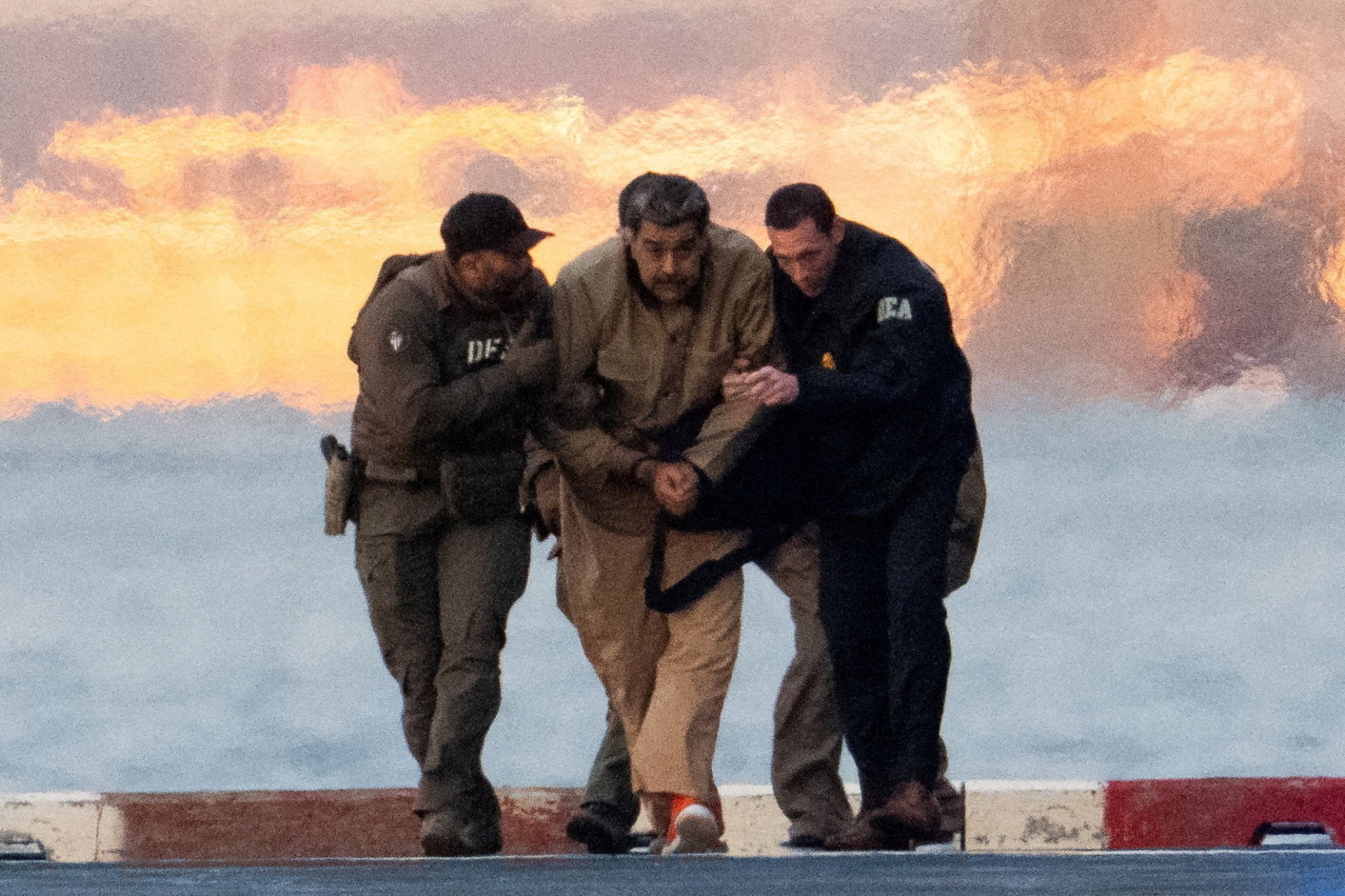
With Clayton at the helm, his office prosecuted the high-profile case against former Venezuelan president Nicolas Maduro.
Elsewhere in the hearing, senators pushed Clayton on US President Donald Trump’s false claims about the 2020 election, with several heated exchanges.
Appearing to avoid directly answering who won that election, in one exchange Clayton said: “I am not an election denier. Joe Biden was certified as president.”
Senators also pressured Clayton to commit to declassifying intelligence on the origins of Covid-19, with one lawmaker arguing that more information should be made public.
“I think there’s a whole lot more to learn from what happened in Covid,” Clayton said, adding that “there’s a lot of work for our Intelligence Community to do to ensure that the American people have access to that learning”.
Clayton previously served as chairman of the US Securities and Exchange Commission (SEC) during Trump’s first term as president.
His work at the SEC saw him combat “Chinese influence on and exploitation of our markets, and importantly, maintaining economic stability and confidence in our markets during the Covid-19 shutdowns”, Clayton told the hearing.
Following his role at the SEC, Clayton was Apollo Global Management Inc’s independent chair and returned as a senior adviser at New York-based law firm Sullivan & Cromwell.
“I encourage the United States Senate to confirm Jay as soon as possible,” Trump said on social media when he announced the nomination.
Wednesday’s confirmation hearing comes after Trump’s abrupt cancellation of the last one, as lawmakers rushed to schedule Clayton’s nomination to block Bill Pulte, the current acting national intelligence director.
Trump selected housing regulator and loyalist Pulte to serve in the role on an acting basis, to replace the outgoing director of national intelligence, Tulsi Gabbard, who said she was leaving the role to help care for her husband, who has recently been diagnosed with bone cancer.
Pulte’s lack of military and intelligence experience sparked bipartisan concern over his selection. As director of the Federal Housing Finance Agency, he also launched investigations into people and institutions Trump has portrayed as political adversaries. -- SOUTH CHINA MORNING POST


