




A Chinese military magazine has highlighted a spate of non-combat losses across the US Navy, claiming they have eroded the fleet’s capabilities and exposed “systemic pressure and shortcomings”.
The report in Naval & Merchant Ships pointed to fires, electrical failures and propulsion issues on America’s most advanced warships in recent months.
They include the USS Gerald R. Ford aircraft carrier, the USS Zumwalt destroyer, Nimitz-class carrier the USS Dwight D. Eisenhower and Arleigh Burke-class destroyer the USS Higgins.
The report said the problems had revealed critical vulnerabilities stemming from excessive deployments, an overreliance on technology and inadequate shipyard support.
“The shared underlying problem reflected by this is the systemic pressure and shortcomings in the areas of equipment management, maintenance support and damage control,” the report in the magazine’s May edition concluded.
“These issues – manifesting as non-combat losses – are continuously eroding the fleet’s combat capabilities,” it said, adding that the risks were rising.
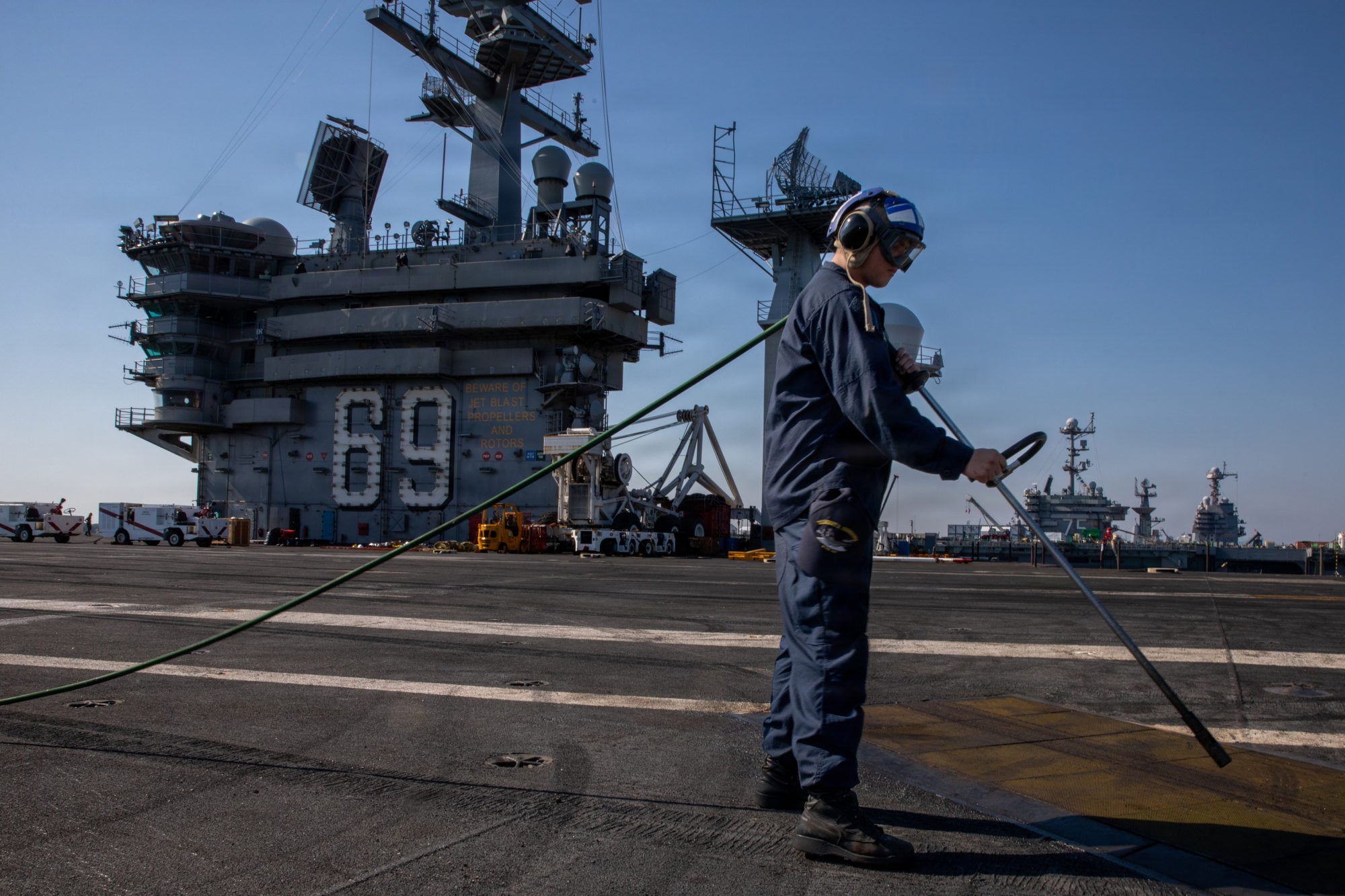
It came days after 64 sailors fell ill after being exposed to diesel exhaust fumes when a generator malfunctioned on the USS Nebraska, an Ohio-class nuclear-powered ballistic missile submarine.
The report claimed that a fire in the laundry room of the USS Ford in March – the cause of which is still under investigation – suggested there was a “maintenance deficit” caused by prolonged global deployments that had delayed upkeep of the vessel and that crew fatigue was also a factor.
It said that this situation could result in the accumulation of “hidden risks” in everything from combat hardware to the well-being of the crew, and that problems could get “out of control at any moment”.
The report also pointed to the complex maintenance and modernisation requirements of the US Navy’s hi-tech vessels, which it said added to the strain on the country’s declining industrial base.
It cited two separate fires in April, aboard the USS Eisenhower when it was undergoing maintenance at a shipyard in Virginia, and aboard the USS Zumwalt when an upgrade was being carried out at a shipyard in Mississippi.
“The US Navy is facing widespread structural challenges in vessel maintenance, including persistent schedule delays, insufficient shipyard capacity and a shortage of skilled workers,” according to the report.
“If the industrial system cannot keep up with the heavy maintenance burden of these complex warships, problems like fires, construction mishaps and electrical failures will continue to surface, resulting in non-combat losses such as delayed deployments and lower operational availability.”
The report also noted the risk of modern ships relying too much on advanced electrical and automated systems, pointing to a blackout on the USS Higgins that knocked out its power and propulsion while it was deployed in the Indo-Pacific in April.
It said while these technologies could improve performance, any minor electrical faults or maintenance oversights could rapidly escalate into full-ship operational failures.
According to the report, the USS Higgins was at the time on a high-intensity deployment and it was lacking maintenance.
It said vessels like the Arleigh Burke-class destroyer would be vulnerable to saturation attacks from anti-ship missiles or drones if an electrical fault were to cause any temporary loss of detection.
“For the US Navy, probably the primary challenge is no longer building more advanced ships but rather balancing global deployment demands with the need to maintain a complex, highly strained fleet,” the report concluded. -- SOUTH CHINA MORNING POST


