




Flights have been cancelled and airlines are offering refunds in at least 10 airports, as a weakened Typhoon Bavi nears China’s coast, where it is expected to land between Fuqing in Fujian province and Wenling in Zhejiang.
Zhoushan’s airport said in a social media post that 14 flights to and from the island city in Zhejiang province were cancelled for Friday. In Wenzhou, 17 inbound flights have been cancelled.
Multiple airlines – including Air China, China Southern Airlines, China Eastern Airlines and Hainan Airlines – have activated special ticketing help channels and announced fee-waiver rebooking or refund policies.
According to an Air China notice, passengers booked to fly via affected cities, including Quanzhou, Hangzhou and Xiamen, in the next two days can refund their tickets or switch flights without additional fees.
The National Meteorological Centre said on Friday that Bavi had weakened to “severe typhoon” status, with winds at its centre dropping to 45 metres per second (100mph) as it continues towards China’s coast.
The forecaster maintained an orange alert, the second-highest in a four-tier system. The former super typhoon is predicted to bring heavy rainfall over the next 24 hours to Taiwan as well as across the Chinese mainland.
Beijing and the Inner Mongolia autonomous region in the north, Yunnan in the southwest, Zhejiang province in the east and the southern Guangxi Zhuang autonomous region are expected to be affected.
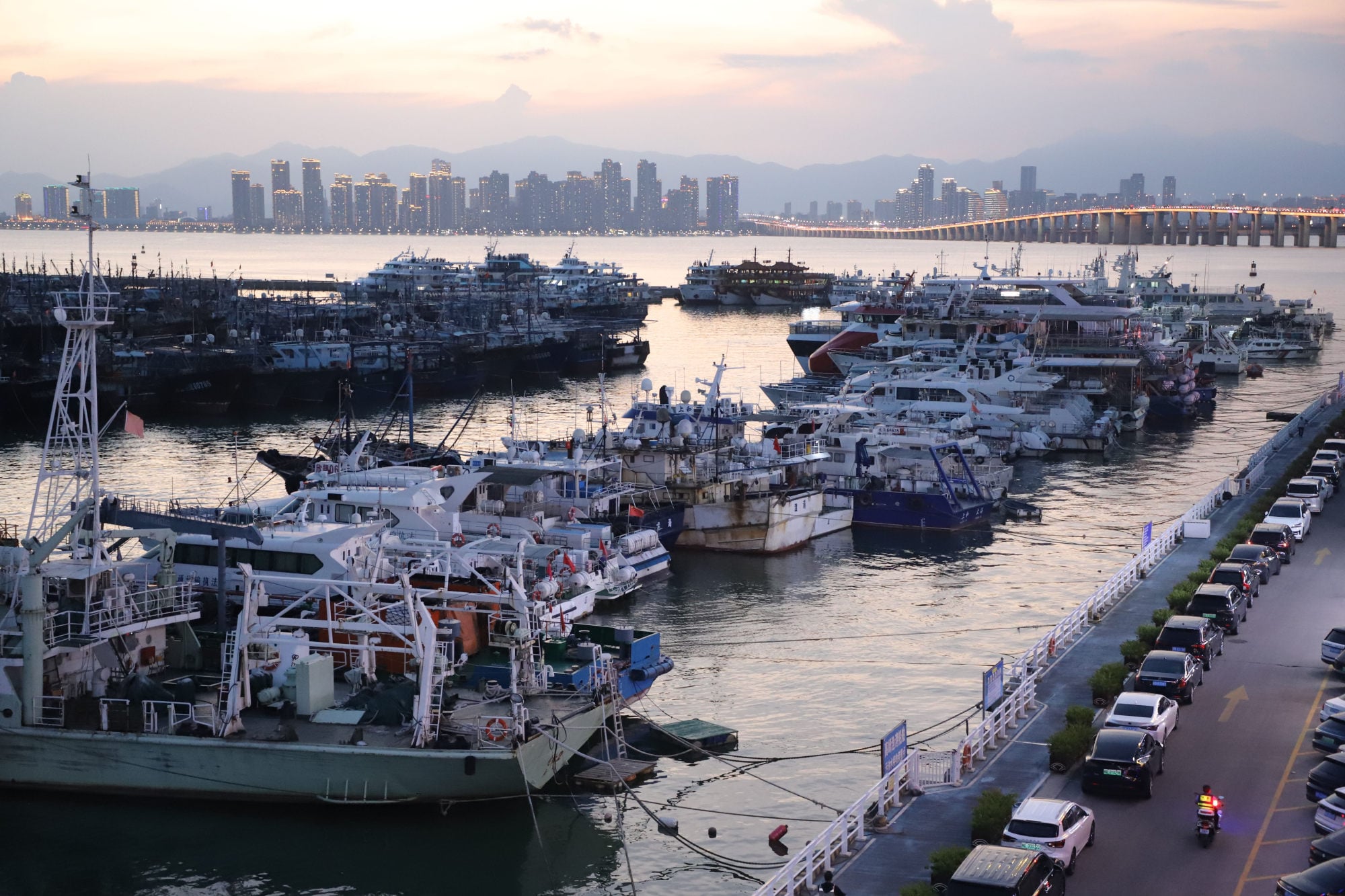
Local governments should order ships to be securely docked, halt all outdoor activities, stabilise infrastructure and make sure that elderly people and children were warned to stay in the safest parts of their homes, it said.
The eye of the typhoon disappeared on Thursday night, CCTV reported, but its structure remains symmetrical with complete circulation and the overall cloud system has expanded significantly to an area of around 1.4 million sq km (540,543 square miles) – about 1,263 times the size of Hong Kong.
The disappearance of the circular area of clear skies and minimal cloud cover at the centre of the typhoon does not mean that Bavi has become less dangerous.
The Shanghai Association for Science and Technology explained that it meant the typhoon’s energy was no longer concentrated in a core area but expanded to its outer wind layers.
This could mean longer-lasting rainfall and other disasters, the association said in an article in Shanghai Science and Technology Daily. It added that if a new eye were to appear, it could make the typhoon even stronger.
In 2021, peripheral wind and moisture from typhoons travelled inland to central China’s Henan province, causing extreme rainfall and floods that killed almost 400 people.
Even though typhoons In-fa and Cempaka did not make landfall in Henan, they sucked moisture from the air over the sea and delivered it inland, where it was elevated by the Taihang Mountains and other terrain, creating extreme rainfall.
In Shanghai, it was “sunny and peaceful” on Friday morning, though the air was hotter and more humid than usual, Shanghai residents told the South China Morning Post.
Tom Liu, a financial analyst, said the effect of the typhoon was not yet clear, but he would cancel all activities and stay at home this weekend.
In Beijing, commuters were greeted with pouring rain as they travelled to work in congested traffic.
Preparations were still under way in coastal cities on Friday morning. Fish farmers in Taizhou, Zhejiang, shored up their facilities and prepared draining equipment to reduce foreseeable losses, state broadcaster CCTV reported.
Crab farmers added more than 3,000 metres (9,840 feet) of nets around the ponds to prevent their stocks from escaping, it said.
In Shanghai, farms were scrambling to harvest vegetables ahead of the typhoon, not only to save them from damage but also to provide for daily needs during the effects of Typhoon Bavi, according to the report.
In Fujian, multiple coastal parks, resorts, wetlands and mountain tourism spots closed on Friday, with tourists offered refunds on their tickets, according to the attractions’ official social media accounts.
Some universities issued safety instructions for all field research and volunteer activities to be halted and changed to online conferences.
Sources told the SCMP that senior officials from the province and its capital Fuzhou had repeatedly inspected reservoirs in the area, with multiple discharges of water on Friday to make room for rain. Earlier this week, one reservoir in neighbouring Guangxi suffered a breach, leading to multiple deaths.
Numerous railways along the coast have suspended operations for the weekend, while delivery services, including YTO Express and ZTO Express, said there could be delays because of the extreme weather.
Taiwan stepped up emergency preparations on Friday as Typhoon Bavi approached, placing Yilan, New Taipei, Hsinchu, and Miaoli under heightened flood alerts. The typhoon is expected to pass through the waters north of Taiwan on Saturday.
Taiwanese leader William Lai Ching-te inspected the Central Emergency Operation Centre on Friday morning, after visiting the Lanyang military command a day earlier. The island’s authorities said 28,000 troops were on standby, with some units deployed to disaster-prone areas.
Authorities also issued a red warning for the landslide-dammed lake in Hualien, which overflowed last year after torrential rains brought by a typhoon, resulting in 19 deaths.
All ferry services in eastern Taiwan were suspended on Wednesday. As of Friday, 154 domestic flights and 261 international and cross-strait flights had been cancelled, the island’s civil aerospace authorities said.
In Guangxi, flooding caused by Typhoon Maysak has receded in several regions, with local authorities cleaning up debris and preventing secondary disasters.
In Binyang county, dead pigs from a farm were buried and the area sanitised to prevent pandemics. In Guigang, residents were cleaning up debris and washing away the dirt on their porches and furniture.
Volunteers had also arrived in villages across Guangxi, some with excavators to dig up mud, some carrying emergency supplies on their backs and others cooking free meals, Chinese media reported. -- SOUTH CHINA MORNING POST


