




For months, the United States and China have been locked in an unusual stand-off over cutting-edge chips – the building blocks of the artificial intelligence industry.
In early 2026, Washington took the rare step of approving Nvidia’s H200 graphics processing unit for export to China, but Beijing has deliberately restricted Chinese firms from purchasing them as it pursues a tech self-sufficiency drive.
Now, however, China’s stance is beginning to change, as the government plans to let selected companies – including Alibaba Group Holding – buy limited numbers of the device, a source with knowledge of the matter told the South China Morning Post.
The targeted easing of the ban is likely a “middle-ground solution” designed to “temporarily ease the frontier training bottleneck” in China’s AI industry, buying time for domestic chipmakers to develop their own market-leading devices, according to analysts.
Besides Alibaba, the Chinese government has also informed ByteDance – the maker of TikTok – and leading AI start-up DeepSeek of the coming approvals, though companies will have to explain why they need to buy the Nvidia product rather than a locally made alternative, The Information reported on Wednesday.
China may allow H200 imports because domestic chips are unlikely to fill the country’s computing-power gap in the near term, said Shi Shenchang, a lawyer focusing on export controls at Shanghai-based Co-Effort Law Firm.
The imports could help China’s leading AI companies ease their frontier training bottleneck, while allowing Beijing to retain control over trade flows through quotas and use-based approvals, Shi said.
But China’s long-term push for self-sufficiency in computing power is unlikely to change, Shi cautioned.
“The core consideration behind this approach is most likely to secure a window of opportunity for domestic AI chips to grow,” said Zhou Chao, assistant researcher at Anbound, an independent think tank based in Beijing.
If Beijing had fully opened up imports of the H200 earlier this year, China’s major technology companies would “almost certainly have prioritised purchasing Nvidia products” over domestic systems, Zhou added.
Nvidia, Alibaba, DeepSeek and ByteDance did not immediately respond to requests for comment on Thursday. Alibaba is the owner of the SCMP.
Beijing’s delayed and limited approval of H200 imports “is the middle-ground solution for all parties”, which will help China’s AI industry meet its need for advanced chips while allowing the US to maintain its edge, said Gary Ng, senior economist for Asia-Pacific at Natixis Corporate and Investment Bank.
The selected Chinese companies may only be allowed to import fewer than 200,000 of the Nvidia devices in total, the source said.
That amount “is significantly lower than the volume the companies had previously applied for”, which suggests that China is “not lacking procurement opportunities, but has instead chosen to slow down the pace of purchases”, Anbound’s Zhou said.
The change comes as China’s tech giants struggle to close the gap with America’s frontier AI labs.
Last month, Meituan released a model with 1.6 trillion parameters trained entirely on home-grown hardware. But US labs continue to surge ahead. While OpenAI has not publicly disclosed the size of GPT-5, experts have estimated that it is about 4 trillion parameters.
Parameters are a machine-learning term that measures the complexity of AI systems during training, with a higher figure generally indicating a stronger model.
GPT-6, which will reportedly be released in around a month, is set to be significantly larger than its predecessor. OpenAI did not immediately respond to a request for comment.
Leading figures in the US AI industry have advocated for a strong chip ban on China, with Anthropic CEO Dario Amodei stating that China was only “six to 12 months” behind the company’s Mythos model.
But an often-overlooked fact is that Chinese models are still much smaller than their US peers, despite their capabilities being as or almost as impressive.
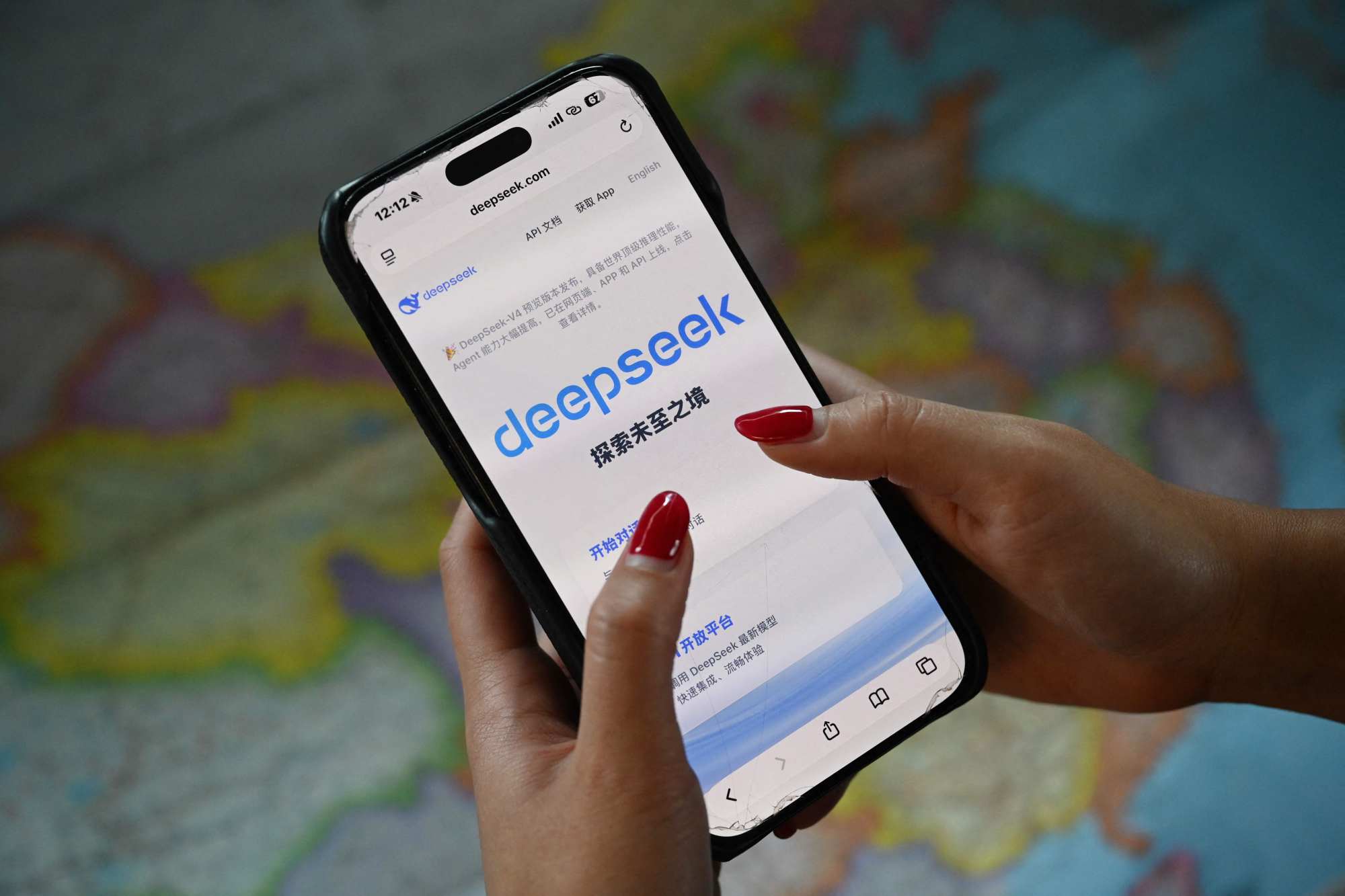
China’s DeepSeek introduced its first trillion-parameter system, DeepSeek V4, as recently as April. Moonshot AI and Alibaba were among the first Chinese firms to cross the trillion-parameter threshold last year with the release of their Kimi K2 and Qwen-3-Max-Preview models, respectively.
Nvidia has made great efforts to lobby both Washington and Beijing to allow more cross-border chip trade. In May, CEO Jensen Huang joined US President Donald Trump on his trip to China, after not being included on the White House’s original business delegation list.
But access to the H200 alone will not guarantee that China’s firms catch up with the American labs, analysts cautioned.
The gap between China and the US does not lie in a single graphics processing unit; “it lies in the entire AI computing platform” that combines chip performance, high-bandwidth memory, high-speed interconnects and the software ecosystem, Anbound’s Zhou said.
Nvidia stands out with the CUDA ecosystem. Huawei Technologies’ alternative CANN system, despite having made progress over the years, still lags behind in terms of ecosystem maturity, development convenience and engineering experience, Zhou added. -- SOUTH CHINA MORNING POST


