
As Hong Kong marks the 29th anniversary of its return to Chinese rule on July 1, the South China Morning Post talks to the city’s senior officials about the administration’s achievements so far and what may lie ahead.
Hong Kong should focus on becoming “bigger and better”, rather than expecting neighbouring cities such as Shenzhen to “stand still”, the city’s tourism chief has said, as the government prepares its first five-year plan and seeks to raise the sector’s contribution to the economy.
Secretary for Culture, Sports and Tourism Rosanna Law Shuk-pui told the South China Morning Post in an exclusive interview that the city faced intense competition not only in tourism but across multiple sectors.
She expressed confidence that annual growth in arrivals would help the government meet its target of expanding the tourism sector’s contribution to the city’s gross domestic product to about 5 per cent by 2029, revealing that the industry last year contributed around 3 per cent.
“I don’t think it’s aggressive. We have done that in the past,” she said.
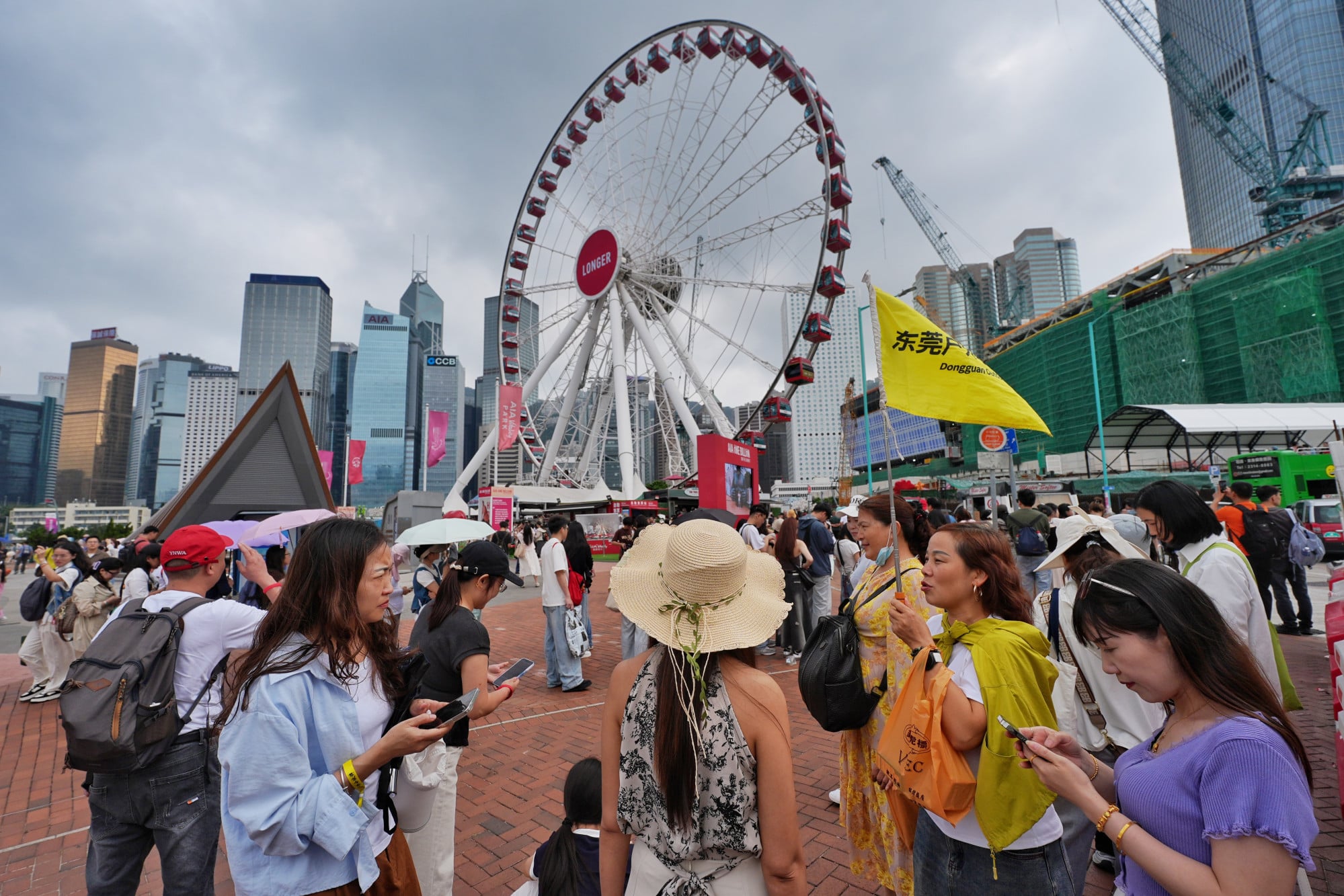
Shenzhen has increasingly emerged as a tourism rival to Hong Kong, with a growing line-up of attractions and lower prices, contributing to a steady flow of cross-border travel by Hong Kong residents.
“Our answer is not to expect or hope that our neighbours do not grow. It is to work on us being bigger and better,” Law said.
“If Hong Kong hopes that our neighbouring cities or competitors can stand still so that we can also stand still, or that we [do not] move ahead and still maintain our position, I think that is unrealistic.
“Our attitude must be – we actually want everybody to flourish, but in the process, Hong Kong should still be in a leading position in the pack, and also that Hong Kong should be unique ... so that our attractiveness is still very apparent and visible.
“I think that is what is meant by positive competition.”
But Law dismissed concerns about Shenzhen’s popularity, saying people travelling north across the border would not necessarily weaken the city’s tourism sector, arguing that visitors from elsewhere in the Greater Bay Area would come to Hong Kong in turn.
The bay area refers to Beijing’s initiative to turn Hong Kong, Macau and nine cities in Guangdong province into an integrated economic powerhouse.
She described greater cross-border movement as a natural consequence of improved transport links and integration within the bay area.
“With improved connectivity, with better transport, and with easier cross-boundary facilities, this is bound to happen,” she said.
In fact, stronger tourism offerings elsewhere in the region could ultimately benefit Hong Kong by making the bay area more attractive overall, she added.
“We are promoting multi-destination tourism. If cities around us are all putting out new offerings, that makes our job easier,” Law said.
“If the Greater Bay Area as a whole becomes more attractive, I’m sure that if Hong Kong also works hard on our own offerings, we will benefit because the pie is bigger.”
Hong Kong welcomed about 49.9 million visitors in 2025, and expects arrivals to rise by 8 per cent to around 53.8 million this year.
Visitor numbers in the first five months of 2026 had already reached about 23 million, representing an increase of 14 per cent year on year.
Spending associated with inbound tourism is projected to rise by about 9.7 per cent from HK$217 billion (US$27.7 billion) in 2025 to HK$238 billion this year.
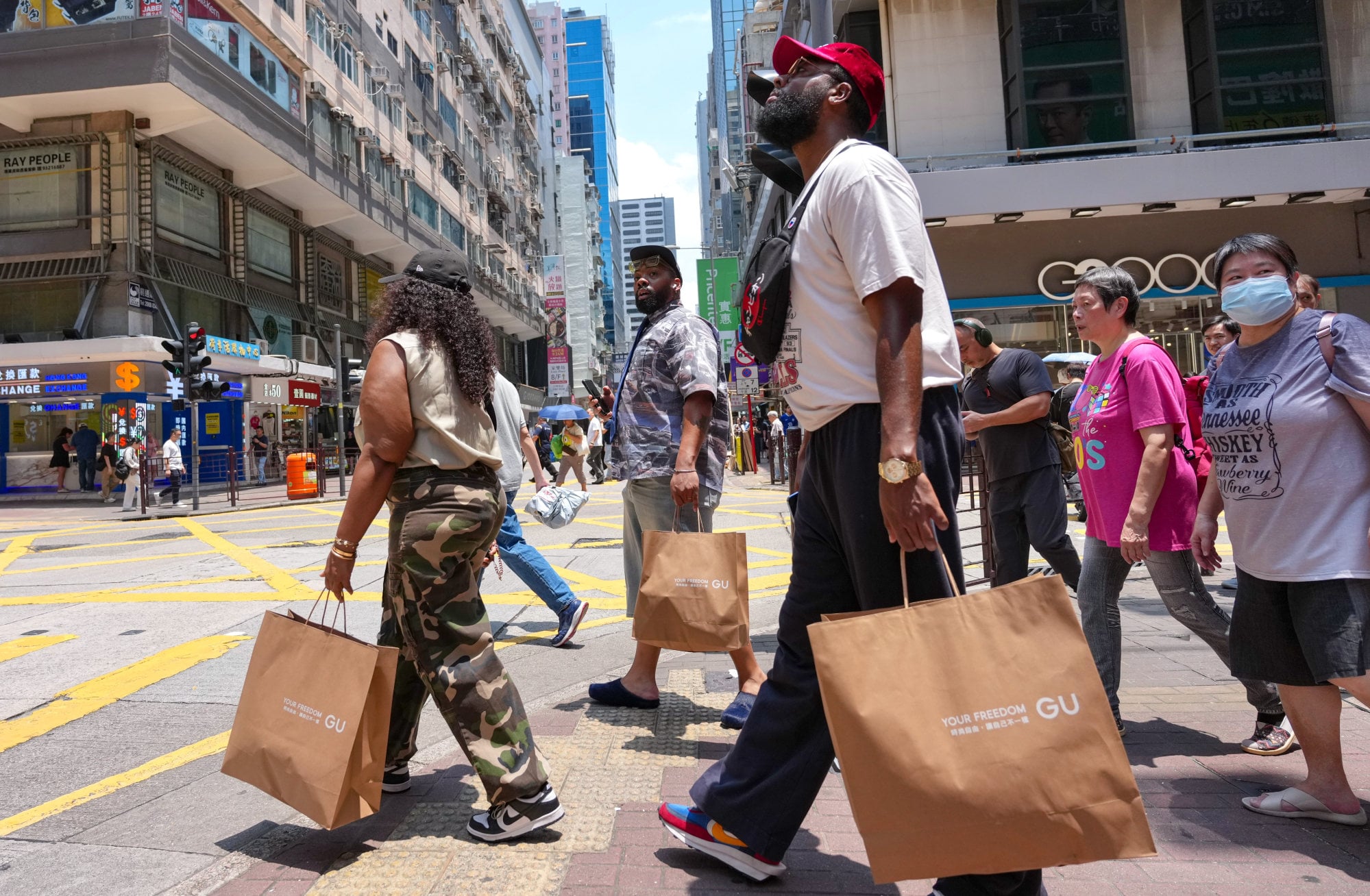
According to government projections, the extra value generated by the tourism industry is expected to increase from HK$86.2 billion in 2024 to HK$120 billion by 2029, a rise of about 39 per cent.
Law’s remarks came as the government launched a public consultation on Hong Kong’s first five-year plan, which will feed into the city’s broader development strategy under the country’s recently released 15th five-year plan.
Hong Kong plays a crucial role in the national development plan, serving as an East-meets-West tourism and culture hub.
While Beijing has mandated that Hong Kong’s first-ever plan should support national development, Law said the blueprint would not only focus on infrastructure and visitor numbers, but also on how the tourism industry should evolve over the next five years.
She said that operators needed to rediscover the creativity and entrepreneurial spirit that once helped establish Hong Kong as one of Asia’s leading tourism destinations.
“I want our stakeholders, our industry practitioners, our trade to really use their brains, use their creativity and use their energy,” she said.
“We used to do very well. We were very energetic. We were very innovative. Maybe [due to] the last few years’ difficulties, perhaps Covid, has kind of discouraged some of them from making bold choices or daring decisions.
“But I think now is the time.”
Law said industry players had ideas on how individual sectors could be improved and what types of support they hoped to receive from the government, but the consultation was still in its early stages.
“For us in the government, our job is to take, as much as possible, their views and then do a balancing act,” she said. “You also have to think about what would be best for the community.”
Law also expressed confidence that the city was “back and back big time”, pointing to feedback from international attendees of events such as the Rugby Sevens, Art Basel and the Wine and Dine Festival as evidence that perceptions of Hong Kong were changing.
“People misunderstood Hong Kong, or were misled in the past few years, that Hong Kong might not be as safe as before,” she said. “But they came and saw for themselves – then they went back home to tell a good Hong Kong story.”
She said such experiences were often more effective in promoting Hong Kong.
Looking ahead, Law said Hong Kong would continue investing in tourism, cultural and event infrastructure to support future growth.
She cited projects such as Kai Tak Sports Park, the second phase of AsiaWorld-Expo, new facilities in the West Kowloon Cultural District and a planned museum showcasing the country’s achievements and development.
Last week, Xia Baolong, director of the Hong Kong and Macau Affairs Office, visited the city to conduct research on its alignment with the country’s 15th five-year plan, which covers 2026 to 2030.
During a visit to AsiaWorld-Expo, officials told Xia that the venue hosted more than 300 events in 2025, about one-third of which were concerts that attracted visitors from across the bay area and overseas.
The second phase of AsiaWorld-Expo, scheduled for completion in 2028, will provide additional exhibition space and a new indoor venue capable of accommodating more than 20,000 people, according to the Commerce and Economic Development Bureau. -- SOUTH CHINA MORNING POST